
Lieferung heute & morgen

Qualitätsgarantie

Willkommens-Angebote freischalten: KOSTENLOSE Lieferung | Bis zu 80 % RABATT | Kostenlose 30-Tage-JoyPlus-Testphase
App herunterladen
A marker needs to suit the surface, the desired durability and the way you work. If you choose based solely on colour or price, you can quickly end up with a product that cannot be wiped off film, bleeds through paper or produces a line that is too narrow for a presentation. That is why the STAEDTLER Lumocolor Marker range includes different types of ink, tip shapes and line widths.
This buying guide explains which details matter before you buy and which options suit typical requirements.
A Lumocolor Non-Permanent Marker is designed for smooth, non-absorbent surfaces such as glass, plastic and overhead film. On paper, card or textiles, however, water-soluble ink can soak in and remain visible. If you are looking for a marker for changing labels, check the surface first.
A flipchart pen with a chisel tip can, for example, produce lines of around 2 to 5 mm. This is useful for headings and clearly visible presentation cards, but unsuitable for small labels. For precise notes, a 0.4 mm marker or a 1.0 mm marker is more practical.
Not every Lumocolor version is refillable. According to the product details, the yellow STAEDTLER Lumocolor Flipchart Marker with a 2–5 mm chisel tip is not designed for refilling. Several Non-Permanent versions, on the other hand, are compatible with a STAEDTLER refill station. It is therefore worth checking the specific model description and the relevant station number before buying.
For paper flipcharts and presentation cards, water-based, low-odour ink is suitable. It dries quickly and should not bleed through the paper during normal use. STAEDTLER flipchart markers are designed for this purpose.
According to the product details, a water-soluble marker for glass, plastic and film can be removed from many non-absorbent surfaces with a damp cloth. These include overhead film, smooth plastic surfaces and glass. If you are unsure about the material, test the marker on an inconspicuous area before writing on the entire surface.
A Lumocolor Permanent Marker, or the Lumocolor Permanent Omnigraph, is designed for permanent, water-resistant markings. The Omnigraph uses a wax-based core and, according to the product description, can be used on glass, metal, plastic, wood and paper. It should therefore not be confused with a wipeable film marker.
With a chisel-tip marker, you can vary the line width by changing the angle at which you hold it. Avoid putting unnecessary pressure on the tip. A lockable tip, as specified for selected flipchart models, can help prevent the tip from being pushed in while writing.
Refillable models can be useful in offices, training rooms and for regular workshops, as the marker does not need to be replaced every time the ink runs out. For the Non-Permanent versions mentioned above, refill stations 487 15 and 487 17, among others, are specified. Compatibility depends on the model.
Replace the cap securely after use. Some models feature DRY SAFE properties and, according to the product details, can remain uncapped for several days without drying out. This does not replace closing the marker after every use. Storing it horizontally or keeping it in the original box can help maintain an even flow of ink.
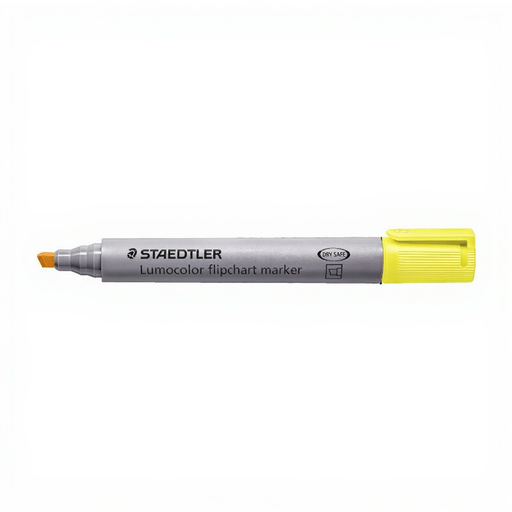
Why this product suits this profile: The yellow flipchart marker is designed for paper, presentation cards and straightforward presentation tasks. Its chisel tip allows you to create lines of different widths without needing several tip sizes.
The product details explicitly name paper flipcharts as a suitable application. This helps prevent a wipeable film marker being confused with a presentation marker for paper.
Water-based, low-odour ink, lockable chisel tip and variable line width of around 2–5 mm.
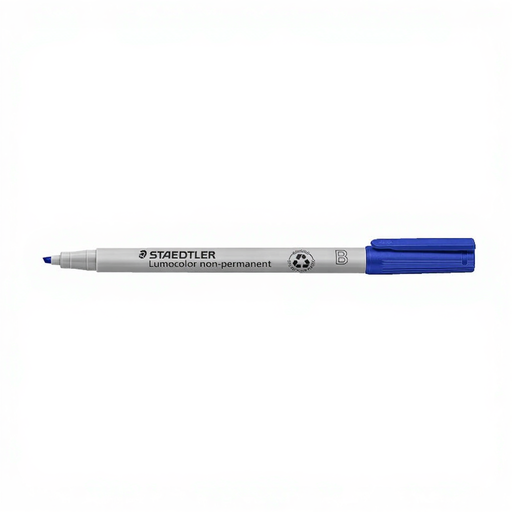
Why this product suits this profile: The blue universal ink is designed for smooth surfaces such as glass, plastic and overhead film. The chisel tip covers both fine and clearly visible markings with a single pen.
The Non-Permanent label distinguishes it from a permanent marker. According to the product description, the ink can be removed from non-absorbent surfaces with a damp cloth.
Line width of around 1.0 to 2.5 mm, water-soluble ink, refill option with station 487 15 and automatic pressure regulation.
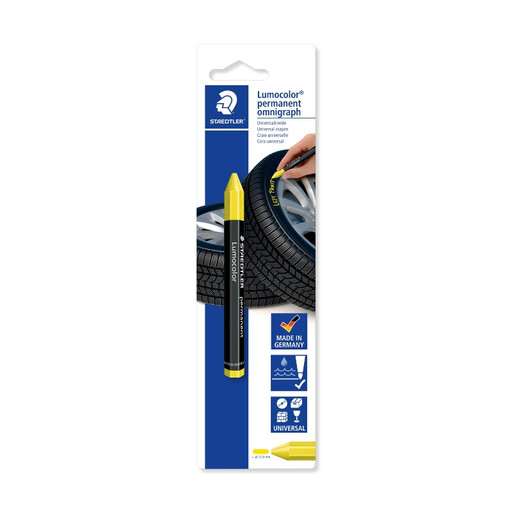
Why this product suits this profile: For industrial markings, workshops, construction, arts and crafts or permanent labelling, a water-resistant wax-based core is more suitable than a wipeable presentation marker.
The permanent, water-resistant design prevents temporary Non-Permanent ink from being used for long-term markings.
Wax-based core, water-resistant markings and, according to the product description, suitable for glass, metal, plastic, wood and paper.
We have put together a complete, regularly updated list of products that fully meet these strict selection criteria and the safety regulations applicable in the EU.
Before placing your order, these four questions can help you narrow down your choice:
For colours such as yellow marker, blue marker, green marker, red marker or violet marker, you should also consider how legible the ink will be on the chosen surface. Light shades may offer less contrast on white paper, so a quick test mark is advisable before larger presentations.
On smooth, non-absorbent surfaces such as glass, plastic or overhead film, the ink can be removed with a damp cloth according to the product details. It can soak into paper and textiles. The surface should therefore be tested before first use.
Some Non-Permanent models are compatible with STAEDTLER refill stations, such as 487 15 or 487 17, depending on the version. According to the product description, the yellow flipchart marker with a 2–5 mm chisel tip is not designed for refilling. The specific product page is therefore the deciding reference.
A 2–5 mm chisel tip is suitable for large headings and clearly visible presentation cards. For consistent lines, a flipchart marker with a round 2 mm tip can be a good choice. Fine tips from 0.4 to 1.0 mm are more suitable for detailed labelling, films or small diagrams.