
Lieferung heute & morgen

Qualitätsgarantie

Willkommens-Angebote freischalten: KOSTENLOSE Lieferung | Bis zu 80 % RABATT | Kostenlose 30-Tage-JoyPlus-Testphase
App herunterladen
A STAEDTLER Lumocolor Permanent Marker is designed to keep lettering permanently legible on paper, glass, plastic, metal and wood. In practice, however, the result depends on more than just the brand. The nib, ink type, surface and storage conditions all determine whether the permanent marker writes cleanly or becomes unusable after a short time.
This buying guide from the Joybuy Product Recommendation Officer provides an objective overview of the key product features and shows which format is suitable for the office, warehouse, workshop, classroom, DIY projects or garden.
A permanent marker with a broad chisel tip is suitable for headings, cardboard boxes and highly visible markings. For small labels, technical notes or narrow spaces, a fine or superfine tip is often more practical. If you buy based on colour alone, you will often overlook the line width.
Permanent ink adheres to many non-absorbent materials, but it can be removed from glass or certain plastics with alcohol or a suitable solvent. On textiles, untreated wood or wallpaper, removal can be difficult. Before making extensive markings, it is advisable to test the ink in an inconspicuous area.
A water-resistant marker may withstand moisture once dry. For long-term outdoor use, resistance to light and UV rays is also important. A universal marker is therefore not automatically suitable for plant labels that are continuously exposed to sunlight, rain and frost.
The nib determines legibility and suitability for different tasks:
A permanent marker with a chisel tip is practical when you need both prominent headings and thinner underlining. For small warehouse labels or technical markings, however, a permanent marker with a fine tip is easier to control.
The following details are relevant when choosing a marker:
According to STAEDTLER product information, several Lumocolor models feature DRY SAFE. For the variants marked accordingly, resistance to drying out has been tested in accordance with ISO 554. This does not replace closing the marker after use, but it can limit the effects of accidentally leaving it uncapped.
Many Lumocolor universal markers are suitable for glass, plastic, metal and wood. The surface should be clean, dry and as free from grease as possible. For garden labels, wooden sticks, ceramic pots or other outdoor materials, a format specifically described as weather- or light-resistant is more suitable.
Storage also affects the product’s service life. Many models should be stored horizontally so that the ink remains evenly distributed throughout the reservoir. With refillable versions, you should also check whether the matching STAEDTLER refill station is specified.
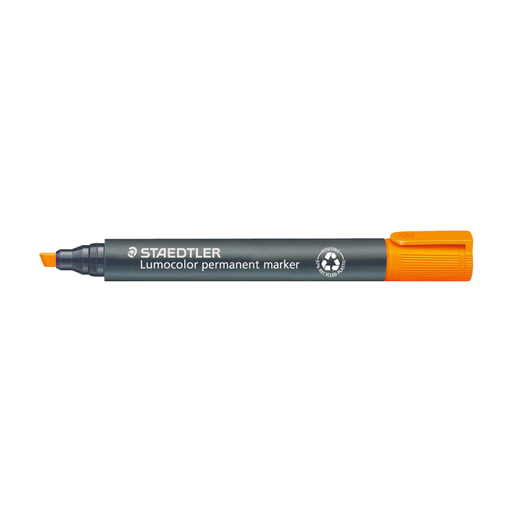
Why this product suits this profile: The orange ink is suitable for highly visible markings. The 2–5 mm chisel tip allows broad strokes and narrower lines with the same nib.
The variable chisel tip reduces the need for several markers with different widths. A test should be carried out first on delicate or porous materials.
2–5 mm synthetic tip, designed for glass, plastic, metal and wood; according to the product information, with DRY-SAFE technology.
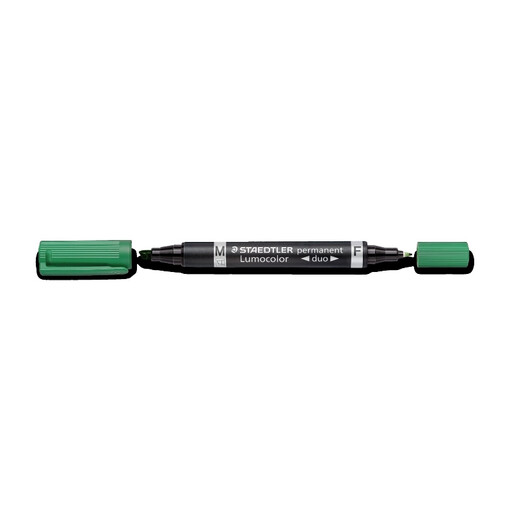
Why this product suits this profile: The combination of a 1.5 mm and 0.6 mm tip covers general lettering and more precise tasks, for example in the office, classroom or warehouse.
The two tips make it easy to understand the desired line width before buying. This helps avoid using an overly broad universal marker for small labels.
Two tips in one pen; according to the product information, permanent universal ink and smudge- and water-resistant markings once dry.
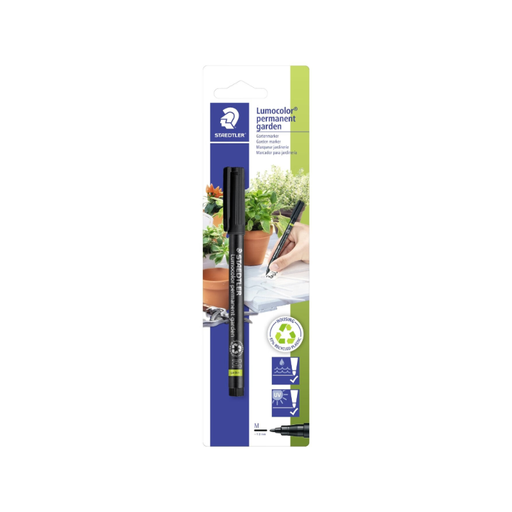
Why this product suits this profile: The version with a black 1.0 mm round tip is designed for plant labels, wooden sticks, ceramics and other outdoor materials.
Its weather- and light-resistant designation sets it apart from basic permanent markers, whose ink may lose legibility more quickly outdoors.
1.0 mm round tip; according to the product information, water-, smudge- and light-resistant ink for specified outdoor applications.
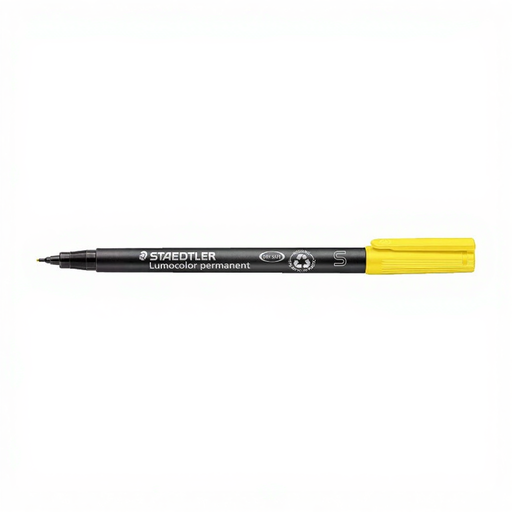
Why this product suits this profile: The superfine 0.4 mm tip is ideal for small lettering, fine lines and detailed work. The yellow colour can be used for colour coding.
The defined line width prevents small lettering from spreading when using a tip that is too broad. For the actual contrast, the marker colour should be tested on the intended surface.
Approx. 0.4 mm line width; according to the product information, quick-drying, permanent ink and DRY-SAFE properties.
We have put together a complete, regularly updated list of products that fully meet these strict selection criteria and the safety regulations applicable in the EU.
Permanent ink should not be applied to the skin and should not be used on food packaging. Keep caps and small parts away from children under three years of age. With solvent-based ink, adequate ventilation is advisable.
According to the product information, many STAEDTLER Lumocolor universal markers are designed for almost all surfaces, including glass, plastic and metal. Actual adhesion depends on the coating, dirt and material. A test should be carried out before making a permanent mark.
Quick-drying ink can reduce smudging while writing. Models with an F or S tip also make it easier to create controlled, narrow lines. The actual drying time depends on the amount of ink applied, the surface and the room climate.
Its service life depends on the amount of writing, stress on the tip, cap closure and storage. With suitable refill systems, a refillable permanent marker can be used for longer than a disposable model. According to the relevant product testing, DRY SAFE can limit drying out when the pen is left uncapped, but it does not replace closing the marker after use.