
Lieferung heute & morgen

Qualitätsgarantie

Willkommens-Angebote freischalten: KOSTENLOSE Lieferung | Bis zu 80 % RABATT | Kostenlose 30-Tage-JoyPlus-Testphase
App herunterladen
A marker needs to do more than produce vivid colour. What matters is whether the ink suits the surface, the line width is right for the task and the pen is reliable and easy to handle day to day. If you choose based on colour or a low price per pen alone, you may end up buying twice.
Three common mistakes to avoid:
The type of ink determines how easily you can change a mark.
A STAEDTLER permanent marker uses quick-drying, smudge-resistant ink. Depending on the model, it may be suitable for paper, glass, plastic, metal, wood or film. Check the surface before use, as permanent ink can be difficult to remove without leaving traces on porous materials.
A STAEDTLER non-permanent marker is designed for temporary marks. On the Lumocolor models mentioned here, the ink can be wiped off film with a damp cloth. This makes them useful for overhead projections, presentation film, glass surfaces and certain whiteboard applications. However, “non-permanent” does not automatically mean that every surface will be left completely clean.
The stated line width is a useful way to compare markers:
A Lumocolor fineliner with a 0.4 mm tip is not the same as a broad fibre-tip marker. If you’re writing in a confined space, choose one with a synthetic precision tip. For school, journalling and colour-coded notes, a STAEDTLER Triplus Fineliner with a 0.3 mm tip or a Triplus Color with a 1.0 mm tip may be a better fit.
The description “marker for almost all surfaces” suggests a wide range of uses, but it doesn’t replace testing the marker on the material itself. Glass, plastic, metal and coated film all react differently to ink. Before making a permanent mark, test it on an inconspicuous area.
For a waterproof marker, make sure the surface is clean, dry and free from grease. For a water-soluble marker, a soft, damp cloth is a better choice for cleaning film than an abrasive cleaner. Replace the cap fully after use. DRY-SAFE can delay the ink drying out if the cap is left off, but it’s no substitute for careful storage.
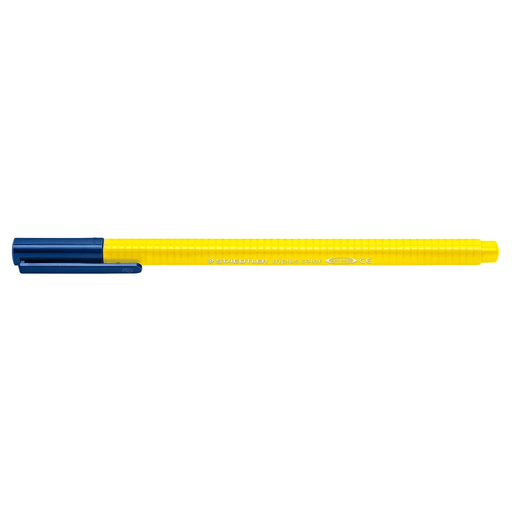
Why this product suits you: The yellow, water-based ink and 1.0 mm tip are ideal for school, studying, colourful notes and creative paper projects.
The washable, water-based ink is a more practical choice for paper projects than permanent ink. The clearly stated 1.0 mm line width also means you won’t expect it to produce fine lettering.
Triangular barrel, pressure-resistant synthetic tip and DRY-SAFE rating in accordance with ISO 554.
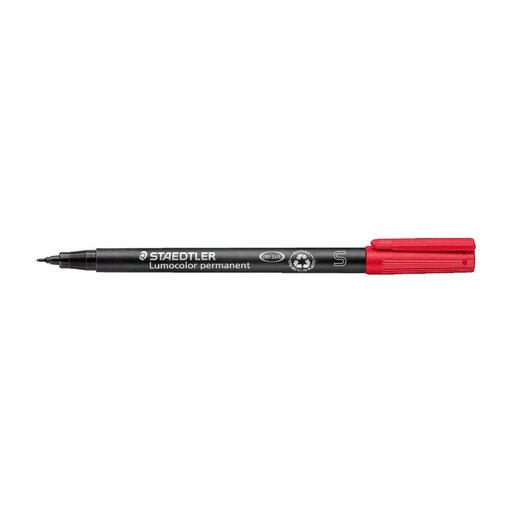
Why this product suits you: The permanent red ink and superfine synthetic tip are designed for precise labelling on a wide range of non-absorbent surfaces.
The line width of around 0.4 mm is clearly stated. That makes it less likely you’ll use a broad permanent marker for small labels or technical details.
Quick-drying, virtually odourless ink, DRY-SAFE technology and refillable using Station 487 17.
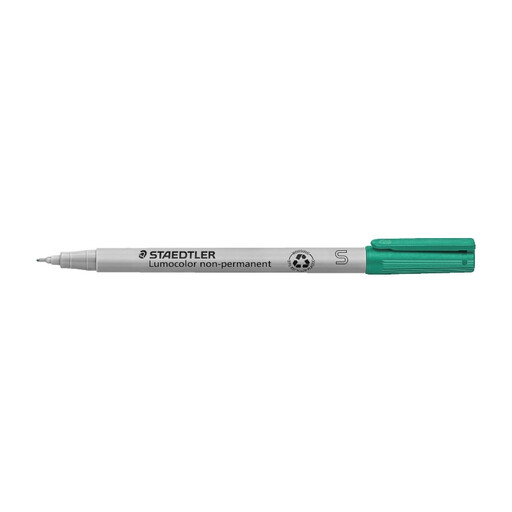
Why this product suits you: The water-soluble green ink offers a temporary alternative for presentation film, laboratory labelling and reusable markings.
The non-permanent label and the claim that it can be wiped off film with a damp cloth clearly distinguish it from permanent ink.
Around 0.4 mm line width, instant-drying ink and refillable using Station 487 15.
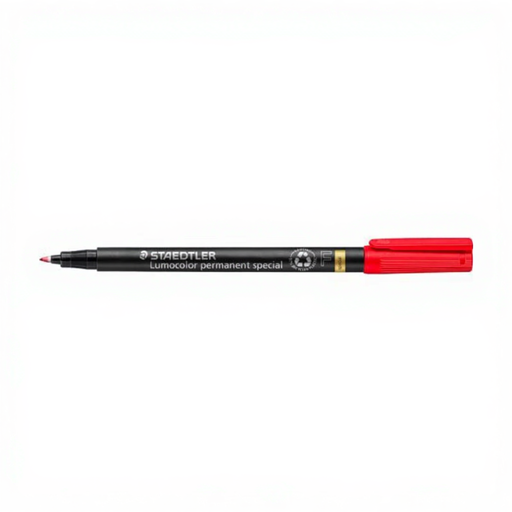
Why this product suits you: Its fine tip and stated suitability for coated surfaces, optical glass and laboratory glassware make it a good choice for specialist labelling tasks.
The product description sets this marker apart from standard fibre-tip pens and names specific specialist surfaces. That means you can choose based on what you need it for, not just its colour.
Water-resistant, smudge-resistant red ink and a barrel made from 97% recycled plastic, according to the product details.
A low-cost individual pen isn’t automatically the more economical choice. If you use it regularly, consider ink consumption, tip durability and whether it can be refilled. For occasional school or office tasks, washable fibre-tip pens with a 1.0 mm line may be enough. In a laboratory, workshop or office, a refillable marker can reduce the need to buy replacements.
The refill station must be compatible with the model. Station 487 17 is specified for certain permanent Lumocolor models, while 487 15 is for non-permanent versions. Before buying, check the ink type and compatible station in the product details.
We’ve put together a complete, regularly updated list of products that meet these strict selection criteria and fully comply with the safety regulations in force in the EU.
According to the product details, many Lumocolor models are suitable for glass or almost all surfaces. Permanent versions generally leave a more durable mark, while non-permanent ink can be wiped off suitable non-absorbent surfaces with a damp cloth. Test it on a small area first.
For small labels, 0.4 mm or 0.6 mm is usually a better choice than 1.0 mm. The right option depends on the viewing distance, the size of the area you’re labelling and how easy it needs to be to read.
Replace the cap firmly after each use. Storing many types of marker horizontally can help maintain an even flow of ink. If you have a refillable model, make sure you use the correct refill station.