
Lieferung heute & morgen

Qualitätsgarantie

Willkommens-Angebote freischalten: KOSTENLOSE Lieferung | Bis zu 80 % RABATT | Kostenlose 30-Tage-JoyPlus-Testphase
App herunterladen
A STAEDTLER Lumocolor marker can be used for labelling in the office, presentations, technical drawings, craft projects or marking in the garden. However, the ranges differ significantly in ink, tip shape and the surfaces they’re designed for. If you choose by colour or price alone, it’s easy to end up with a marker that smudges on your material, bleeds through paper or quickly loses legibility outdoors.
A permanent marker typically adheres to smooth, non-absorbent surfaces such as glass, metal, plastic or film. On untreated wood, textiles or porous paper, the ink can soak in and later be difficult to remove. Before you do larger-scale labelling, test adhesion on an inconspicuous spot.
A marker with a chisel tip can produce several line widths, but it needs more space for small labels. For cables, technical sketches, files or narrow labels, a marker with a fine tip is usually a better fit. The labels S, F, M and B at STAEDTLER give an important clue to line width.
A permanent marker is designed for smudge- and water-resistant marks. A Lumocolor flipchart marker, by contrast, uses water-based ink for paper and presentation surfaces. Depending on the product, this can be easier to remove from certain materials. Metallic markers, meanwhile, are often intended for decorative use and aren’t equivalent to a waterproof marker.
The tip determines how precise or prominent your labelling will be:
A fine tip can wear out faster on rough surfaces. For warehouses, workshops or the garden, durable tips and a sufficiently visible line width matter.
Models from the Lumocolor Permanent range are suitable for glass, metal, plastic, overhead transparencies and many smooth materials. The product details mention quick-drying, virtually odourless ink as well as smudge- and water-resistance on many surfaces. Actual suitability still depends on the material, cleaning method and length of use.
A universal marker for almost all surfaces is not automatically right for permanent outdoor marking. UV exposure, rain and temperature changes place different demands. For plant labels, terracotta pots or wooden stakes, a dedicated garden marker is more appropriate.
A refillable marker can reduce repeat purchases if you use it regularly. According to the product description, several Lumocolor Permanent models are compatible with the STAEDTLER refill station 487 17. The DRY SAFE feature on these models is tested to ISO 554 and is designed to delay drying out for several days even with the cap left off. You should still replace the cap firmly after use.
For flipchart and metallic markers, refer to each specific model’s information. Don’t assume a refill function transfers from one range to another.
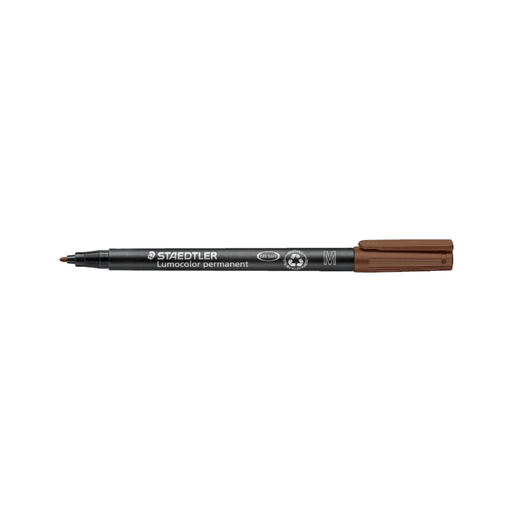
Why this product suits the profile: The medium tip at about 1,0 mm is suitable for general labelling on paper, glass, metal, plastic and films.
The clearly stated line width helps prevent choosing a marker that’s too broad for standard labels. The permanent ink is intended for smooth surfaces.
About 1,0 mm line width, quick-drying and virtually odourless permanent ink, refillable according to the product information.
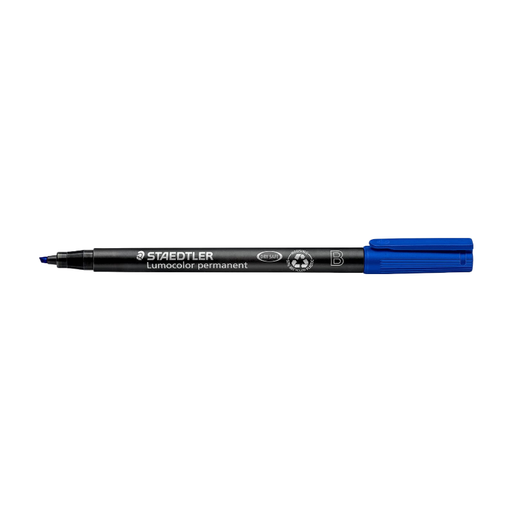
Why this product suits the profile: According to the product information, the chisel tip offers about 1,0 and 2,5 mm lines, making it suitable for technical labelling as well as clearly visible markings.
The two usable line widths reduce the need for separate markers for narrow and wide labelling. The surface should be clean and dry beforehand.
Chisel tip approx. 1,0/2,5 mm, DRY SAFE to ISO 554 and refill option with station 487 17.
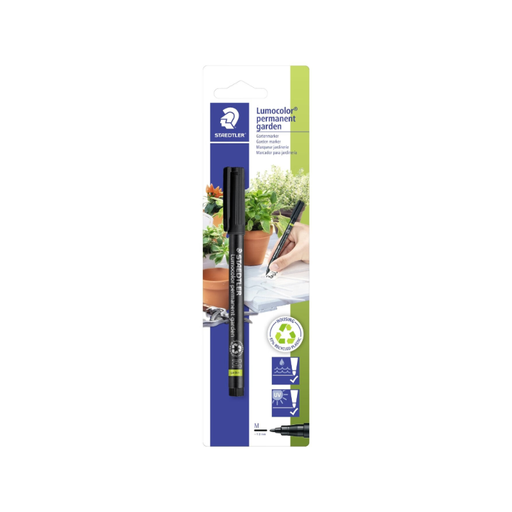
Why this product suits the profile: For gardeners and hobby users, the focus on plant labels, wood, ceramics, metal and other outdoor materials is highly relevant.
The product details cite weather- and light-resistance. That makes it a better fit for outdoor marking than a standard office or flipchart marker.
Black ink with claims of weather- and light-resistance, medium tip with about 1,0 mm line width.
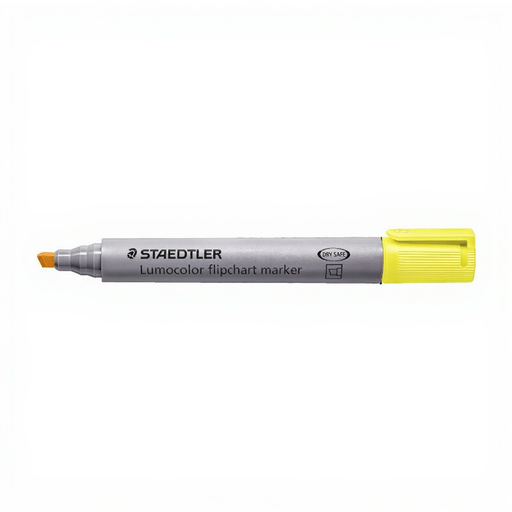
Why this product suits the profile: The water-based ink and variable chisel tip of about 2,0 to 5,0 mm are designed for paper flipcharts, teaching and meetings.
Its focus on flipchart paper prevents you from selecting a permanent ink for presentations. The protected tip is designed for frequent use.
Water-based, low-odour ink, 2,0–5,0 mm line width and DRY SAFE according to the product description.
We’ve put together a complete, continuously updated list of products that fully meet these strict selection criteria and EU safety regulations.
For decorative work on dark paper, metallic markers with a round tip are a good option. According to the product information, the STAEDTLER Metallic Marker Green is water-based with a line width of about 1 to 2 mm. Before using on glass or mirrors, check whether the ink can be removed with a damp cloth.
For very small labelling, Lumocolor models with 0,4 mm or 0,6 mm are suitable. For specific smooth materials such as coated surfaces, optical glass or laboratory glassware, the Lumocolor Permanent Special Marker with a 0,6 mm tip is intended. Again, a test mark is advisable before the actual application.
According to the product information, the Permanent models are intended for many smooth surfaces such as glass, plastic, metal and films. Before permanent labelling, test the marker in an inconspicuous place. Removal can be difficult depending on the material and cleaner.
Service life depends on frequency of use, line width, surface and storage. Models with DRY SAFE can, according to the information, be left uncapped for several days without drying out. This does not imply a fixed shelf life. Refillable models can be used repeatedly with the matching refill station if you use them regularly.
For flipcharts, a Lumocolor flipchart marker with water-based ink makes more sense than a permanent marker. A round 2 mm tip is suitable for even handwriting; a chisel tip of about 2 to 5 mm enables visible headings and broader marks.