
Lieferung heute & morgen

Qualitätsgarantie

Willkommens-Angebote freischalten: KOSTENLOSE Lieferung | Bis zu 80 % RABATT | Kostenlose 30-Tage-JoyPlus-Testphase
App herunterladen
Anyone looking for a STAEDTLER Lumocolor Non-Permanent Marker typically wants to mark temporarily, make clean corrections and choose from different line widths. Teachers label OHP transparencies, students organise study materials, office teams use glass surfaces or presentation transparencies, and technical users need clearly visible lines on smooth surfaces.
However, the product name alone is not enough to make the right choice. The key factors are the tip, ink type, surface and how the marking is intended to be removed.
A water-soluble marker can generally be removed from smooth, non-absorbent surfaces with a damp cloth. Examples include glass, plastic, laminated films and many whiteboards. On paper, cardboard, textiles, untreated wood or wallpaper, however, the ink can soak in and leave stains.
The marker should therefore be tested on an inconspicuous area before first use. Coated plastic surfaces in particular may react differently depending on their finish.
A marker with a 0.4 mm tip is suitable for small labels, technical sketches and fine details. For everyday notes, a marker with a 0.6 mm tip offers better visibility without writing too broadly. A model with a 1.0 mm tip is ideal for clearly legible labelling. The 1.0 to 2.5 mm chisel tip allows both narrow and bold lines, depending on the angle.
Anyone writing on a presentation transparency viewed from a distance should therefore not automatically choose the finest tip.
The Lumocolor Non-Permanent range is described as using water-soluble ink with a quick-drying formula. This helps reduce smudging while writing. Removal, however, generally still requires a damp cloth. A dry whiteboard cloth may not remove the marking completely, as this is not conventional dry-erase whiteboard ink.
A wipe-clean marker, also known as an OHP marker, should be selected according to the intended surface. The STAEDTLER Lumocolor models described in the product data use water-soluble ink and, according to the product description, are suitable for almost all smooth surfaces. These include:
On suitable surfaces, the ink can be removed with a damp cloth. Removal is not guaranteed on absorbent materials.
The designations provide useful guidance:
A marker for presentations should remain clearly legible from the usual viewing distance. For diagrams and transparencies with limited space, a fine tip may be more suitable than a broad all-purpose marker.
According to the product data, several of the listed models are compatible with the STAEDTLER Refill Station 487 15. Individual listings may specify a different station number. It is therefore advisable to cross-check the relevant product page and manufacturer information before refilling.
For a consistent ink supply, the marker should be capped securely after use and stored horizontally whenever possible. The polypropylene barrel and cap are designed for regular use. A refill option can reduce the need to replace the entire marker, but it requires the correct refill station.
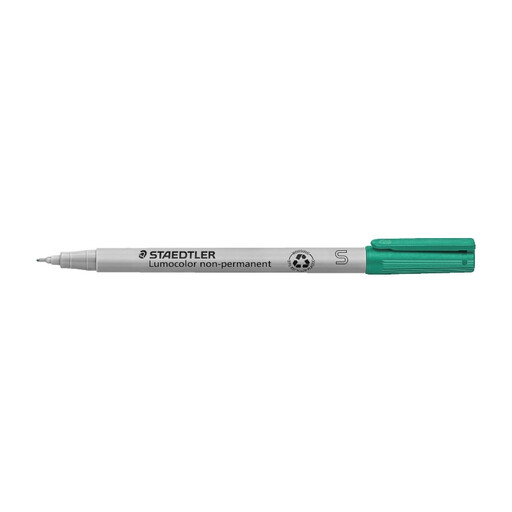
Why is this model a good fit? The fine tip is ideal for smaller labels on transparencies, plastic folders and smooth organisational surfaces.
The approximately 0.4 mm line width is clearly specified. This helps prevent choosing a marker that is too broad for small surfaces.
Water-soluble ink, damp removal from transparencies according to the product description, polypropylene barrel and refill compatibility with Station 487 15 according to the supplier.
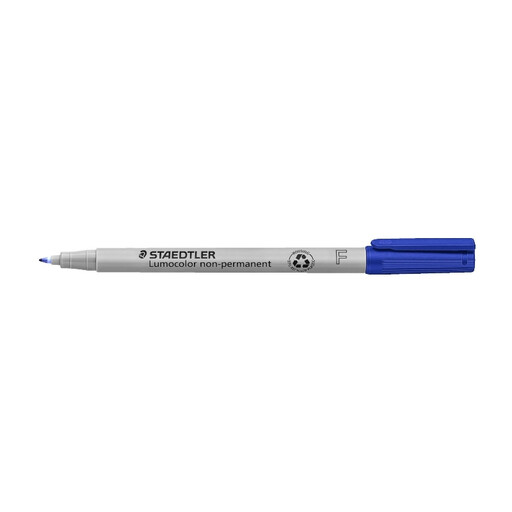
Why is this model a good fit? The F tip strikes a balance between precision and visible line definition for lessons, meetings and transparencies.
The 0.6 mm specification prevents choosing based on colour alone. The line remains easy to control for small diagrams.
Blue, water-soluble ink, quick drying, damp-wipeable on suitable smooth surfaces and refillable according to the product data.
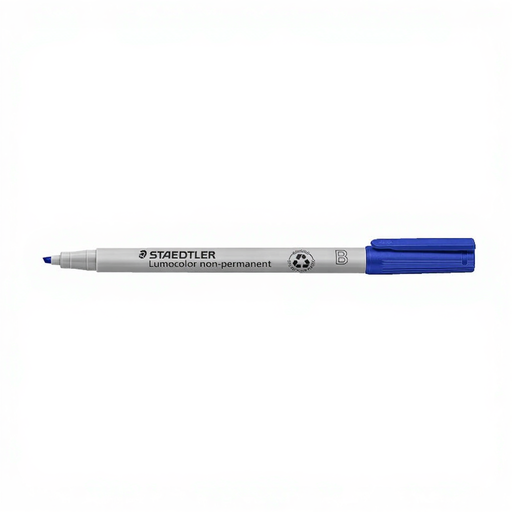
Why is this model a good fit? The chisel tip produces highly visible markings for presentations, transparencies and temporary notes on glass or plastic.
The variable width works for both broad and narrow lines. This eliminates the need for a second marker for every line thickness.
Chisel tip of approximately 1.0/2.5 mm, water-soluble ink, damp removal from non-porous surfaces and refill option according to the product description.
STAEDTLER Lumocolor markers in different colours make visual organisation easier. Blue and black are suitable for general notes, while red works well for corrections or priorities. Green, yellow, orange, brown and purple can complement diagrams, timetables or laboratory organisation.
With lighter colours, check before buying whether the desired visibility is suitable for the projection surface or glass background. Models with a 0.4 or 0.6 mm tip are better for very small details. For headings and presentation markings, a B marker with a chisel tip offers greater flexibility.
The models described as aircraft-safe markers reportedly feature an automatic pressure-equalisation system that is designed to prevent leakage during flights, according to the manufacturer or product information. When travelling, it is still advisable to keep the cap securely closed and store the marker in a separate pouch.
Browse the complete selection to compare the available products by colour, tip shape and intended application.
On smooth, non-porous surfaces, the water-soluble ink can be removed with a damp cloth according to the product description. With coated plastic, older whiteboards or unfamiliar surfaces, test a small inconspicuous area first. On paper and textiles, the ink may remain permanently visible.
For detailed notes, 0.4 mm or 0.6 mm are suitable choices. A 1.0 mm tip is ideal for clearly legible standard writing. If you need different line widths on a single transparency, choose a marker with a 1.0/2.5 mm chisel tip.
The cap should click fully into place after every use. Storing the marker horizontally can help maintain an even ink supply. When the ink begins to fade, use the compatible refill station specified on the product page. Check the station number and model designation before buying, as the details may vary between listings.