
Lieferung heute & morgen

Qualitätsgarantie

Willkommens-Angebote freischalten: KOSTENLOSE Lieferung | Bis zu 80 % RABATT | Kostenlose 30-Tage-JoyPlus-Testphase
App herunterladen
Anyone looking to buy a STAEDTLER Lumocolor non-permanent marker is usually seeking a combination of precise lines, water-soluble ink and dependable wipeability. Whether you are using it in the office, classroom, at university or for presentations, colour is not the only consideration. It is important to choose the right line width, surface compatibility and ink type for the intended use.
A water-soluble marker can usually be removed from smooth, non-absorbent surfaces with a damp cloth. Examples include OHP transparencies, glass, certain plastics and laminated materials. On paper, card, textiles, wallpaper or untreated wood, however, the ink may soak in and leave stains.
The surface should therefore be tested in an inconspicuous area before first use. An erasable marker is not automatically suitable for every type of material.
According to the available product information, Lumocolor ink dries immediately or within a few seconds on the surface. This helps to reduce smudging while writing. However, this does not indicate how resistant the marking is to water or condensation. If it comes into contact with water, water-soluble ink may smudge again.
A marker with a line width of 1,0 to 2,5 mm is suitable for headings, diagrams and clearly visible presentation notes. For small labels on transparencies, plastic folders or planning boards, however, a 0,4 mm marker or 0,6 mm marker is easier to control. Choosing the wrong tip often results in lettering that is difficult to read or takes up too much space.
A universal marker or OHP marker should be suitable for the specific surface. According to the product information, STAEDTLER Lumocolor Non-Permanent variants are designed for almost all smooth surfaces, including transparencies, glass and plastic. The ink is water-soluble and can be removed from transparencies and non-porous materials with a damp cloth.
These products are not intended for permanent labelling. If you need markings to remain visible for longer periods outdoors or on absorbent materials, consider a permanent marker instead.
The stated line width is a guideline. The writing angle, pressure and condition of the surface can affect the actual appearance of the lettering.
Several Lumocolor variants are compatible with a STAEDTLER refill station. The product information frequently lists refill station 487 15; for some M models, 487 17 is specified. You should therefore check compatibility for the specific model before buying.
After use, the cap must be closed fully and securely until you hear it click. This protects the tip from drying out. Storing the marker horizontally or in its original packaging can help maintain an even distribution of ink. The polypropylene barrel and cap are designed for regular use. Nevertheless, the ink can stain textiles and porous surfaces.
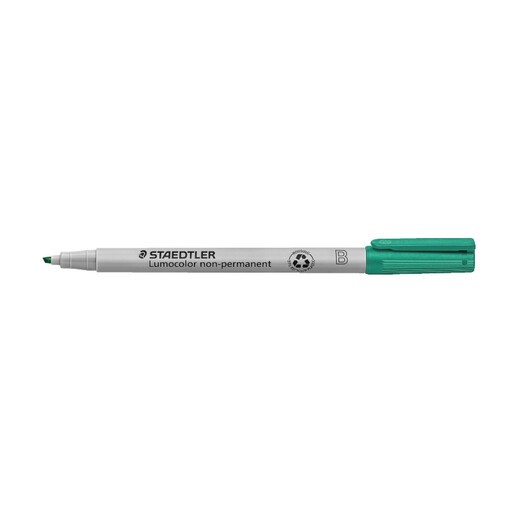
Why this product suits this profile: The variable chisel tip handles both narrower and broader markings with a single pen. This is practical for occasional presentations, transparencies and labelling at university or in the office.
The line width is clearly specified. The water-soluble ink can also be removed from smooth, non-porous surfaces with a damp cloth.
Variable line width of approximately 1,0 to 2,5 mm, water-soluble ink and refill compatibility with station 487 15 according to the product information.
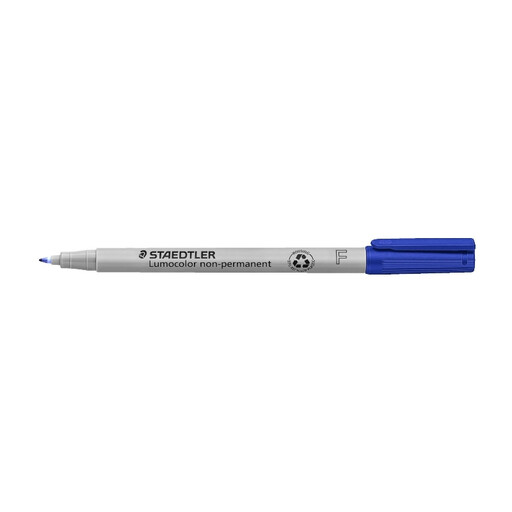
Why this product suits this profile: The fine synthetic tip supports controlled writing on transparencies, glass and transparent plastic surfaces. The blue colour is well suited to structured presentation notes and labelling.
The defined F tip of approximately 0,6 mm prevents small labels from losing clarity because of an overly broad marking.
Water-soluble, erasable ink, an instant-drying design and refill compatibility with STAEDTLER 487 15 according to the product description.
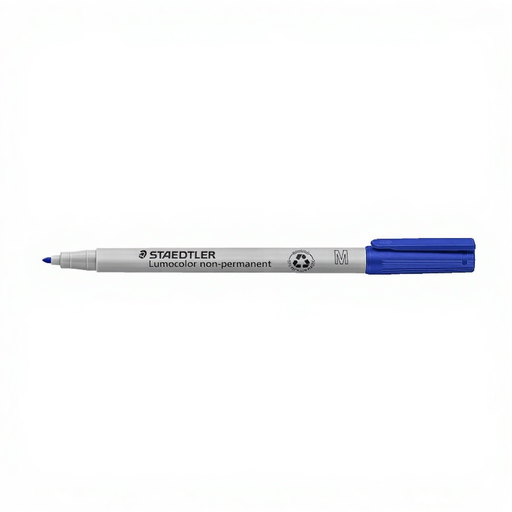
Why this product suits this profile: The medium tip is suitable for regular labelling in schools, businesses and event venues. Its stated air-travel safety may be relevant to people who frequently transport writing materials.
The product information clearly states the surface compatibility, ink type and line width. This makes it easier to choose than a vaguely described universal marker.
Medium tip of approximately 1,0 mm, vivid colour, ink that can be wiped off with a damp cloth on suitable surfaces, and a refill option according to the model information.
We have put together a complete, regularly updated list of products that fully meet these strict selection criteria and the safety regulations applicable in the EU.
According to the product information, the water-soluble ink can be removed from smooth, non-porous surfaces with a damp cloth. Results may vary on coated or textured plastic. Testing the marker in an inconspicuous area is recommended.
For detailed notes, approximately 0,4 mm or 0,6 mm is suitable. For headings, diagrams and clearly visible presentation markings, 1,0 mm to 2,5 mm is a good choice. The right option depends on the viewing distance and the space available on the transparency.
There is no standard usage period. It depends on how much you write, how the marker is stored, whether it is properly capped and the surface used. A refillable marker can last longer than a disposable product with proper care, provided the appropriate STAEDTLER refill station is available. The cap should be closed securely after every use.