
Lieferung heute & morgen

Qualitätsgarantie

Willkommens-Angebote freischalten: KOSTENLOSE Lieferung | Bis zu 80 % RABATT | Kostenlose 30-Tage-JoyPlus-Testphase
App herunterladen
A STAEDTLER Lumocolor Non-Permanent Marker is designed for anyone who needs to write temporarily on smooth surfaces: teachers using overhead projectors, office workers giving presentations, laboratory staff making temporary markings, students and technical draughtspeople. It’s not just the colour that matters, but the combination of line width, erasability, drying time and refillability.
A water-soluble marker can generally be removed from non-absorbent surfaces such as glass, plastic, transparencies and smooth whiteboards with a damp cloth. However, the ink can soak into paper, card, textiles or untreated wood and remain visible. If you need a marker for different locations, check the surface first.
A fine marker with a 0.4 mm or 0.6 mm tip is suitable for small labels and technical details. For headings, diagrams or markings that need to be legible from further away, a broader tip is more practical. A chisel tip of around 1.0 to 2.5 mm offers more flexibility, but requires a controlled hand.
STAEDTLER’s product information describes the ink in Lumocolor models as quick-drying or instant-drying. This helps reduce smudging as you write. However, the ink remains water-soluble and can be removed with moisture. A non-permanent marker is therefore not intended for permanent markings, outdoor use or damp environments.
The tip determines how legible and precise your writing will be:
If you mainly write on overhead projector transparencies, a fine tip is often a good choice. For whiteboards, plastic wallets or presentation transparencies viewed from further away, a medium or variable line width may be more suitable.
An erasable marker or transparency pen should be tested on the surface you intend to use it on. According to the product information, the ink can be removed from smooth glass, plastic and transparencies with a damp cloth. Before using it regularly, test it on an inconspicuous area, especially on coated plastics or delicate surfaces.
A universal marker is handy, but that doesn’t mean it will behave in exactly the same way on every surface. “Suitable for almost all smooth surfaces” shouldn’t be confused with lasting adhesion to porous materials.
Models compatible with the STAEDTLER refill station 487 15 can be refilled when they run out of ink. This extends their useful life and can reduce the number of replacements you need to buy if you use them regularly. After use, make sure the cap clicks shut. This helps prevent the tip from drying out.
Proper storage is important for a consistent ink supply. If you won’t be using the marker for a while, close it as directed in the product information and keep it away from direct heat and strong sunlight.
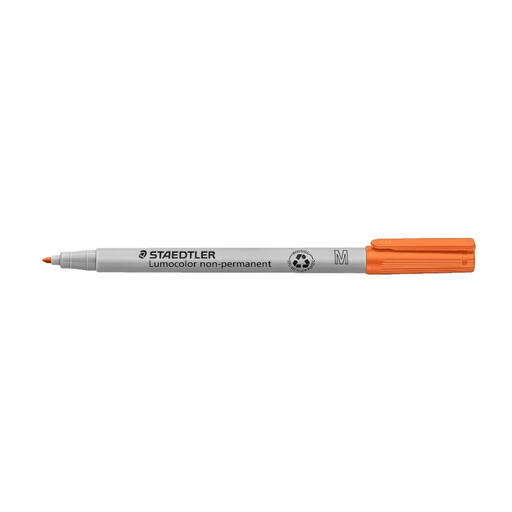
Why it suits this user: The medium tip, around 1.0 mm wide, is designed for general writing on transparencies, glass and plastic, making it suitable for a range of everyday tasks.
The medium line width avoids the limitations of an ultrafine tip. According to the product information, the water-soluble ink can be wiped off smooth surfaces with a damp cloth.
Synthetic tip, approx. 1.0 mm wide; water-soluble orange ink; refillable with STAEDTLER 487 15.
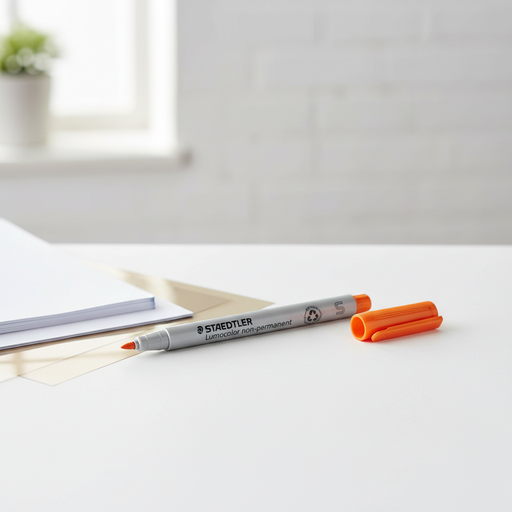
Why it suits this user: The superfine tip is ideal for precise writing where controlled lines matter more than broad markings.
The metal-encased 0.4 mm tip is designed for fine lines, helping you avoid writing too broadly by mistake when working on details.
Superfine line width of approx. 0.4 mm; designed for OHP transparencies, clear plastic wallets, glass and smooth whiteboards.
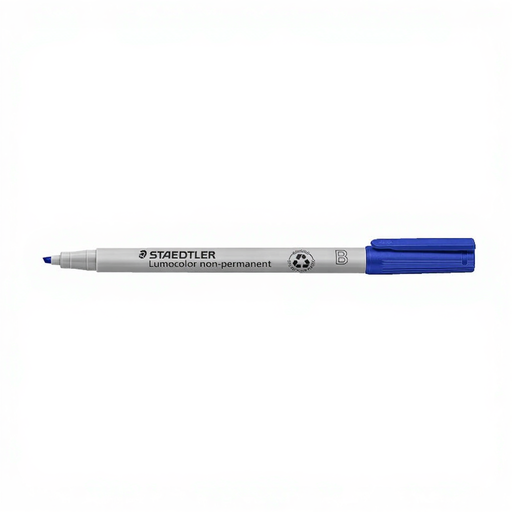
Why it suits this user: The chisel tip offers variable line widths, making it suitable for presentations, teaching, organising a laboratory and frequent changes of marking task.
The variable tip isn’t a substitute for several precision pens, but it gives you two useful line widths in one marker. It can be wiped off smooth, non-porous surfaces.
Chisel tip, approx. 1.0 to 2.5 mm; refillable with 487 15; water-soluble ink for transparencies, glass and plastic.
We’ve put together a complete, regularly updated list of products that meet these strict selection criteria and fully comply with the safety regulations in force in the EU.
According to the product information, the models listed are designed for smooth surfaces such as glass, plastic and overhead projector transparencies. The ink should be removable with a damp cloth. It’s a good idea to test it on an inconspicuous area before using it for the first time.
A 0.4 mm marker is often a good choice for small writing and technical details. A 0.6 mm transparency pen offers a little more visibility. For larger markings or presentations, consider models with a 1.0 mm to 2.5 mm tip.
Close the cap fully after every use. Refillable models can be topped up using the STAEDTLER refill station 487 15 specified for that model. You should also protect the marker from heat, direct sunlight and prolonged exposure to moisture.