
Lieferung heute & morgen

Qualitätsgarantie

Willkommens-Angebote freischalten: KOSTENLOSE Lieferung | Bis zu 80 % RABATT | Kostenlose 30-Tage-JoyPlus-Testphase
App herunterladen
Whether in the office, warehouse, lecture hall, or laboratory, the requirement for a good marker is always the same: it must perform reliably. A pen that dries out at a crucial moment, smudges on the surface, or bleeds through the paper is more than just an annoyance; it can disrupt workflows and compromise professional results. Selecting the right writing instrument for a specific task is therefore an important detailed decision.
The Staedtler Lumocolor pens product line offers a variety of models designed for different areas of application. This article serves as a guide to help you understand the features of the various markers and make an informed choice for your needs. We present objective criteria and a selection of models suitable for specific tasks in a professional environment.
To find the right pen, three key features should be considered: the ink, the tip, and the intended surface.
The composition of the ink determines whether the writing is permanent or temporary.
The shape and size of the tip define readability and the intended use.
Some Lumocolor models are equipped with DRY SAFE technology. According to the manufacturer STAEDTLER, these pens can be left uncapped for days without drying out (tested according to ISO 554). This feature is particularly advantageous in fast-paced environments such as workshops, logistics centres, or during presentations, where immediately replacing the cap is not always possible.
Here is a selection of Lumocolor models designed for specific professional requirements.
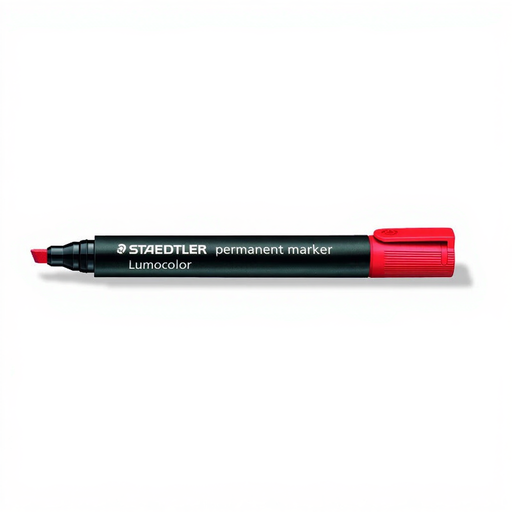
Why it stands out: This permanent marker is a versatile tool for durable markings. Its ink adheres to almost all surfaces and, thanks to the DRY SAFE technology, remains ready for use even when left uncapped.
Advantages:
Who it's for: Users in logistics, industry, and offices who need a robust and versatile marker for permanent labelling on a wide variety of materials.
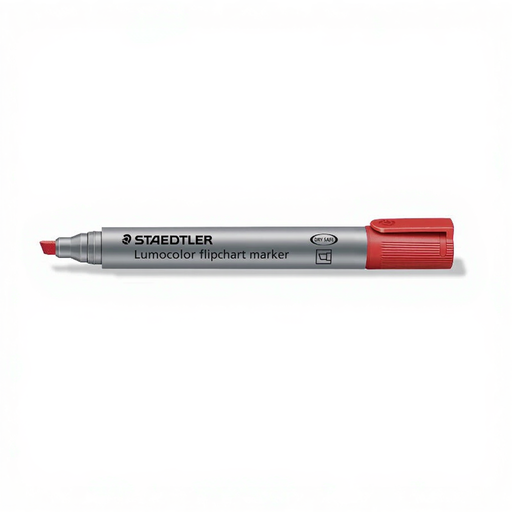
Why it stands out: This flip chart marker was specifically developed for presentations on paper. Its ink does not bleed through, ensuring that subsequent pages of the pad remain clean.
Advantages:
Who it's for: Teachers, lecturers, presenters, and anyone who regularly writes on flip charts or presentation boards and values a clean script.
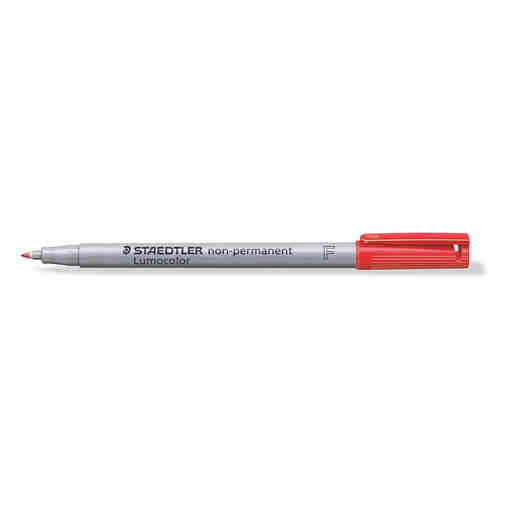
Why it stands out: As a wipeable transparency pen with a fine tip, this model is ideal for temporary, precise markings on smooth surfaces.
Advantages:
Who it's for: Users in educational institutions for overhead transparencies, in the office for rewritable planning boards, or in industry for temporary markings on components.
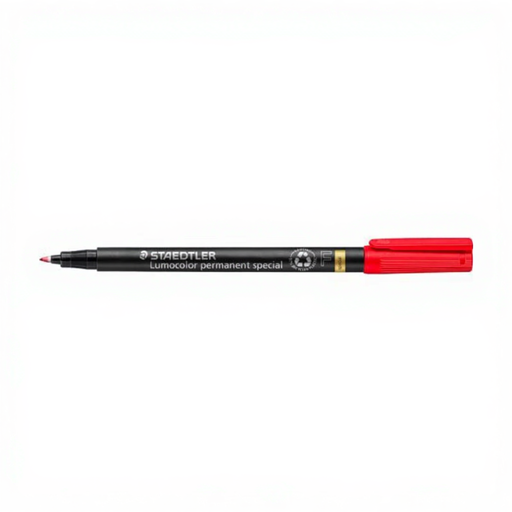
Why it stands out: This speciality marker is designed for surfaces where other permanent markers fail to adhere. According to the manufacturer, its barrel is also made from 97% recycled plastic.
Advantages:
Who it's for: Professionals in laboratories, the optics industry, or technical fields who require reliable, permanent marking on demanding, smooth materials.
The Lumocolor series includes numerous other colours, line widths, and speciality pens. If the models presented here do not exactly meet your requirements, you may find the right product in our broader selection.
Discover more options in our category for pens with a red tip.
1. Are Staedtler Lumocolor pens refillable? Yes, many models in the Lumocolor series are refillable. You can tell if a pen is refillable by checking the product description. There are specific refill stations for permanent markers, non-permanent pens, and flip chart markers that allow for easy and clean refilling.
2. What does the DRY SAFE technology in Lumocolor markers mean? DRY SAFE is a technology developed by STAEDTLER. According to the manufacturer, it prevents the ink from drying out even if the pen is left uncapped for several days (tested according to ISO 554). This increases the marker's lifespan and readiness for use.
3. How can the ink from a Lumocolor permanent marker be removed? The ink of permanent markers is designed for permanent adhesion. On smooth, non-porous surfaces like glass or metal, the ink can often be removed with alcohol-based solvents (e.g., isopropanol). On porous materials like paper or untreated wood, complete removal is generally not possible. It is recommended to test the compatibility of the cleaning agent on an inconspicuous area first.