
Lieferung heute & morgen

Qualitätsgarantie

Willkommens-Angebote freischalten: KOSTENLOSE Lieferung | Bis zu 80 % RABATT | Kostenlose 30-Tage-JoyPlus-Testphase
App herunterladen
Whether in the office, workshop, garden, or for creative projects, the requirement for a permanent marker is clear: the writing must be reliable and long-lasting. However, not every pen is suitable for every surface. A mark that holds perfectly on paper might smudge on glass or fade outdoors due to UV radiation. The STAEDTLER Lumocolor Permanent series offers specialised solutions for a wide variety of applications.
This article serves as a guide to help you find the right Lumocolor pen for your specific needs. We will introduce various models and explain which features are crucial for different materials.
The choice of the right pen depends on three key factors: the surface, the environmental conditions, and the desired line width.
The fundamental distinction is between porous (absorbent) and smooth (non-absorbent) surfaces. While an all-surface universal pen works well on materials like cardboard, wood, and stone, smooth materials such as film, glass, or coated metals require a special ink formula to ensure adhesion without smudging. A specialised permanent film pen or a glass marker is often the more reliable choice here, as their ink is designed to adhere to the surface rather than beading up.
The term "permanent" can be interpreted differently depending on the requirements. For office use, it's often sufficient for a pen to be a waterproof and smudge-proof permanent marker. For outdoor labelling, such as on plant tags, additional UV and weather resistance is necessary. A weatherproof garden marker contains pigments that won't fade even in strong sunlight and rain. For archiving data on optical media, a CD marker is essential, as its ink does not damage the sensitive data layer.
The shape and size of the tip determine its potential applications. Fine tips (S or F) are suitable for detailed labelling in small spaces, such as on CDs or lab equipment. Chisel tips (B) allow for variable line widths for highlighting and headlines. Bullet tips (M) provide a consistent line and are highly versatile.
Based on the different areas of application, we have curated a selection of specialised STAEDTLER Lumocolor pens.
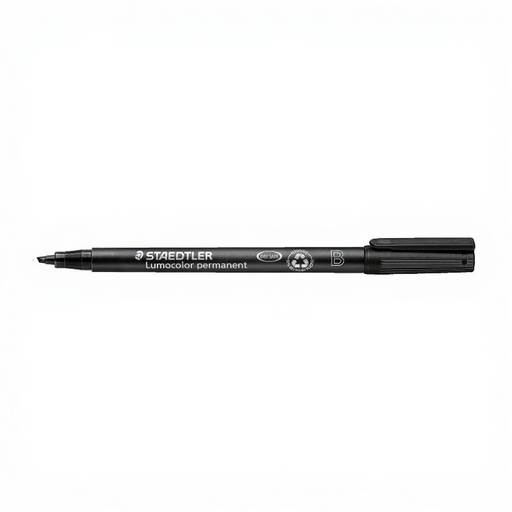
Why It Stands Out: This model is designed as a universal pen for almost all surfaces, including overhead transparencies. Its ink dries in seconds, making it especially practical for left-handers.
Advantages:
Who It's For: Ideal for use in the office, warehouse, and for general household tasks where flexible and reliable labelling on various materials like cardboard, plastic, and film is required.
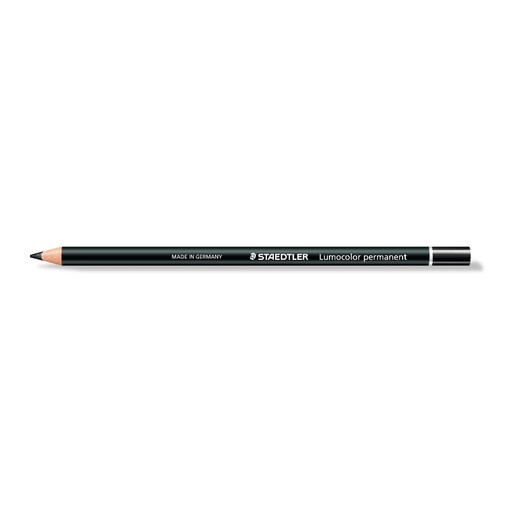
Why It Stands Out: Unlike liquid ink, the Glasochrom uses a wax-based lead. This adheres exceptionally well to smooth surfaces like glass, metal, and plastic without beading. At the same time, it is suitable for rough materials such as stone or wood.
Advantages:
Who It's For: A specialised tool for trades, industry, and laboratories. Perfect for marking components, glass vessels, tiles, or for opaque labelling on dark materials.
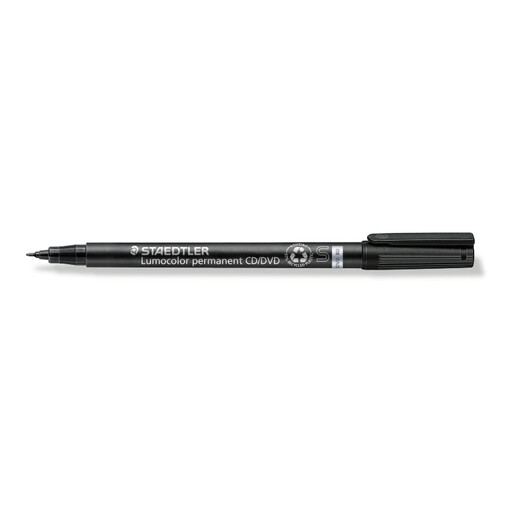
Why It Stands Out: This pen was specially developed for the safe labelling of CDs, DVDs, and Blu-ray Discs. Its ink does not attack the data storage layer, and the extra-soft tip prevents scratches.
Advantages:
Who It's For: Essential for archivists, photographers, musicians, and anyone who needs to catalogue digital data on optical media safely and permanently.
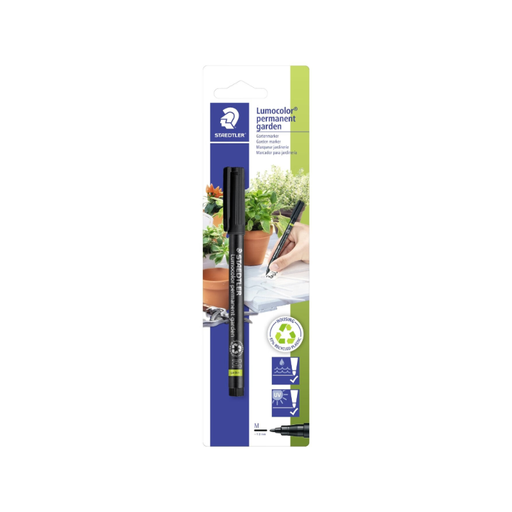
Why It Stands Out: This marker is designed for extreme outdoor conditions. Its ink is not only waterproof but also exceptionally lightfast and weatherproof to prevent fading from sun and rain.
Advantages:
Who It's For: The ideal solution for hobby gardeners, landscapers, and nurseries who need durable plant identification that remains legible for years.
The Lumocolor series includes many other STAEDTLER pens for various special applications. If you haven't found the right model in our selection or are looking for a different colour or line width, you can find more products in our category.
Discover the full range of Black Permanent Markers.
1. Is the STAEDTLER Lumocolor Permanent truly permanent on all surfaces? The term "permanent" means the ink is smudge-proof and waterproof on most surfaces. However, on smooth, non-porous surfaces like glass or porcelain, the marking can usually be removed with solvents such as alcohol or mineral spirits. On porous materials like paper or untreated wood, the ink soaks in and is then no longer removable.
2. What does the "DRY SAFE" technology mean? "DRY SAFE" is a technology developed by STAEDTLER. According to the manufacturer's specifications, based on the ISO 554 test, a pen with this feature can be left uncapped for several days without the tip drying out. This is particularly useful during interrupted workflows.
3. Can I use a Lumocolor permanent marker to label clothing? Although the ink is permanent, these pens are not designed as special fabric markers. The ink is not machine-washable and can bleed on fabric or fade over time. For permanent labelling of textiles, special laundry markers are recommended.