
Lieferung heute & morgen

Qualitätsgarantie

Willkommens-Angebote freischalten: KOSTENLOSE Lieferung | Bis zu 80 % RABATT | Kostenlose 30-Tage-JoyPlus-Testphase
App herunterladen
A STAEDTLER Lumocolor Permanent Marker should write permanently, dry quickly and perform reliably on different materials. In practice, however, the different versions vary considerably in tip shape, line width, colour and refill system. If you choose based only on colour or pack size, you may end up with a marker that’s too broad, too fine or unsuitable for the surface you want to use it on.
A permanent marker usually works particularly well on smooth, non-absorbent materials such as glass, plastic, metal and film. On porous surfaces such as untreated wood, textiles or paper, however, the ink can soak in and may not come off without leaving visible marks. If you’re writing on a delicate item, it’s best to test the marker on an inconspicuous area first.
Depending on the angle, a Lumocolor marker with a chisel tip can create lines of different widths. This is useful for headings, cardboard and clearly visible labels. For small labels, laboratory containers or technical notes, however, a fine tip of around 0.6 mm gives you more control. Choose a tip shape to suit the size of the writing you actually need.
A fast-drying marker helps prevent smudging, particularly if you’re left-handed. However, the ink may still contain volatile substances. Even a low-odour permanent marker should be used in a well-ventilated room and kept away from heat, naked flames and young children. Always follow the safety information on the packaging.
When choosing a marker, the stated line width is more useful than a general description such as “universal marker”:
The actual line width depends on factors including the writing angle, pressure and surface. If you regularly switch between detailed work and larger lettering, a dual-tip marker may be a good choice.
According to the product information provided, a waterproof marker with permanent ink is suitable for many smooth surfaces, including glass, plastic, metal, wood, stone and film. However, “waterproof” doesn’t mean that every mark will remain unchanged in all conditions. Friction, cleaning products, UV exposure and the nature of the material can all affect the result.
For glass and plastic, check that the ink is suitable for your specific application. For laboratory or industrial use, you’ll also need to consider cleaning methods and possible exposure to chemicals.
Several Lumocolor versions feature DRY SAFE technology, which is described as allowing the tip to remain uncapped for several days in accordance with ISO 554. This helps prevent the marker from drying out quickly, but doesn’t replace the need to cap it carefully after use.
A refillable marker can be topped up using a compatible STAEDTLER refill station. Make sure you choose a station that’s suitable for the specific product range. The product information lists stations including 487 17, 488 50 and 488 88. Even with refillable markers, you should close the cap until it clicks after use.
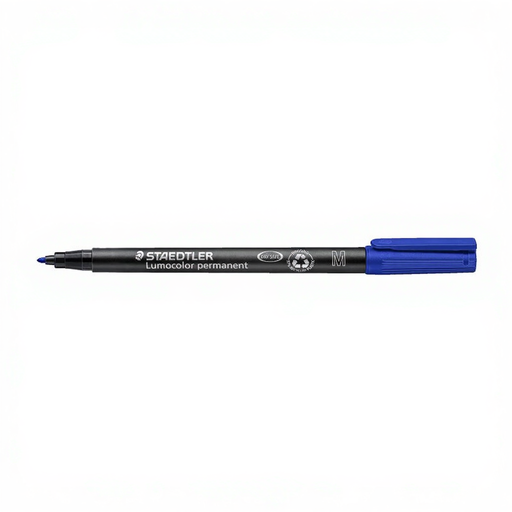
Why it suits this profile: The medium line width of around 1.0 mm is suitable for everyday writing at school, in the office and at home, without limiting you to a single specialist use.
The defined M tip avoids having to choose between very fine and very broad lettering. DRY SAFE technology and the refillable design help reduce the risk of the marker drying out quickly or needing to be replaced too soon.
Permanent, low-odour ink, an approximate line width of 1.0 mm, DRY SAFE technology and compatibility with refill station 487 17, according to the product information.
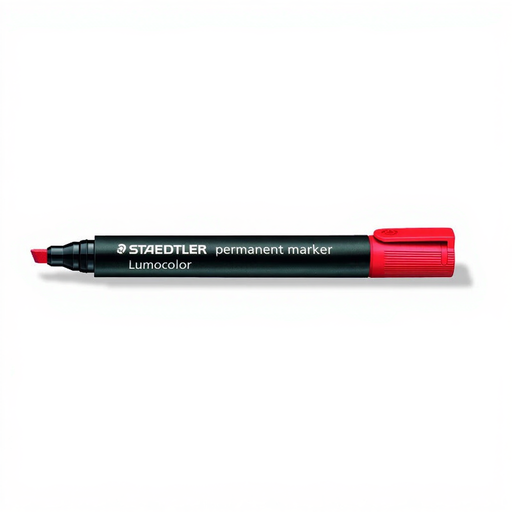
Why it suits this profile: The chisel tip offers two usable line widths, making it suitable for prominent writing in the office, warehouse, workshop or classroom.
The stated width of 2–5 mm gives you a clear idea of the mark to expect. The ink is described as fast-drying, smudge-proof and water-resistant; you should still test it on delicate materials first.
A 2–5 mm chisel tip, DRY SAFE technology, automatic pressure regulation for air travel and the option to refill using station 488 50, according to the product description.
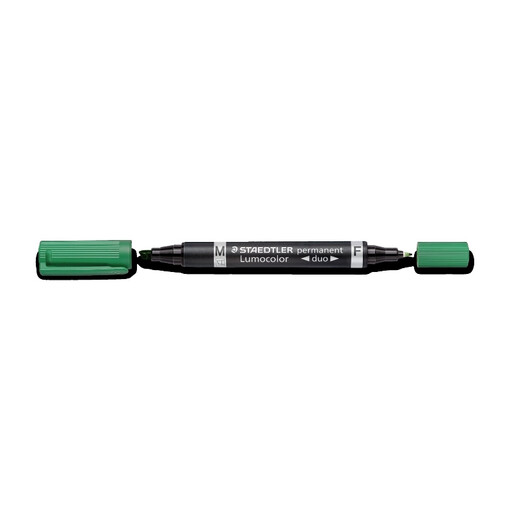
Why it suits this profile: The combination of an F tip of around 0.6 mm and an M tip of around 1.5 mm lets you use a single pen for both fine notes and medium-sized labels.
Instead of combining two unsuitable single-tip markers, you get two clearly defined tips in one. The ink is described as waterproof, weather-resistant and instant-drying.
Two line widths, DRY SAFE technology, refillable using station 488 88 and suitability for many smooth surfaces, according to the product information.
We’ve put together a complete, regularly updated list of products that meet these strict selection criteria and fully comply with the safety regulations in force in the EU.
For consistent results, make sure the surface is as clean and dry as possible, and free from grease. Glass, plastic and metal can often be cleaned with a suitable product that’s safe for the material. Before using the marker over a large area, allow the ink to dry completely.
These tips are also worth following:
According to the product information, many Lumocolor versions are designed for smooth surfaces such as glass, plastic, metal and film. However, adhesion and removability depend on the material, its coating and how it’s cleaned afterwards. It’s best to test the marker on an inconspicuous area first.
For fine writing and precise marks, a Lumocolor fine tip, 0.6 mm is usually a better choice than a broad chisel tip. An M tip of around 1.0 mm is a good option if you want your writing to be easy to read but not particularly small.
There’s no set lifespan that applies to every marker. It depends on the line width, writing pressure, frequency of use, surface and storage. With careful recapping and a compatible refill station, a refillable marker can last longer than a non-refillable model. Only top up the ink using the system designed for that marker.