
Lieferung heute & morgen

Qualitätsgarantie

Willkommens-Angebote freischalten: KOSTENLOSE Lieferung | Bis zu 80 % RABATT | Kostenlose 30-Tage-JoyPlus-Testphase
App herunterladen
A STAEDTLER Lumocolor Permanent Marker should make lasting marks, dry quickly and adhere reliably to a range of materials. In practice, though, the result depends on more than the brand. The tip shape, line width, surface and ink type all determine whether a permanent marker is right for the office, school, workshop, garden or creative projects.
That’s why it’s worth checking the technical details before you buy. You’ll avoid common buying mistakes and choose a marker that suits the job you have in mind.
Permanent ink usually adheres particularly well to smooth materials such as glass, plastic and metal. On porous surfaces, including untreated wood, cardboard and textiles, it can soak in deeply. In some cases, that means it may not be possible to remove it completely.
Even on smooth surfaces, “permanent” doesn’t mean absolutely impossible to remove. Depending on the material, suitable cleaning products such as alcohol may partially lift the mark. So test the marker on an inconspicuous area first.
A Lumocolor marker with a 0.4 mm, 0.6 mm, 1.0 mm or 2–5 mm tip is suited to a different purpose in each case:
A 2–5 mm chisel tip can produce lines of different widths by turning the marker. Even so, it’s less suitable than a fine tip for small stock labels or narrow cable markings.
Quick-drying ink helps reduce smudging immediately after writing. Resistance to water, abrasion, light and weather is a separate consideration. For outdoor use, you’ll need a suitable garden marker with the relevant manufacturer’s specifications.
According to the product details available, an all-purpose marker is designed for almost all surfaces, including glass, plastic, metal, wood and film. You can generally expect good adhesion, especially on smooth, non-absorbent materials. Results may be less reliable on dirty or greasy surfaces, so clean and dry the area before marking it.
For outdoor use, look for explicit claims such as weather-resistant, water-resistant or light-resistant in the product description. The STAEDTLER Lumocolor Permanent Garden Marker is described as having weather- and light-resistant black ink, with a line width of around 1.0 mm. That makes it a good option for plant labels, terracotta pots, wooden sticks and garden signs.
The tip shape affects how much control you have when writing:
Also check that the stated line width will fit the area you need to mark. A broad marker is often impractical for very small labels.
Several Lumocolor models are listed as featuring DRY SAFE technology, with a cap-off time of several days and testing in accordance with ISO 554. This can be useful in the office, classroom or during longer marking tasks. Even so, make sure the cap clicks firmly into place after use, as this helps reduce ink evaporation.
A refillable permanent marker can last longer if you use it regularly. According to the product details, several Lumocolor versions are compatible with the STAEDTLER refill station 487 17. Some Duo models specify a different refill station, so check compatibility for the exact model you’re considering.
Storage requirements depend on the tip. For an even flow of ink, many models are best stored horizontally. Metallic markers should also be stored horizontally to help keep the pigments evenly distributed.
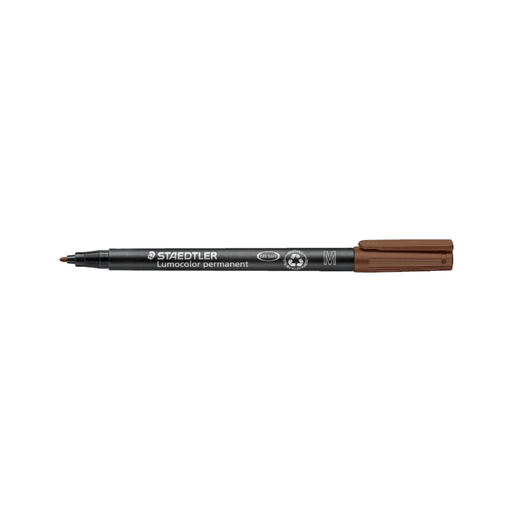
Why it suits this profile: The medium line width of around 1.0 mm is ideal for everyday labelling at home, in the office or at school.
The round synthetic tip isn’t designed for very fine details or particularly broad marks. That makes it less likely you’ll choose the wrong tip width for everyday tasks.
Permanent ink, an approximately 1.0 mm line width, DRY SAFE technology and the option to refill using station 487 17, according to the product details.
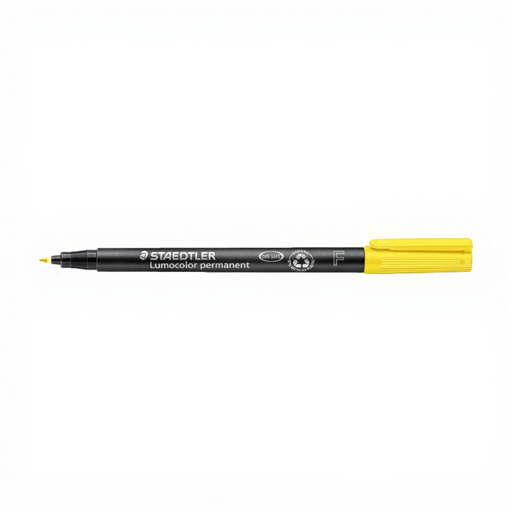
Why it suits this profile: The fine 0.6 mm tip is designed for neat labelling, film, laboratory equipment and colour coding where space is limited.
The clearly stated 0.6 mm tip width helps you avoid buying a broad tip for small labelling areas. It’s still worth testing the marker on the surface first.
Quick-drying, low-odour permanent ink, DRY SAFE technology, and resistance to water and abrasion on suitable surfaces, according to the product description.
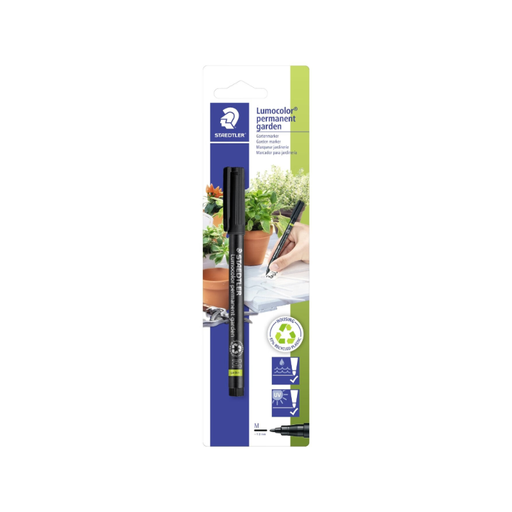
Why it suits this profile: This version is designed for plant labels, wooden sticks, ceramic pots and other materials used outdoors.
Choosing ink specifically described for garden use reduces the risk of relying on a general-purpose marker for lasting outdoor labels.
Black ink, an approximately 1.0 mm line width, and stated weather and light resistance for outdoor use.
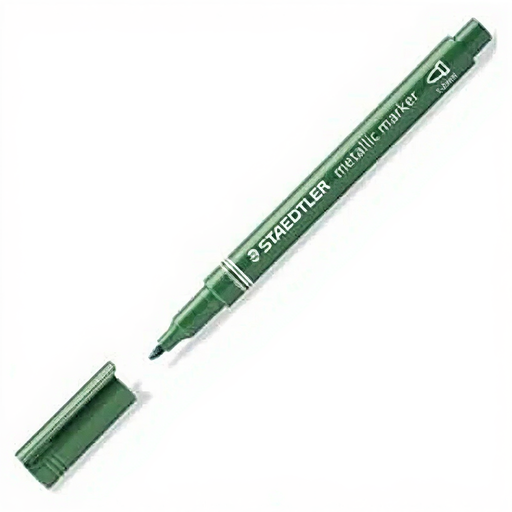
Why it suits this profile: This water-based metallic marker has a round tip of around 1–2 mm and is designed for cards, craft projects and dark paper.
Clearly identifying it as a metallic marker helps prevent it being mistaken for a waterproof permanent marker for stock or outdoor labelling.
Water-based metallic ink, a round tip and ready to write without shaking or pumping, according to the product details.
We’ve put together a complete, regularly updated list of products that meet these strict selection criteria and fully comply with the safety regulations in force in the EU.
For small labels, laboratory containers or narrow plastic surfaces, 0.4 mm or 0.6 mm is usually more suitable than a 1.0 mm or 2–5 mm tip. Let the available space and the level of readability you need guide your choice.
According to the product details available, several Lumocolor models are compatible with the STAEDTLER refill station 487 17. Duo models may require a different station, so always check the details for the specific product.
That depends on the surface, sunlight, moisture and physical wear. For garden labels, a garden marker made specifically for the job is a better choice than any all-purpose marker. Even with weather- and light-resistant ink, you may need to check the marks regularly.