
Lieferung heute & morgen

Qualitätsgarantie

Willkommens-Angebote freischalten: KOSTENLOSE Lieferung | Bis zu 80 % RABATT | Kostenlose 30-Tage-JoyPlus-Testphase
App herunterladen
Choosing the right pen can make or break a project. Are you labelling a transparency for a presentation, designing an invitation card, or marking components in a workshop? For each of these tasks, there is a specialised STAEDTLER marker. However, the variety of inks, tips, and features can be overwhelming.
This guide is designed to provide clarity. We will introduce the key features of the various STAEDTLER pens and help you identify the right tool for your project. Our goal is to provide you with an informed basis for your decision, so you can achieve precise and clean results.
To find the perfect pen, three main criteria should be considered: the ink type, the tip, and the intended surface.
The ink defines how and where a marker can be used. The distinction is fundamental.
The marker's tip determines the line width and the character of your linework.
Not every pen adheres equally well to every surface. While most markers are suitable for paper, smooth, non-porous materials like glass, metal, or plastic require special ink formulations, such as those found in the STAEDTLER Lumocolor series. For creative work on paper, metallic or coloured pens are the right choice. Always check the product description to ensure compatibility.
Based on different areas of application, we have compiled a selection of specialised STAEDTLER markers.

Why It Stands Out: This marker is specially designed for decorative purposes. Its silver metallic ink provides a shimmering, opaque effect that stands out beautifully on dark paper and cardstock.
Benefits:
Who Is It For?: Creative users, hobby crafters, and anyone looking to design personal greeting cards, scrapbooks, or festive decorations.
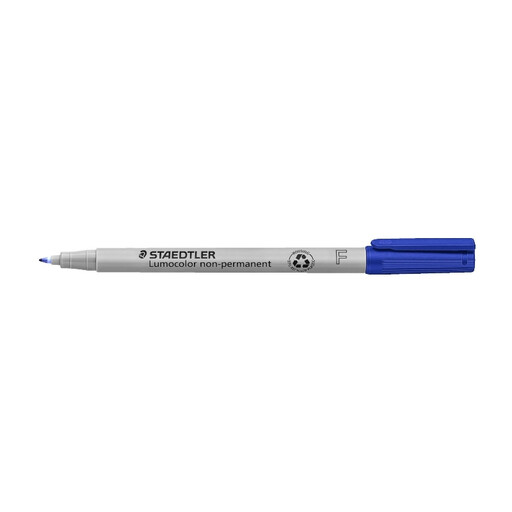
Why It Stands Out: As a universal non-permanent transparency pen, this model is designed for temporary writing on almost all smooth surfaces. The ink can be wiped off with a damp cloth, making corrections effortless.
Benefits:
Who Is It For?: Teachers, students, and professionals who work on reusable surfaces during presentations, in meetings, or for organisational tasks.
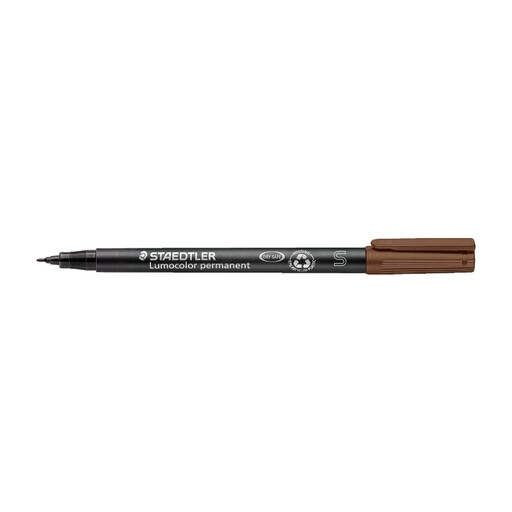
Why It Stands Out: This permanent marker combines a superfine tip with an ink that adheres permanently to almost any surface. The DRY SAFE technology is another practical feature.
Benefits:
Who Is It For?: Users in technical, laboratory, and logistics fields, as well as anyone who needs reliable, fine, and permanent labelling on a wide variety of materials.
The STAEDTLER range is extensive and offers the right pen for almost every niche. If the models presented here do not exactly meet your requirements, you may find the right product in our complete selection.
Discover more pens in our standard sketch pens category
1. What is the difference between STAEDTLER Lumocolor permanent and non-permanent? The main difference is the ink. Lumocolor permanent uses a waterproof, permanent ink intended for durable labelling on almost all surfaces. Lumocolor non-permanent uses a water-soluble ink that can be removed from smooth surfaces (e.g., transparencies) with a damp cloth.
2. Are STAEDTLER Metallic Markers suitable for glass? STAEDTLER Metallic Markers are primarily designed for porous surfaces like paper and cardstock, where they achieve their best opacity and vibrancy. On smooth, non-porous surfaces like glass, the adhesion is not permanent. For permanent writing on glass, a STAEDTLER Lumocolor Permanent marker is the more suitable choice.
3. How do I store STAEDTLER markers correctly to prevent them from drying out? To maximise their lifespan, it is recommended to store most markers horizontally. This ensures that the ink is evenly distributed to the tip. Always replace the cap firmly after each use to prevent drying out. Models with DRY SAFE technology are more forgiving in this regard.