
Lieferung heute & morgen

Qualitätsgarantie

Willkommens-Angebote freischalten: KOSTENLOSE Lieferung | Bis zu 80 % RABATT | Kostenlose 30-Tage-JoyPlus-Testphase
App herunterladen
A STAEDTLER marker can produce very different results depending on its ink, nib and the surface it is used on. A permanent marker for plastic is not automatically suitable for glass, garden labels or dark card. If you choose based solely on colour or an eye-catching product image, you risk smudged lettering, hard-to-read lines or a marker that is unsuitable for the intended surface.
The term permanent marker initially describes ink that remains durable on certain surfaces. It does not mean that the lettering will behave in the same way on every material. On porous wood or card, the colour may soak in, while on smooth glass it may remain wipeable. You should therefore test the marker on an inconspicuous area before use.
A marker with a fine nib is suitable for labelling, tables and small details. For large areas or decorative lettering, however, a 0.6-mm nib may be too narrow. Conversely, a broad marker makes small notes more difficult. The specified line width in millimetres is therefore more important than the general description “fine” or “medium”.
Many metallic markers need to be shaken and activated by pumping before writing. Uneven pigment distribution can result in an inconsistent application of colour. According to the product information, the STAEDTLER Metallic Calligraphy Markers in the selection described here are ready to use straight away and require no shaking or pumping. Metallic colours should be stored horizontally to prevent the pigments from settling on one side.
For paper, card and scrapbooking, water-based metallic pigments are worth considering when you want an opaque colour on a light or dark surface. A marker for dark paper should specifically contain highly visible, opaque ink. Gold, silver, white, green or violet can create decorative contrasts on black card.
For glass, plastic, metal or overhead projector film, permanent inks such as those used in the Lumocolor marker are designed for this purpose. The product information for the STAEDTLER 318-4 Orange states that it is suitable for almost all surfaces, dries quickly and offers high smear resistance on many substrates. Nevertheless, actual adhesion should always be assessed according to the material, its coating and the level of wear it will be exposed to.
A calligraphy marker requires controlled movement of the flat nib. For consistently small printed letters, a fine round nib is usually easier to handle.
With permanent markers, the cap should be closed fully after every use. According to the product description, the STAEDTLER 318-4 Orange has a “Dry-Safe” feature tested to ISO-554 and can be refilled using a suitable refill station. This may be useful for frequent users, but it does not replace careful recapping.
Metallic markers should ideally be stored horizontally. Garden markers should be used on dry, preferably clean surfaces. For outdoor surfaces, rain, UV light, frost and the nature of the material all play an important role. Even a garden marker described as weather- or light-resistant should be checked regularly to ensure that it remains legible.
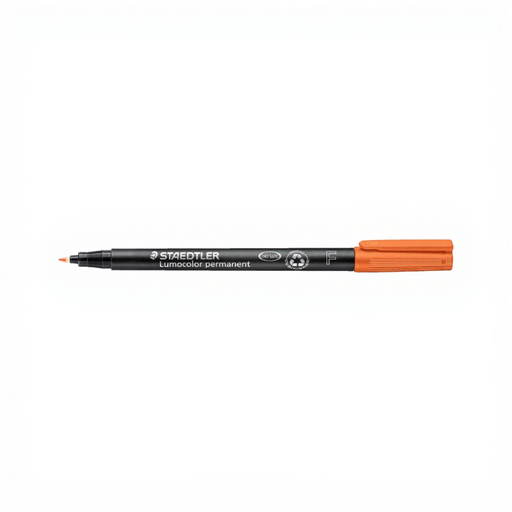
Why this product suits this profile: The fine line of around 0.6 mm is suitable for precise labelling. The permanent, quick-drying ink can be used on many common surfaces.
The specified line width prevents “fine” from being understood as nothing more than an unclear marketing claim. The product information also states that the ink is virtually odourless and refillable.
Line width of around 0.6 mm, quick-drying permanent ink, Dry-Safe feature and refill option.
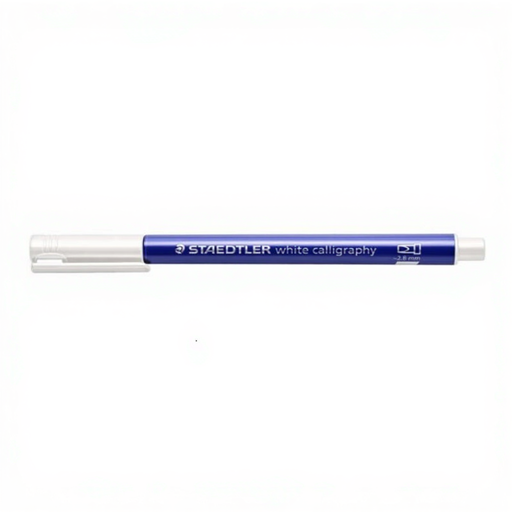
Why this product suits this profile: The white, water-based metallic ink is designed for clearly visible writing on light and dark paper as well as card. The calligraphy nib supports variable line widths.
Its suitability for dark types of paper is clearly stated. As no shaking or pumping is required, a common step when using metallic pens is eliminated.
Calligraphy nib with a line width of approximately 2.8 mm, opaque metallic colour and ready-to-use design.
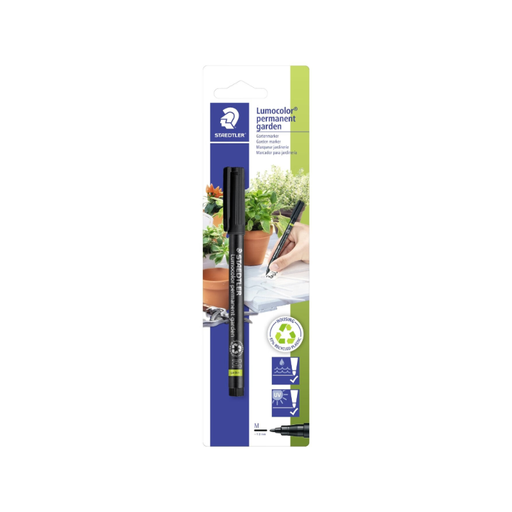
Why this product suits this profile: The black ink is designed for plant labels, wooden sticks, pots and other outdoor materials, with stated weather and light resistance. The medium nib produces a line of around 1.0 mm.
This version is not merely described as a general permanent marker; it is designed for outdoor labelling exposed to rain and sunlight. The surface should nevertheless be dry and clean.
Around 1.0 mm line width and, according to the product information, weather- and light-resistant black ink for various outdoor materials.
For markers for scrapbooking, as well as markers for cards and craft projects, metallic colours and a round or chisel-shaped nib are usually a good choice. On dark paper, the colour should be opaque. For hand lettering, a calligraphy marker with a flat nib is practical, while pupils, students and office users often benefit from a fine nib and quick-drying ink.
A waterproof marker is useful when the lettering will come into contact with moisture. However, the exact level of resistance depends on the surface. For optical glass or coated surfaces, a specialist Lumocolor Permanent Special Marker with a nib of around 0.6 mm may be a suitable option. For textiles, skin, food containers or delicate surfaces, always follow the relevant product labelling and test the marker on a small area first.
We have put together a complete, regularly updated list of products that fully meet these strict selection criteria and the safety regulations applicable in the EU.
Opaque metallic or white inks are suitable for dark paper. According to the product information, the STAEDTLER Metallic Calligraphy Markers in white, gold or silver are designed for light and dark paper as well as card. The calligraphy nib is better suited to decorative lettering than very small notes.
Its lifespan depends on the line width, amount of writing, storage and whether the cap is securely closed. A firmly closed cap helps prevent the ink from drying out. The STAEDTLER 318-4 Orange also has a stated Dry-Safe feature and can be refilled using a suitable station. The specific coverage in metres or pages is not provided for the products described here.
Not every version does. According to the product information, the STAEDTLER Metallic Calligraphy Markers described here and some round metallic markers are ready to use straight away. The LAMY plus 250 Gold, on the other hand, must be shaken before use and activated by gently pressing the nib. You should therefore check the relevant instructions before using the marker for the first time.