
Lieferung heute & morgen

Qualitätsgarantie

Willkommens-Angebote freischalten: KOSTENLOSE Lieferung | Bis zu 80 % RABATT | Kostenlose 30-Tage-JoyPlus-Testphase
App herunterladen
A STAEDTLER marker can be useful for labelling, technical drawings, presentations and creative projects. But a bright colour doesn’t automatically mean it’s the right pen for the job. There are three common pitfalls that can lead to the wrong purchase: using permanent ink on a delicate surface, choosing a tip that’s too broad for precise notes, or buying a marker that seems good value but can’t be refilled and needs replacing sooner than expected.
Claims such as ‘suitable for almost all surfaces’ also need to be considered in practice. Glass, plastic and film behave differently from paper, wood and textiles. Before you buy, focus on ink type, tip width, surface and the level of smudge resistance you need.
A permanent marker is designed for lasting marks. According to the product description, Lumocolor permanent markers are available for use on glass, metal, plastic, stone and wood, among other materials. However, the ink can become permanent on porous surfaces. Test the pen on an inconspicuous area before using it for the first time.
A non-permanent marker contains water-soluble ink. According to the product description, it can be wiped off smooth surfaces such as film, glass and plastic with a damp cloth. This makes it a good choice for overhead projector film, whiteboards, temporary markings and presentation materials. However, ‘wipeable’ doesn’t mean the ink can be removed without a trace from every material. It may leave stains on textiles or untreated wood.
The tip width determines what you can use the marker for:
A fineliner with a tip of around 0.3 mm is better suited to note-taking, bullet journalling and detailed drawings. For expressive lettering, consider calligraphy markers, brush pens or artists’ pens with a flexible tip. If you need a consistent line width, choose a round or synthetic precision tip.
Water-based ink is practical for paper and many creative applications. According to the product description, the STAEDTLER Triplus Fineliner has water-based, washable ink and a line width of around 0.3 mm. With permanent markers, look for quick-drying ink that produces as little odour as possible, particularly if you’ll be using the pen in an office or indoors.
Refillable markers can reduce ongoing costs and help cut waste. Matching refill stations are listed for various Lumocolor models. Before buying, check that the refill station is compatible with your marker. Storage matters too: many ink pens are ready for use more consistently when stored horizontally.
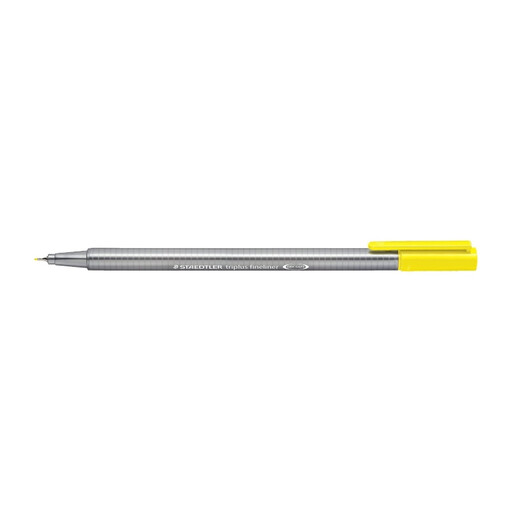
Why this product suits this profile: This fineliner is designed for school, university, note-taking and simple creative projects. Its line width of around 0.3 mm helps you write precisely.
The fine tip keeps small writing legible, rather than letting it become difficult to read with a marker that’s too broad. According to the product description, the water-based ink is washable.
Triangular barrel, metal-clad tip and DRY-SAFE claim in accordance with ISO 554.
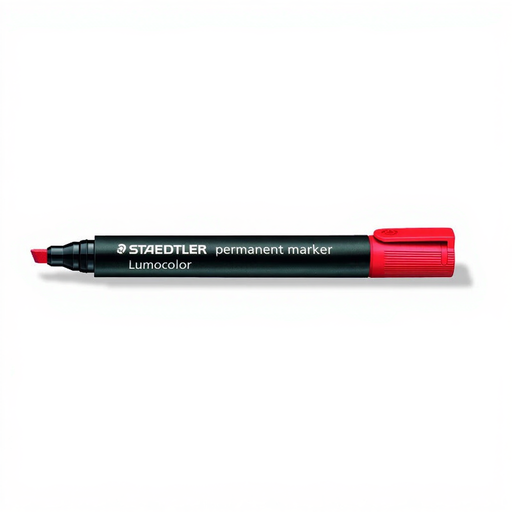
Why this product suits this profile: The chisel tip lets you make both broad marks and narrower lines. It’s a good fit for workshops, warehouses and offices, as well as for labelling smooth materials.
The clearly stated 2 to 5 mm range makes it easier to plan how you’ll use the marker than a vague claim that it’s suitable for everything.
Permanent ink, PP barrel, refillable system and, according to the product description, DRY-SAFE function.
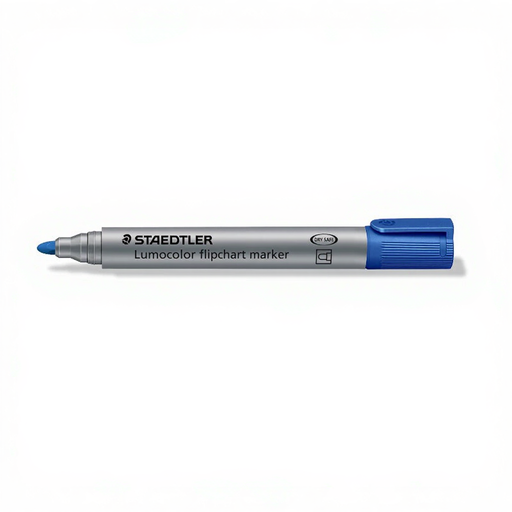
Why this product suits this profile: For teachers, facilitators and presentation professionals, a defined 2 mm round tip is a practical choice for paper.
The water-based ink is designed for flip chart paper. This reduces the risk of accidentally using a permanent marker on presentation paper.
According to the product description, it has low-odour ink, DRY-SAFE properties and is refillable.
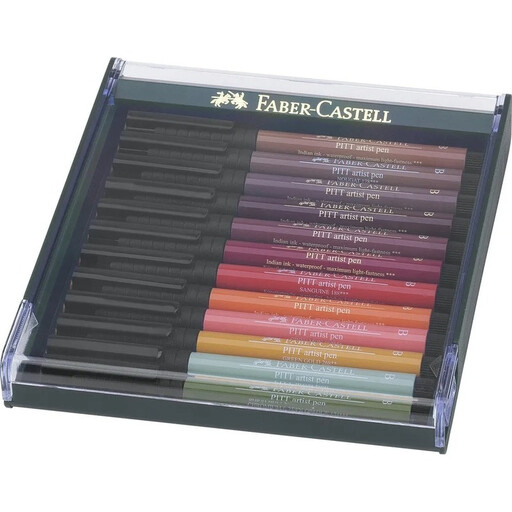
Why this product suits this profile: The flexible brush tip is suited to illustration, hand lettering, sketching and creating lines of varying widths.
The product description specifies waterproof, permanent pigment ink. That makes this set a clearer choice for long-lasting drawings than a washable fineliner.
12 earth tones, a flexible brush tip and, according to the product description, low-odour, acid-free and pH-neutral ink.
We’ve put together a complete, regularly updated list of products that meet these strict selection criteria and fully comply with the safety regulations in force in the EU.
How long it lasts depends on the amount of ink, tip width, pressure applied when writing, surface and cap. Refillable Lumocolor models can be used again with a compatible refill station. It isn’t possible to give a reliable estimate of how much writing you’ll get without consistent testing conditions.
For permanent marks, consider Lumocolor permanent markers with a fine, medium or chisel tip. Lumocolor non-permanent markers are designed for temporary labels. If you’re using one on delicate plastic, test it on a concealed area first.
A fineliner usually has a fine tip of around 0.3 mm and is designed for writing, outlines and details on paper. A marker often lays down more ink, has a broader tip or contains ink specially formulated for smooth surfaces. For illustration, you could also consider artists’ pens, brush pens or a Pitt Artist Pen.