
Lieferung heute & morgen

Qualitätsgarantie

Willkommens-Angebote freischalten: KOSTENLOSE Lieferung | Bis zu 80 % RABATT | Kostenlose 30-Tage-JoyPlus-Testphase
App herunterladen
A STAEDTLER marker can be used for notes, technical labelling, craftwork or highlighting text. However, the models differ considerably in terms of ink, surface compatibility, nib shape and removability. If you choose based solely on colour or price, you may easily end up with a product that will not adhere to glass, bleeds through paper or cannot be removed later.
This buying guide explains which features matter before you buy and which models are suitable for different applications.
A standard fibre-tip marker is designed for paper. On glass, plastic or metal, however, the ink may bead, smudge or only be faintly visible. Smooth and dark materials require a glass marker pen designed specifically for this purpose, such as a Glasochrom or Omnichrom marker pen.
A permanent marker for glass is a sensible choice when labelling needs to be water-resistant and remain visible over time. For temporary labelling, presentations or laboratory containers, a non-permanent marker may be more suitable. So check whether the marking can be removed with a damp cloth, a solvent or only by scraping.
Gold and silver markers are generally more opaque on dark paper than traditional coloured pens. However, opacity depends on the paper’s texture, shade and drying time. Metallic markers are also not automatically suitable for plastic, textiles or other non-absorbent surfaces. Testing on an inconspicuous area can help you avoid buying the wrong product.
Choose your marker according to the material:
The nib determines how precisely or broadly you can write:
Replace the cap fully after every use. Water-based inks can dry out if the cap is left off. Metallic markers and highlighters should preferably be stored horizontally so that the ink reaches the nib evenly. Wax-based cores may soften in high temperatures and should not be left in direct sunlight or in a hot vehicle for extended periods.
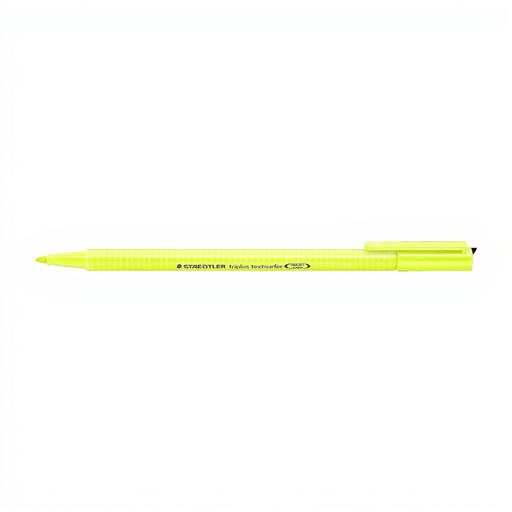
Why this product suits this profile: The Textsurfer is suitable for school, university and the office when you need to highlight sections of paper quickly and flexibly. The soft round nib creates lines of approximately 1 to 4 mm.
Its use is clearly focused on paper and highlighting. This helps prevent using a highlighter on glass or plastic when it is not designed for those surfaces.
Water-based, vibrant ink and a variable line width of approximately 1–4 mm. The triangular barrel supports a controlled grip.
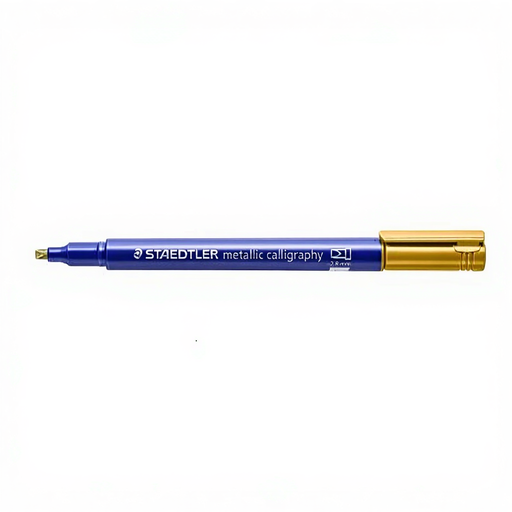
Why this product suits this profile: For cards, scrapbooking and decorative lettering on light or dark paper, the calligraphy nib offers variable line control.
The product details specify paper and card as the intended materials. The marker should therefore not be used on glass or textiles without testing it first.
Gold-coloured metallic ink, an approximately 2.8 mm basic line width and no activation by shaking or pumping, according to the product description.
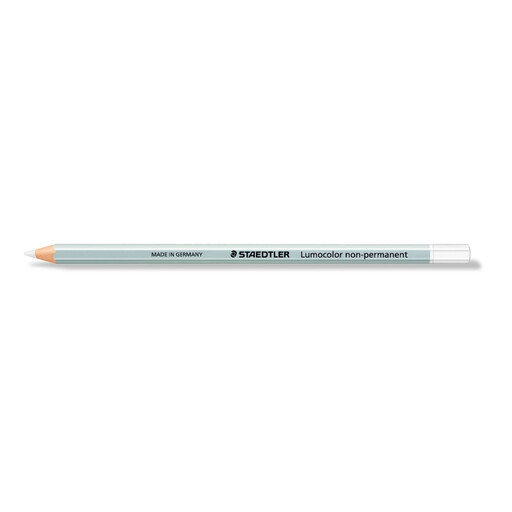
Why this product suits this profile: The white, opaque core is designed for visible marking on glass, plastic, metal and dark surfaces. This makes it suitable for laboratories, workshops and creative projects.
The non-permanent, water-soluble core is designed for corrections. According to the product details, the marking can be removed with a damp cloth.
Opaque white colour, wax-based core and use on several smooth surfaces. Testing a sample inscription before extensive use is advisable.
For workpieces that need to remain permanently labelled during processing, a STAEDTLER Lumocolor Permanent Glasochrom may be a suitable choice. According to the product details, the models in black, green, red, blue or yellow use a wax-based, waterproof core. They can be used to mark glass, metal, plastic, stone and wood, among other materials.
If the labelling needs to be corrected later, an Omnichrom marker pen with a non-permanent core is the more suitable option. On smooth materials, the marking can generally be removed with a damp cloth. Actual removability depends on dirt, the surface texture and contact time.
For festive lettering on cards or black paper, a Metallic Marker Gold and a Metallic Marker Silver are also available. According to the product details, the silver STAEDTLER marker with a round nib produces lines of approximately 1–2 mm. Here too, testing is recommended before working on high-quality materials.
We have compiled a complete, regularly updated list of products that fully meet these strict selection criteria and the safety regulations applicable in the EU.
The Lumocolor Permanent Glasochrom models are designed for permanent marking. For labelling that needs to be removed again, the non-permanent Omnichrom glass marker pens are suitable. Clean the surface before writing and test adhesion on an inconspicuous area.
Its service life depends on writing pressure, frequency of use, storage and paper. Keeping the cap firmly closed prevents the nib from drying out. With Textsurfer models, replace the cap immediately after highlighting and store the pen horizontally wherever possible.
According to the product details, gold and silver markers are designed for opaque writing and decoration on both light and dark paper. The effect may vary depending on the nature of the paper. These details do not automatically apply to plastic, glass or fabric; testing beforehand is required.