
Lieferung heute & morgen

Qualitätsgarantie

Willkommens-Angebote freischalten: KOSTENLOSE Lieferung | Bis zu 80 % RABATT | Kostenlose 30-Tage-JoyPlus-Testphase
App herunterladen
The Staedtler Mars Lumograph is a graphite pencil renowned in professional circles for its consistent quality and reliability. It is used by artists, designers, and architects for precision work. However, the series includes various models, each optimised for specific applications. Selecting the correct model depends on technical requirements such as the desired degree of blackness, surface reflection, and required line weight. This article analyses the technical differences between the core variants to enable an informed purchasing decision.
The decision for a specific drawing pencil from the Mars Lumograph series should be based on an analysis of its material properties and intended use.
The composition of the lead is a key determinant of the line's character.
The diameter of the lead influences the line width and the stability of the pencil.
According to the manufacturer STAEDTLER, all models in the series feature a lead with high break-resistance, achieved through a special bonding process with the wood casing.
Based on their different technical profiles, we present three core models from the series in detail.
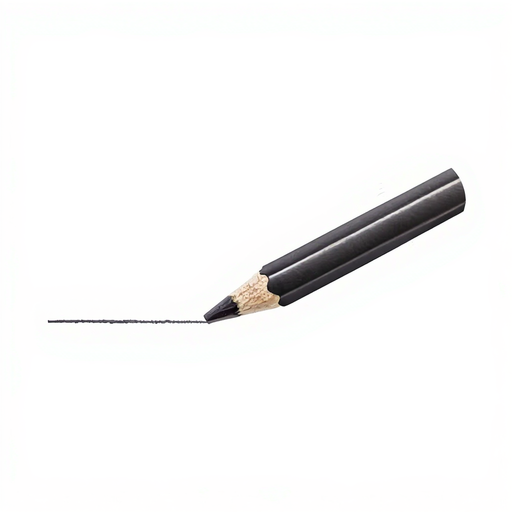
Why We Recommend This Product This model bridges the gap between a graphite pencil and pure drawing charcoal. Its unique feature is the high carbon content in the lead, which produces a deep matte, non-reflective black. Unlike conventional graphite pencils, the typical metallic sheen is eliminated, which greatly simplifies photographing or scanning artwork. The HB variant offers a rare combination of carbon's darkness and the precision of a harder pencil.
Pros
Who It's For Illustrators and artists who digitise their work and want to avoid the distracting glare of graphite. Ideal for portrait artists depicting pupils, deep hair shadows, or dark clothing where a true black is required.
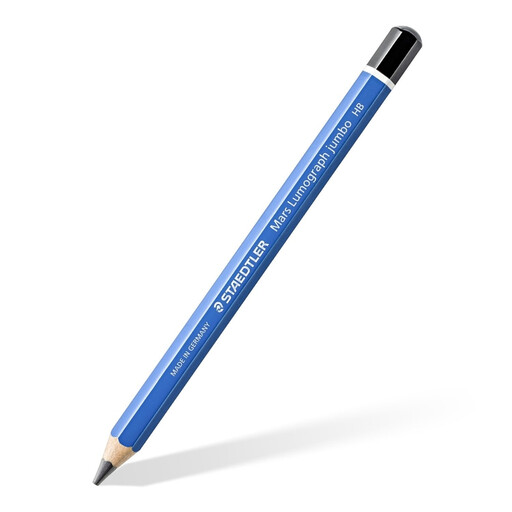
Why We Recommend This Product The Mars Lumograph Jumbo is designed for large-scale and expressive applications. Its main feature is the extra-thick lead diameter of approx. 5.3 mm. This not only allows for quick, rich coverage of large areas but also offers high variability in linework—from broad, flat strokes to finer lines when the pencil is held at a steep angle. According to the manufacturer, the wood is sourced from PEFC-certified, sustainably managed forests.
Pros
Who It's For Artist's pencils like this are designed for users who work on a large scale, for instance, for preliminary studies on canvas, quick outdoor sketches, or in art classes. It is a tool for the broad stroke, not for fine-grained detail.
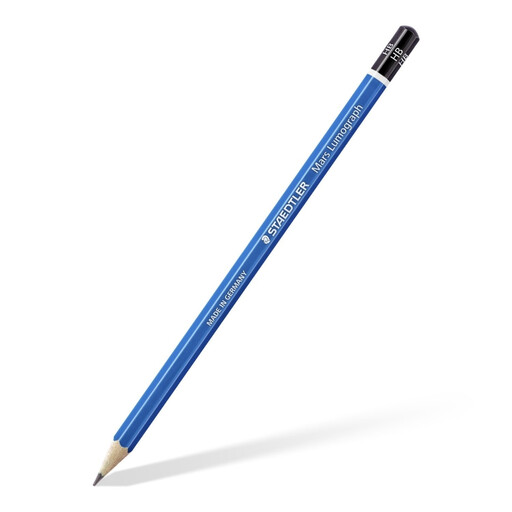
Why We Recommend This Product This is the classic pencil for drawing and technical applications. The hexagonal design prevents it from rolling off inclined drawing boards, while the standard HB lead offers an optimal balance between hardness and blackness. The lead allows for clean, easily reproducible lines and also erases cleanly without "ghosting." The cedar wood construction enables clean sharpening for a consistently sharp point.
Pros
Who It's For Architects, engineers, designers, and any user who needs a reliable and precise graphite pencil for detailed work. It is also a solid choice for art students and ambitious hobby artists looking for a high-quality standard tool.
While the Mars Lumograph series meets specific requirements, a wide spectrum of high-quality HB pencils exists for different preferences and budgets. You can find an overview of other models for professional and semi-professional users in our HB Pencils category.
The main difference lies in the lead formulation. The classic Mars Lumograph uses a pure graphite-clay mixture, which produces a slightly glossy line. The Mars Lumograph Black also contains a high proportion of carbon, resulting in a deep black, matte finish that does not reflect.
Although it is a professional drawing tool, ambitious beginners also benefit from its high quality. The lead's break-resistance and consistent line quality can prevent frustration and help in learning clean techniques from the start.
Due to its lead diameter of approx. 5.3 mm, the Mars Lumograph Jumbo requires a sharpener designed for large pencil diameters. Using a standard sharpener can damage both the lead and the wood casing. Alternatively, the lead can be carefully exposed with a craft knife, which allows for more control over the shape of the point.