
Lieferung heute & morgen

Qualitätsgarantie

Willkommens-Angebote freischalten: KOSTENLOSE Lieferung | Bis zu 80 % RABATT | Kostenlose 30-Tage-JoyPlus-Testphase
App herunterladen
A STAEDTLER metallic marker can add impact to cards, scrapbooking projects and hand lettering. However, metallic pens vary considerably in terms of nib, coverage and intended use. A marker that writes cleanly on white paper will not necessarily work well on black card.
Before buying, crafters, artists, families and schools should therefore consider more than just the colour. The right nib shape, ink base and suitability for the intended material are all key factors.
A metallic shimmer does not necessarily mean that the writing will remain visible on a dark surface. For a metallic marker for dark paper, the ink should be explicitly described as covering or opaque. This is particularly important when working on black, dark blue or strongly coloured card.
A round nib is suitable for even lines, small lettering and outlines. By contrast, a broad calligraphy nib produces different line widths depending on how it is held and how much pressure is applied. If you want to design cards, invitations or decorative headings, choose a nib that suits your own writing style.
Some metallic markers need to be shaken or pumped, while others are ready to use immediately according to the product details. This alone does not determine how long they will last. The cap must be closed fully after every use. Horizontal storage can also help prevent the components in pigment-based metallic inks from settling unevenly.
For fine details in journals or scrapbooking, line widths of around 1 to 2 mm are practical. They allow you to create outlines, small headings and decorative accents. A metallic calligraphy marker with a line width of around 2.8 mm is designed for larger lettering, invitations and calligraphic effects.
A water-based metallic marker is a popular choice for paper and card. However, the exact level of adhesion still depends on the surface. Smooth paper, textured paper, glass and mirrors can all produce different results. On non-porous surfaces, test the marker first in an inconspicuous area.
When using markers for cards and invitations, drying time and smudge resistance are also important. Fresh ink should not be touched immediately with a ruler, the side of your hand or a second layer of colour.
A silver marker creates a clear, cool contrast on black paper. A gold marker often looks warmer on cream, kraft paper and dark shades. A white metallic marker is suitable for light lettering on dark card. Green, blue and violet can be used as colourful accents, but on very dark surfaces they require a sufficiently covering formulation.
For a coordinated look, choose a metallic marker set or put together a carefully considered colour combination. Before starting the actual project, test every colour on a piece of the paper you intend to use.
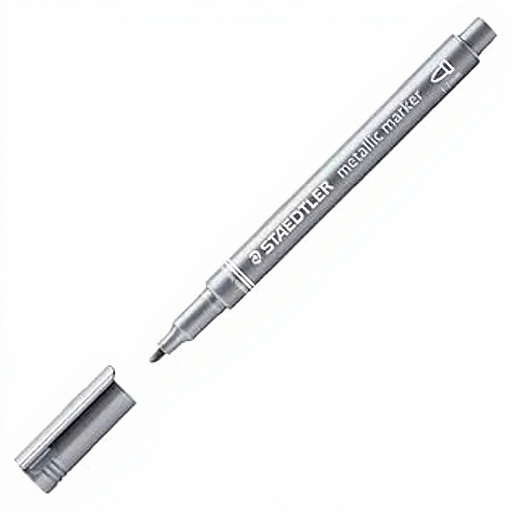
Why this product suits this profile: The round nib, with a line width of around 1 to 2 mm, is suitable for first cards, borders, lettering and simple DIY projects. Silver provides a clearly visible contrast on dark paper.
The clearly stated nib width reduces the risk of buying a pen that is too broad for small lettering. Before use, check the coverage on your own card.
Round nib, line width of around 1 to 2 mm and lightweight format for individual decorative applications.
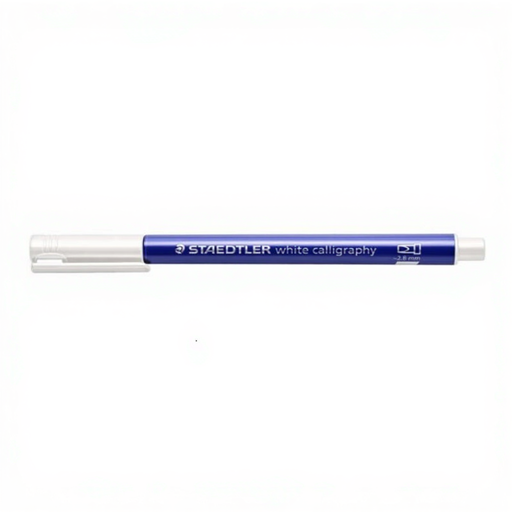
Why this product suits this profile: The calligraphy nib, with a line width of approximately 2.8 mm, is aimed at users who want to create lettering, invitations and decorative headings with varied line effects.
The specified calligraphy nib makes its intended use clear. According to the product description, the white metallic ink is suitable for both light and dark paper.
Calligraphy nib, water-based pigmented metallic ink and stated suitability for paper and card.
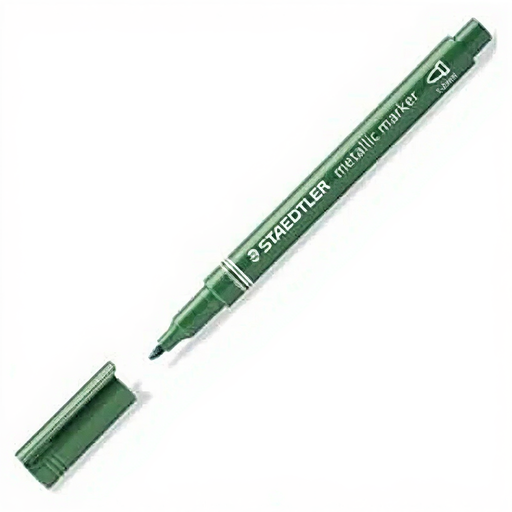
Why this product suits this profile: The round bullet nib, measuring around 1 to 2 mm, is suitable for recurring craft projects, colourful accents and decorative writing. According to the product description, the marker can also be used on glass or mirrors.
The product details specify water-based metallic pigment ink and do not mention activation by pumping. On smooth surfaces, removability should still be tested beforehand.
Round bullet nib, water-based ink and suitability for paper and selected smooth surfaces.
We have put together a complete, regularly updated list of products that fully meet these strict selection criteria and the safety regulations applicable in the EU.
A few simple steps can help you achieve consistent results with metallic pens for writing and decorating:
For children under three, follow the safety instructions for the relevant product, as caps or small parts may pose a choking hazard. Ink should not be applied to the skin or swallowed.
For the STAEDTLER Metallic Calligraphy markers mentioned here and the Bullet Green, the product details do not state that shaking or pumping is required for activation. Nevertheless, check the instructions on the packaging and product page before first use.
For black cards, covering light shades such as silver or white are an obvious choice. The white calligraphy marker is designed for lettering with a line width of around 2.8 mm. A silver marker with a round nib is better suited to even lines and smaller details. The result also depends on the paper’s texture and absorbency.
It is not possible to give a reliable general usage period. It depends on line width, frequency of use, the amount of paper and storage conditions. Keeping the cap closed, storing the marker horizontally and choosing a suitable surface can help maintain consistent writing quality for longer.