
Lieferung heute & morgen

Qualitätsgarantie

Willkommens-Angebote freischalten: KOSTENLOSE Lieferung | Bis zu 80 % RABATT | Kostenlose 30-Tage-JoyPlus-Testphase
App herunterladen
At first glance, a STAEDTLER Triplus Color rPP felt-tip pen looks like a straightforward writing and colouring tool. In practice, felt-tip pens vary considerably in nib width, feel, ink and materials. If you choose based only on colour or pack price, you could end up with a pen that isn’t right for the job.
This guide is for pupils, students, parents, teachers, office users, and journaling and DIY fans. It focuses on easy-to-check features such as a line width of approx. 1.0 mm, an ergonomic triangular-barrel felt-tip pen, washable ink, DRY SAFE technology and the use of recycled plastic.
Bright STAEDTLER Triplus Color shades can work well for headings and creative projects. But a fibre tip of around 1.0 mm is less precise than a fineliner for small notes or very fine details. Before buying, think about whether you’ll mainly use the pen for colouring, writing, highlighting or colour-coding.
According to the product information, water-based, washable ink can be removed from most textiles. This is a useful feature for school and home, but it isn’t a guarantee for every surface. Colour may remain on untreated wood, specially coated paper or delicate fabrics. If you get a stain, treat the fabric as soon as possible, following its care instructions.
According to the product description, DRY SAFE technology is designed to stop the pen from drying out straight away if left uncapped for several days, in accordance with ISO 554. This reduces the risk if you forget to replace the cap, but it doesn’t automatically give the pen an unlimited lifespan. To keep the ink flowing evenly, push the cap on firmly after use. Storing the pen horizontally is also recommended.
A 1.0 mm fibre-tip pen is suitable for clear lines, headings, sketches and medium-sized areas of colour. The synthetic or fibre-based nibs on Triplus Color models are described as pressure-resistant. Even so, avoid pressing too hard when colouring, as this can cause the paper surface to swell or the nib to become uneven.
If you need very fine lines for technical notes or small labels, a fineliner may be a better choice. The broader nib is versatile for adding colour, schoolwork, bullet journaling and creative projects.
The triangular barrel encourages a defined hand position and helps stop the pen rolling off the table. An ergonomic triangular-barrel felt-tip pen can feel comfortable, particularly during longer writing or colouring sessions. However, grip is a personal thing: children with small hands, left-handed users and people who press hard when writing may want to compare its shape with the pens they already use.
The Triplus Color rPP variants mentioned here use water-based ink. The product information states that it can be washed out of most textiles. Depending on the listing, the barrel and cap are made from recycled polypropylene, or rPP. This means recycled polypropylene is used as a material, but it doesn’t allow us to make a blanket statement about the product’s overall environmental impact.
Several variants are also listed as having a ventilated safety cap in accordance with ISO 11540 and BS 7272-1/2. The pens contain small parts and are not suitable for children under 36 months.
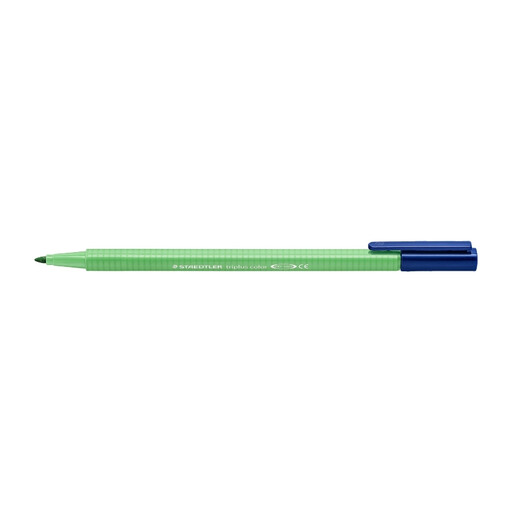
Why this product suits this profile: The pale shade is handy for trying out colour-coding, taking notes and simple creative projects. It’s listed with an approximately 1.0 mm line width, water-based ink and a triangular barrel.
The product information lists washable, water-based ink and DRY SAFE technology in accordance with ISO 554. Even so, remember to replace the cap after use.
Triangular barrel, approx. 1.0 mm fibre tip, and rPP listed for the barrel and cap.
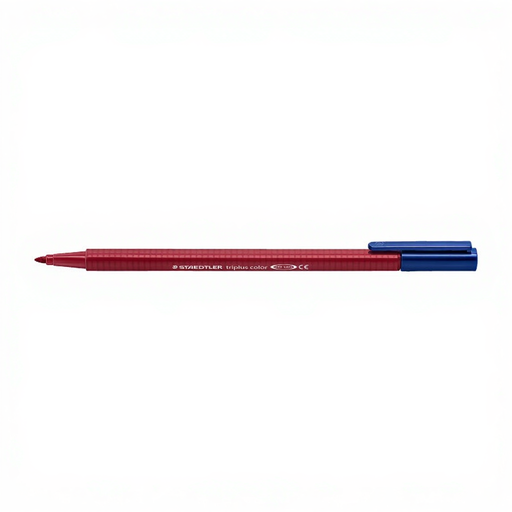
Why this product suits this profile: Carmine is a good choice for prominent headings, colour-coding and bold colouring. The product description lists a durable synthetic nib and a line width of approximately 1.0 mm.
The product information describes a pressure-resistant nib and DRY SAFE technology. That gives you clear details on two common weak points of felt-tip pens.
Water-based, washable ink, a ventilated cap and mix-and-match compatibility with selected STAEDTLER ranges.
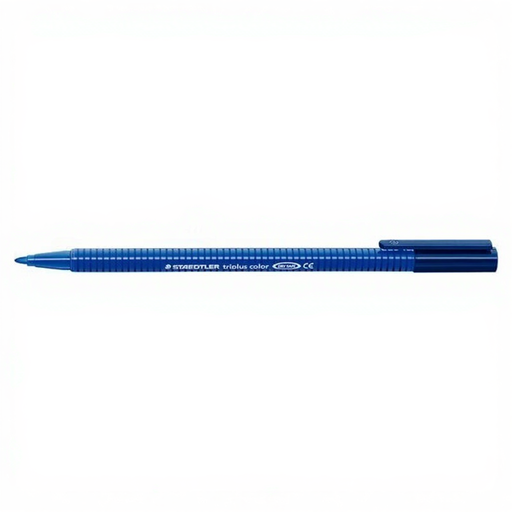
Why this product suits this profile: Blue is useful for organised notes, office tasks, teaching materials and regular colour-coding. The pen combines the listed triangular shape with DRY SAFE technology and water-based ink.
The stated line width of approximately 1.0 mm means you can look beyond the colour name when choosing. The product details also list recycled plastic and washability from most textiles.
Suitable for regular writing and highlighting; the cap and barrel are described as being made from durable polypropylene.
We’ve put together a complete, regularly updated list of products that meet these strict selection criteria and the safety regulations in force across the EU.
The product information describes water-based ink that can be washed out of most textiles. This may not apply to every fibre or surface, or to stains that have already dried. It’s best to wash the fabric promptly, following its care instructions.
According to the product description, the pen can be left uncapped for several days under the conditions of the ISO 554 test, without drying out straight away. For the longest possible lifespan, though, replace the cap after every use.
Yes. The approximate 1.0 mm line width is suitable for legible notes, headings, colour-coding and drawing. For very small labels or especially fine lines, a fineliner with a narrower line width is a better choice.