
Lieferung heute & morgen

Qualitätsgarantie

Willkommens-Angebote freischalten: KOSTENLOSE Lieferung | Bis zu 80 % RABATT | Kostenlose 30-Tage-JoyPlus-Testphase
App herunterladen
A STAEDTLER highlighter can be handy for studying, organising and getting creative – as long as the nib, ink and intended use are a good match. There are clear differences between a classic Textsurfer, a dry highlighter, a fineliner and a permanent marker. If you choose by colour or pack size alone, you may not notice the drawbacks until you start using it.
Broad chisel nibs are ideal for highlighting whole lines of text, but can be imprecise around small lettering. A fine round nib or a fineliner is better for narrow underlining. For hand lettering and decorative headings, a calligraphy marker with a variable line width may be a better choice.
Very intense colours can obscure printed text. Ink can also show through thin paper or smudge on certain types of printout. So check the product information for details such as water-based ink, quick drying and “INKJET SAFE” – don’t rely on the packaging alone.
A water-soluble Lumocolor marker may be suitable for transparencies, glass or plastic. On paper, however, the mark may remain visible permanently. Conversely, a permanent marker won’t come off smooth surfaces easily. It’s a good idea to test it on an inconspicuous area before using it for the first time.
Line width determines how versatile a marker is:
A variable nib is handy if you want to carry fewer writing tools when you’re out and about. For repeated, even lines, though, a fixed width may be easier to control.
Water-based ink is common in many highlighters and fibre-tip pens. Drying time varies depending on the paper, and the ink can be washed out of most textiles. This doesn’t guarantee residue-free cleaning on every surface.
If you choose a refillable marker, check that the correct refill solution is specified. According to the product description, STAEDTLER Lumocolor Non-Permanent Markers are compatible with refill station 487 15. Their water-soluble ink can be wiped off transparencies with a damp cloth. This makes them suitable for temporary labelling, but not for permanent archival marking.
A triangular barrel can help you maintain a controlled grip when writing for longer periods, and stops the pen rolling easily off the table. A securely closing cap helps prevent the ink from drying out. Even with products featuring DRY SAFE, it’s still best to replace the cap as soon as you’ve finished using the pen.
For children aged 3 and over, check the age guidance and cap design, and store the pens safely. Keep small parts out of reach of younger children. When doing crafts, parents should also bear in mind that “washable” doesn’t mean “can be removed without residue from every surface”.
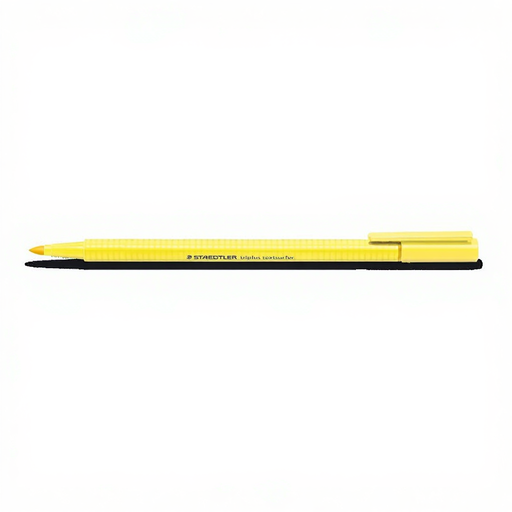
Why it suits this user: The 1–4 mm round nib handles both fine underlining and broader highlighting. This yellow highlighter is ideal for school exercise books, lecture notes and everyday jottings.
The variable nib means you’re less likely to need several different highlighters. According to the product information, the water-based ink is suitable for paper, fax paper and carbonless copy paper.
Triangular barrel, 1–4 mm line width and quick-drying, light-resistant ink, according to the product description.
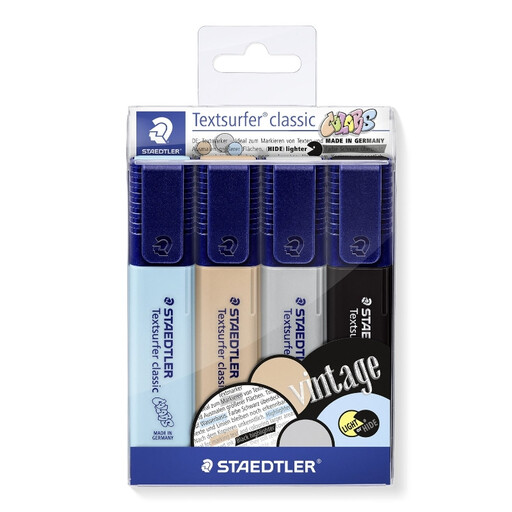
Why it suits this user: The four-pack of vintage shades makes it easy to colour-code your university work, office documents and bullet journal. The chisel nib is designed for classic highlighting.
The firmer, pressure-resistant nib is designed for smooth, even underlining. The large ink reservoir addresses a common drawback of smaller reservoirs.
Chisel nib of around 1–5 mm, water-based ink, twist-off cap and PP barrel, according to the product details.
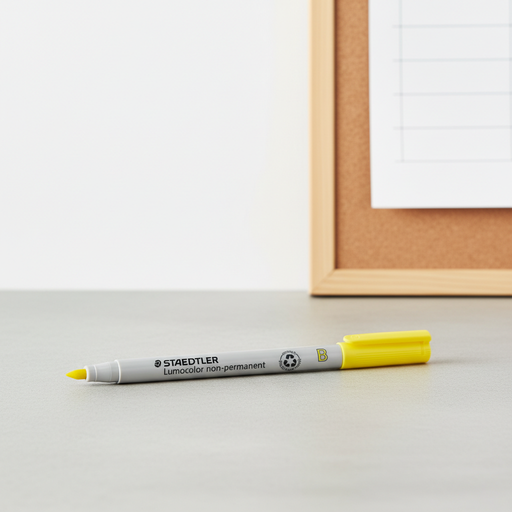
Why it suits this user: This marker is designed for temporary labelling on various smooth surfaces and for use on overhead transparencies. Its refillable design is ideal for regular use in lessons, presentations and the office.
Don’t confuse the water-soluble ink with permanent marker ink: according to the product information, it can be wiped off transparencies with a damp cloth.
Broad line width of around 1.0/2.5 mm, quick-drying ink and refill option using station 487 15.
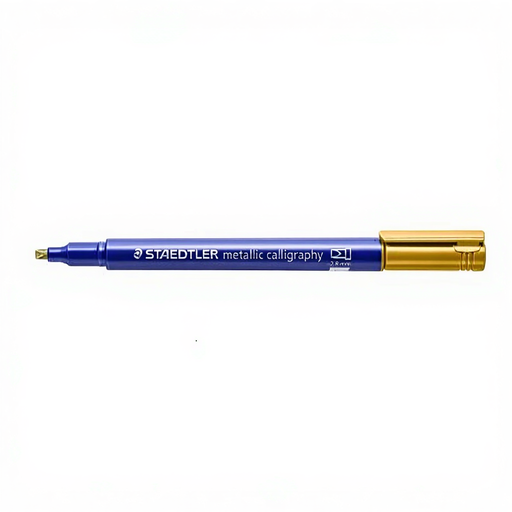
Why it suits this user: The gold metallic ink is designed for use on light and dark paper, as well as card. This makes the marker ideal for cards, scrapbooking and creative journalling projects.
According to the product description, there’s no need to shake or pump the marker before use. On smooth surfaces, it’s still worth checking whether the ink can be wiped off with a damp cloth.
Calligraphy nib with variable line width and water-based, pigmented metallic ink for paper and card.
We’ve put together a complete, regularly updated list of products that meet these strict selection criteria and fully comply with the safety regulations in force in the EU.
For precise notes, pair your highlighter with a STAEDTLER Triplus fineliner with a line width of around 0.3 mm. A fibre-tip pen with a 1 mm nib is a better choice for headings, colourful revision cards or larger areas. A ballpoint pen with a long metal tip can be useful for technical notes, while a dry Textsurfer model offers an alternative to liquid ink on thin paper.
For children aged 3 and over, water-based fibre-tip pens or a coloured ballpoint pen set are worth considering. Always follow the instructions on the packaging, ensure children use the pens safely under supervision, and replace the cap as soon as they’ve finished.
A model with a variable round nib of around 1 to 4 mm is handy for narrow marks. If you want to write very fine notes or draw outlines, choose a 0.3 mm fineliner instead.
How long it lasts depends on the ink reservoir, paper, pressure and cap. A large ink reservoir can keep you going for longer if you highlight frequently. With refillable Lumocolor models, you can extend the pen’s life using the correct refill station. Always close the cap fully after use.
According to the relevant product information, water-based ink can be washed out of most textiles. However, this depends on the fabric and how long the ink has been left to set. Treat stains as soon as possible. Metallic or permanent ink may remain visible on porous materials.