
Lieferung heute & morgen

Qualitätsgarantie

Willkommens-Angebote freischalten: KOSTENLOSE Lieferung | Bis zu 80 % RABATT | Kostenlose 30-Tage-JoyPlus-Testphase
App herunterladen
A good highlighter should make important passages stand out without soaking the paper unnecessarily or smudging the print. When buying a STAEDTLER Triplus Textsurfer highlighter, many people look at the colour first. However, it is primarily the nib, ink and barrel shape that determine whether a highlighter performs reliably in everyday use.
Many classic highlighters have a rigid chisel tip with just one preferred line width. This is practical when you only want to highlight entire lines. However, for individual terms, margin notes or narrow footnotes, this type of tip can be imprecise.
The STAEDTLER Textsurfer with its soft round tip is designed for a variable line width of around 1–4 mm. By changing the angle and pressure, you can switch between fine underlining and broad highlighting.
‘Quick-drying’ does not automatically mean that every ink will remain smudge-resistant on every type of paper. Differences arise from paper quality, printing method and the ink used for writing. This is particularly important with freshly printed inkjet documents, so the highlighter should be suitable for this purpose.
For the Triplus Textsurfer versions mentioned, the ink is described as INKJET SAFE or suitable for inkjet printouts. Even so, it is advisable to carry out a quick test in the margin of important documents. Water-based ink may also show through noticeably on very thin paper.
A round barrel does not feel equally comfortable in everyone’s hand and can roll off the desk. If you work on study materials, books or editorial texts for extended periods, you should therefore pay attention to the shape.
The triangular highlighter in the triplus range offers a defined grip and is less likely to roll away. This can be particularly relevant for students, teachers, office workers and bullet journal users.
For flexible applications, a tip with a range of 1–4 mm is a sensible choice. A soft round tip is suitable for:
The actual line width depends on how you hold the highlighter and how much pressure you apply. If you only need broad lines, you could alternatively choose a classic highlighter with a 1–5-mm chisel tip.
A water-based highlighter is a standard choice for paper, study materials and many office printouts. You should also check specific information about suitability for:
The term smudge-resistant highlighter should not be taken as a blanket guarantee. What matters is whether the manufacturer confirms suitability for the printing method being used. Results may differ on thermally printed receipts or particularly absorbent paper compared with standard office paper.
A polypropylene barrel is lightweight and suitable for regular use. It is still important to replace the cap firmly after use. Otherwise, water-based ink can cause the tip to dry out. Storing the highlighter horizontally helps distribute the ink evenly; the manufacturer’s specific care instructions should be followed.
The Triplus Textsurfer models are also described as featuring automatic pressure equalisation for air travel. This is a practical extra feature for people who carry stationery in their luggage. However, it is no substitute for safe storage in a pencil case.
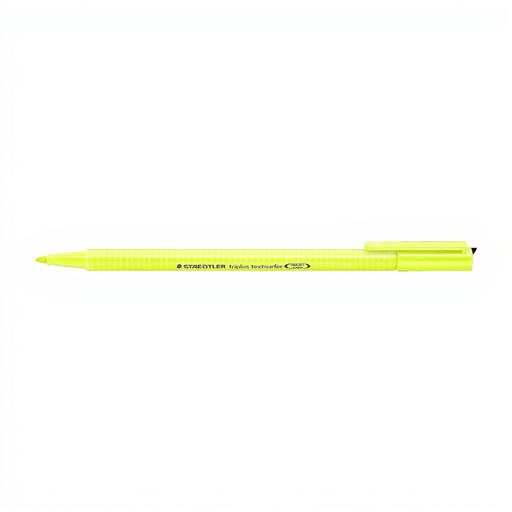
Why this product suits the profile: The yellow version covers typical applications at school, university and in the office. Its variable tip allows you to underline finely and highlight more broadly with just one pen.
The 1–4-mm tip means you do not need separate pens for narrow and broad highlighting. The INKJET SAFE specification also addresses a common issue with printouts.
Water-based, bright ink; triangular barrel; variable line width of around 1–4 mm.
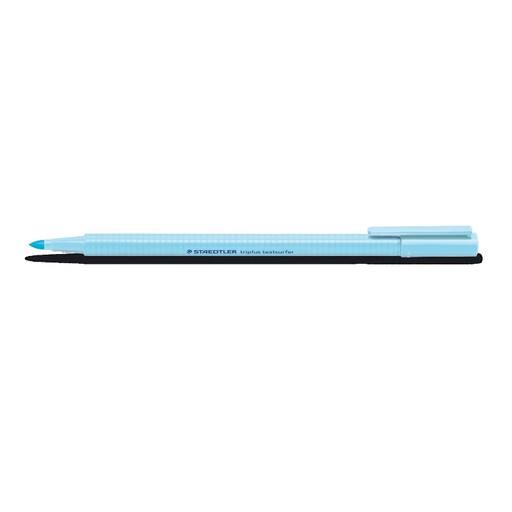
Why this product suits the profile: Sky Blue is ideal for colour-coding documents when yellow highlighting is already reserved for another meaning. The triangular barrel supports a controlled grip.
The soft tip allows you to create different line widths instead of just one broad, standard highlight. The product description points to water-based ink and suitability for school and office use.
Soft round tip with variable line width; ergonomic triangular barrel; bright sky-blue ink.
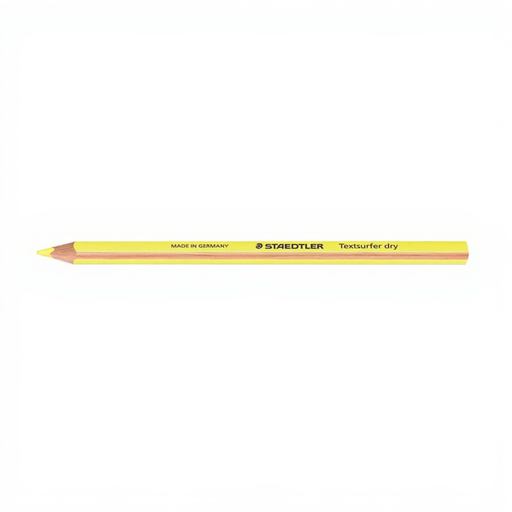
Why this product suits the profile: The dry wax lead is designed for thin types of paper, faxes and carbon paper. It is aimed at users who prefer to work without liquid ink.
The 4-mm wax lead works without applying liquid ink. This reduces the risk of soaking through thin paper; however, it is less flexible than a 1–4-mm highlighter for fine underlining.
Triangular ergonomic shape; 4-mm wax lead; according to the product information, suitable for paper, faxes and carbon copies.
We have put together a complete, regularly updated list of products that fully meet these strict selection criteria and the safety regulations applicable in the EU.
Several versions are described as INKJET SAFE. This means they are intended for use on the corresponding printouts and that printer ink should be less likely to smudge when used correctly. For important documents, however, it is still advisable to test the highlighter on the specific paper.
Its lifespan depends on how often it is used, how it is stored and whether the cap is left off. Keeping the cap firmly closed and storing the highlighter horizontally can slow down drying. Without information about usage and ink capacity, it is not possible to give a reliable fixed timeframe.
The triangular shape provides a defined grip area and prevents the pen from easily rolling off the desk. Whether it feels comfortable depends on the size of your hand and your individual grip. For long study or work sessions, it can be a practical alternative to a round barrel.