
Lieferung heute & morgen

Qualitätsgarantie

Willkommens-Angebote freischalten: KOSTENLOSE Lieferung | Bis zu 80 % RABATT | Kostenlose 30-Tage-JoyPlus-Testphase
App herunterladen
A high-quality stainless steel bowl set is a cornerstone of any kitchen. Unlike plastic or glass alternatives, stainless steel bowls offer a unique combination of durability, hygiene, and versatility. They don't stain, absorb odours, and are incredibly robust. However, the market is filled with a vast array of options, each with different features.
This guide is here to help. We'll highlight the key criteria to consider when making your choice and present a selection of functional sets designed for various kitchen tasks.
To find the perfect set for your needs, several functional aspects should be considered. These features determine how practical the bowls will be in daily use.
The material grade is a key indicator of quality. 304 stainless steel (also known as 18/8 stainless steel) is the gold standard for kitchen utensils. This material is food-safe, meaning it does not leach any substances into food. It is also resistant to corrosion from acids found in foods, making it a hygienic choice for preparing salads, marinating meat, or mixing dough. A seamless interior construction prevents food residue from getting trapped and simplifies cleaning.
Modern stainless steel mixing bowl sets often offer more than just the bowl itself. Additional features significantly enhance their utility:
A versatile salad bowl set or kitchen bowl set should include bowls in various sizes. Small bowls are suitable for mixing dressings or measuring ingredients, medium-sized ones are ideal for preparing dough, and large bowls can easily hold a family-sized salad. Look for sets that offer a practical range of volumes, so you always have the right size on hand for any task.
Here is a selection of products that stand out for their specific features and functionality, making them suitable for different kitchen needs.
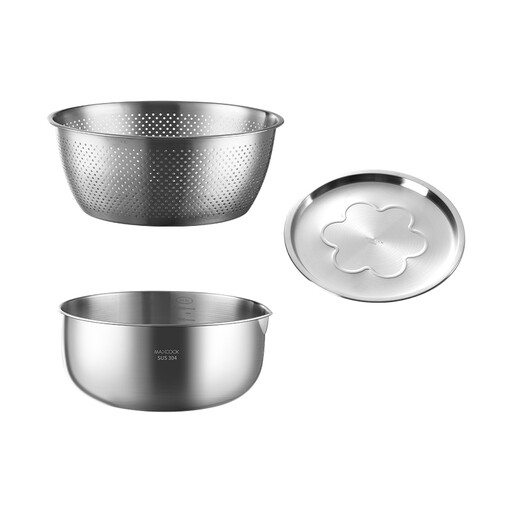
Why it stands out: This set combines three core functions into one product: a mixing bowl, a fine-mesh colander, and a matching lid. The integrated measurement markings inside the bowl allow for precise control of ingredient quantities without needing an extra measuring cup.
Benefits:
Who it's for: Users looking for an all-in-one solution for daily food prep who value integrated features like measurement markings and a matching colander.

Why it stands out: The square shape of this set is a clear distinguishing feature. It allows for exceptionally efficient use of space in the refrigerator, cupboards, or even the sink. The natural bamboo lids lend the set a unique aesthetic.
Benefits:
Who it's for: Individuals who prioritise space-saving storage and are looking for a visually appealing alternative to standard round bowls.
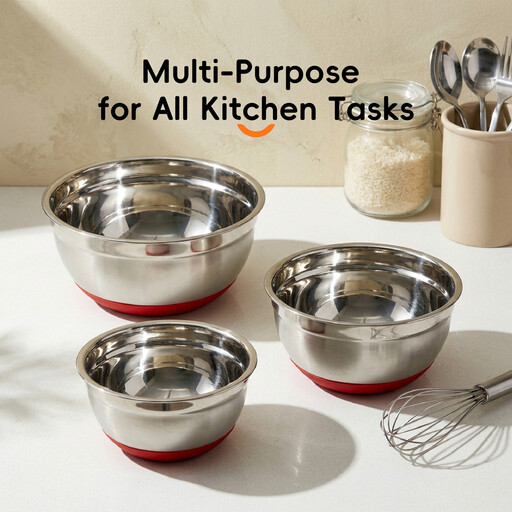
Why it stands out: The firmly attached silicone base makes this mixing bowl non-slip. It provides stability during vigorous stirring or kneading, protects delicate work surfaces from scratches, and reduces the noise of metal on stone or wood.
Benefits:
Who it's for: Home bakers and cooks who frequently mix, knead, or stir and require an absolutely stable and quiet bowl.
The benefits of stainless steel—hygiene, durability, and a neutral surface—make it an excellent material for many other household products, even beyond the kitchen.
For example, explore our selection of durable options for dog bowls for food and water.
1. Is 304 stainless steel truly food-safe? Yes, stainless steel with the material number 1.4301 (known as 304 or 18/8 stainless steel) is approved for food contact and is widely used. It is resistant to corrosion from food acids and alkalis and does not release harmful substances, making it a safe choice for kitchenware.
2. Can stainless steel bowls go in the dishwasher? Most stainless steel bowls are dishwasher-safe. This is one of their major advantages over bowls made from other materials. However, for sets with additional components like bamboo or plastic lids, the manufacturer's instructions should be followed. For instance, bamboo lids should be hand-washed to ensure their longevity.
3. Why should I choose a stainless steel bowl set over plastic bowls? A stainless steel bowl set offers several objective advantages over plastic. Stainless steel is non-porous, so it won't absorb odours, flavours, or stains from foods like tomato sauce or curry. It is more durable and resistant to scratches where bacteria could harbor. Furthermore, it is free of BPA and other plasticisers that may be found in some plastic products.