
Lieferung heute & morgen

Qualitätsgarantie

Willkommens-Angebote freischalten: KOSTENLOSE Lieferung | Bis zu 80 % RABATT | Kostenlose 30-Tage-JoyPlus-Testphase
App herunterladen
A stainless steel chopping board may seem like a straightforward purchase at first glance: durable material, a smooth surface and easy cleaning. In practice, however, the details determine whether the board remains pleasant to use over time. Home cooks, families and health-conscious households should therefore look beyond appearance and also consider the dimensions, stability, care instructions and intended use.
The term antibacterial chopping board initially describes an advertised material or product feature. It does not mean that the board will remain hygienic without thorough washing or that it replaces normal kitchen hygiene. Meat juices, vegetable fibres and oils must be removed after every use.
The following are therefore important:
For coated or combination boards, you should also check whether the surface is prone to scratching and what care the manufacturer recommends.
A chopping board with a juice groove can catch liquid from meat, fruit or vegetables with a high water content. However, the groove must be sufficiently deep and run all the way around the board. Very narrow grooves are also more difficult to scrub clean. After use, the area should be rinsed particularly carefully.
Even a large board only protects the worktop reliably if it sits firmly in place. A non-slip chopping board or an anti-slip mat is therefore useful when making quick chopping movements.
A dishwasher-safe chopping board is practical for busy households. This feature may be expressly stated for stainless steel and plastic composite materials. Bamboo boards, on the other hand, generally require hand washing and complete drying; dishwasher use is expressly not recommended for the VVM model. According to the product information, 5five glass boards should be washed by hand.
The manufacturer’s instructions are decisive. High temperatures, prolonged exposure to moisture and harsh detergents can shorten the service life of bamboo, plastic components or bonded sections.
A stainless steel chopping board for the kitchen has few pores and normally absorbs fewer odours and less liquid than porous materials. It is particularly suitable for raw ingredients and can be cleaned with water and washing-up liquid. However, the hard surface can change the cutting feel and may put more strain on the knife blade with frequent use than bamboo or Wheat-Straw-PP.
A bamboo chopping board generally feels slightly more yielding and can also be used as a serving board. It should not be left permanently wet and may require occasional conditioning oil, depending on its construction. A glass chopping board is smooth, resistant to staining and easy to wipe clean, but is equally hard on knife blades. The glass panel should also be protected from knocks and significant changes in temperature.
For everyday preparation, dimensions from around 35 × 25 cm are versatile. Anyone preparing meat, vegetables and several ingredients at the same time will benefit from a larger surface. The stainless steel model measuring 435 × 281 × 10 mm provides enough space for several stages of preparation and has a juice groove on both sides.
Before buying, check the available storage and worktop space. A large board is only practical if it sits securely on the worktop and can dry completely after use.
Using a double-sided chopping board can make kitchen organisation easier. For example, one side can be assigned to meat and the other to vegetables, fruit or bread. This does not automatically prevent all cross-contamination: both sides must be cleaned thoroughly after use, and the assigned uses should be followed consistently in everyday cooking.
Combinations of stainless steel and Wheat-Straw-PP bring together a hard, smooth side with a lighter, more tactile reverse side. Look out for:
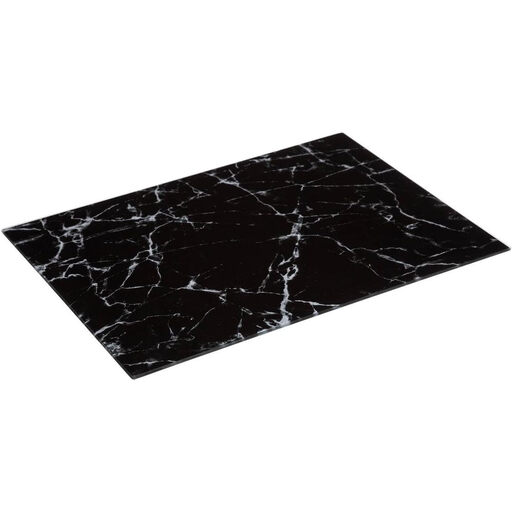
Why this product suits this profile: The 40 × 30 cm glass panel is ideal for anyone looking for an easy-to-wipe surface that can also be used for serving.
The hand-washing recommendation makes the care requirements clear and prevents false expectations about dishwasher use.
40 × 30 cm dimensions, 4 mm height, anti-slip properties and multifunctional use as a serving board.
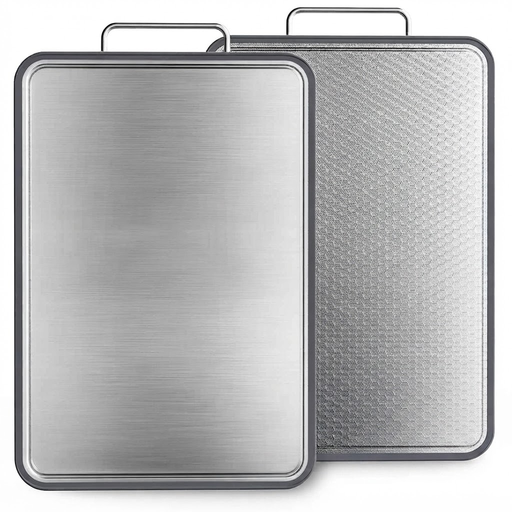
Why this product suits this profile: Made entirely from stainless steel and usable on both sides, this board is designed for an organised kitchen setup with separate work surfaces.
Both sides are made from stainless steel and feature a juice groove. This means there is no soft material side requiring separate care.
435 × 281 × 10 mm, double-sided use, juice grooves on both sides, textured surface and stainless steel handle.
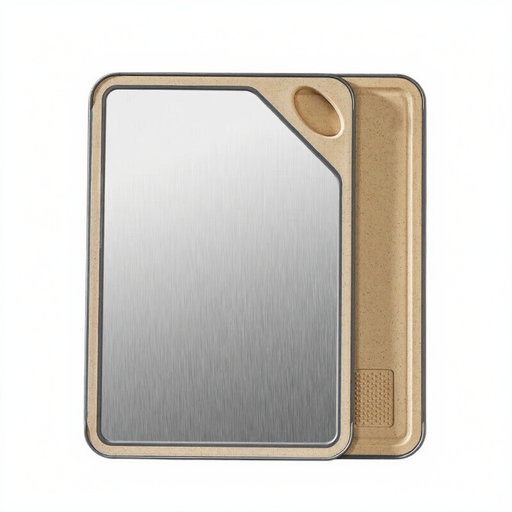
Why this product suits this profile: The combination of 304 stainless steel and Wheat-Straw-PP provides two work surfaces designed for meat, vegetables, fruit and bread.
The product description identifies the different surfaces for specific uses and also highlights the need to clean both sides thoroughly.
Dimensions of 25 × 36 cm, 304 stainless steel on one side, Wheat-Straw-PP on the other and a hanging hole for storage.
We have put together a complete, regularly updated list of products that fully meet these strict selection criteria and the safety regulations applicable in the EU.
Regardless of the material, a hygienic chopping board requires a consistent routine:
With stainless steel, wipe the surface dry after rinsing to reduce water marks. Bamboo should not be put in the dishwasher. For glass, regularly check the edges and underside for damage. Wheat-Straw-PP models should be cleaned according to the instructions provided by the respective manufacturer.
Yes, a stainless steel board can be used for meat and vegetables. With a double-sided model, the sides can be assigned to separate uses in everyday cooking. After contact with raw meat, thorough cleaning with washing-up liquid is required. The choice of material does not replace hygienic food-preparation practices.
Its service life depends on the material thickness, surface quality, knives, cleaning and storage. Stainless steel is resistant to moisture and absorbs fewer odours than many porous materials. Visible deep damage, sharp edges or an unstable base are signs that the board should be replaced.
Stainless steel is generally easy to wipe clean and resistant to water. Bamboo requires more attention, particularly when it comes to drying and conditioning. Glass is also easy to clean, but is hard on knife blades and should be treated by hand in accordance with the manufacturer’s instructions. The right choice therefore depends on the cutting feel, cleaning routine, size and intended use.