
Lieferung heute & morgen

Qualitätsgarantie

Willkommens-Angebote freischalten: KOSTENLOSE Lieferung | Bis zu 80 % RABATT | Kostenlose 30-Tage-JoyPlus-Testphase
App herunterladen
A stainless steel kitchen colander should be suitable for washing vegetables, rinsing rice, draining pasta and letting food drain. In small flats, it can also double as a sink basket, fruit bowl or storage solution. But not every kitchen sieve is right for every household. Unclear material specifications, impractical dimensions or awkward handles can often lead to disappointing purchases.
The term ‘stainless steel’ initially refers only to a group of materials. When choosing a product, it’s important to check whether the manufacturer specifies a particular grade, such as 304 stainless steel or 18/8 stainless steel. With uncoated products, it’s also easier to establish which surface comes into contact with food.
However, a material specification is no substitute for proper care. Even a rust-resistant sieve should be dried thoroughly after cleaning and not left sitting in water for long periods.
A vegetable sieve with very large holes can let small grains of rice, herbs or berries fall through. On the other hand, holes that are too small or unevenly spaced can slow drainage. Look for a dense, evenly distributed pattern of holes that drains water quickly and works well with a range of foods.
The rim matters too: smooth, rolled edges can make the sieve more comfortable to handle and reduce the risk of sharp edges.
An extendable sink basket is handy if you know the width of your sink and the basket sits securely across it. For a fixed stainless steel colander, check that the diameter suits your sink, saucepan or existing salad bowl. Oversized models can be unstable, while small pasta sieves can quickly become overfilled when preparing family-sized portions.
Also look for integrated handles. They make the sieve easier to move, but don’t replace a stable base. A full sink basket should not slide off the sink or tip over.
When choosing a product for everyday contact with fruit, vegetables and crockery, these details are useful:
The term ‘rust-proof’ shouldn’t be taken as permission to use harsh cleaning products. Scouring agents and abrasive pads can scratch the surface. For many stainless steel sieves, mild washing-up liquid, a soft sponge and thorough drying are a better choice.
A diameter of around 24 to 28 cm is often suitable for salad, fruit, vegetables or medium portions of pasta. However, how well a sieve suits your needs also depends on its height, shape and the space available. Before buying, check:
A telescopic model can save space in rented flats and small kitchens. A classic colander with double handles, on the other hand, can be used on the worktop, in the fridge or as a fruit and vegetable sieve.
A stainless steel kitchen colander should be rinsed free of food residue and dried after use. With rice, flour or small herbs in particular, it’s worth rinsing the holes from both sides. Whether a model is dishwasher-safe depends on the manufacturer’s instructions. The drain baskets featured here are not designed for direct contact with hob rings, ovens or naked flames.
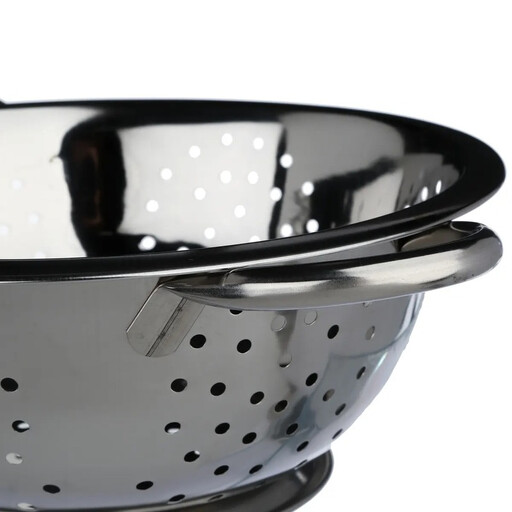
Why this product suits your needs: With a diameter of 24 cm and a capacity of 2.2 litres, this colander is designed for everyday tasks such as draining pasta and washing vegetables and fruit.
The specified diameter and capacity make it easier to assess whether it’s the right fit before you buy.
24 cm diameter, 12 cm height, suitable for washing, draining and sieving.
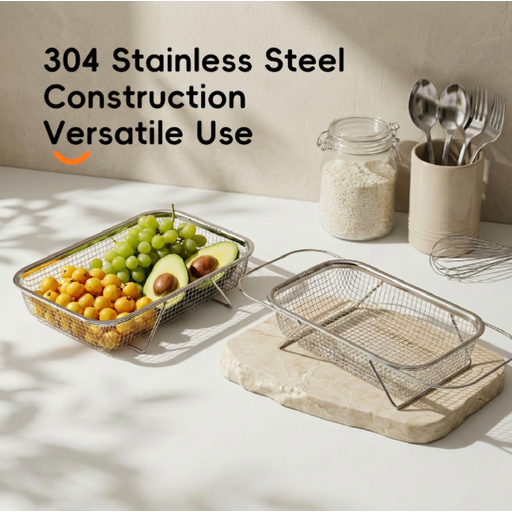
Why this product suits your needs: This telescopic model is designed to fit sinks of different widths and suit households with limited storage space.
Its stated adjustable dimensions of 29.5 × 6.9 cm make it easier to plan where it will fit than a vague ‘one size fits all’ measurement.
Food-grade 304 stainless steel, an uncoated finish and an extendable design.
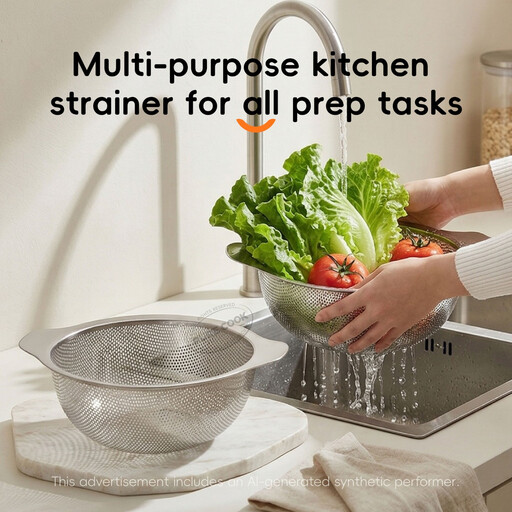
Why this product suits your needs: Its medium size of 27.3 × 22.6 × 9.1 cm and double handles make it suitable for regular washing, draining and moving around.
Dense, evenly spaced drainage holes and rolled edges help address slow draining and uncomfortable edges.
Uncoated stainless steel, integrated double handles and versatile use as a vegetable sieve, fruit basket or storage tray.
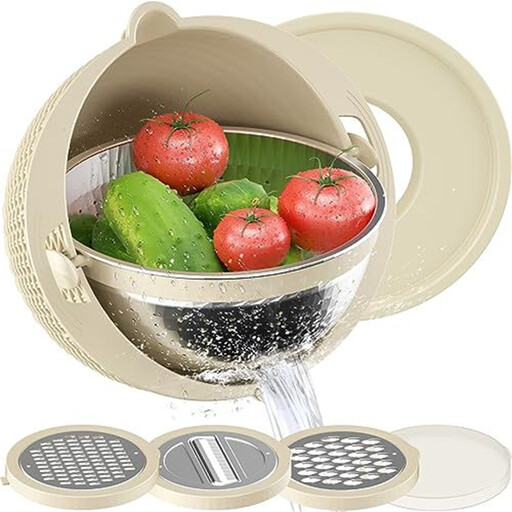
Why this product suits your needs: Its two-tier, rotating design is for people who want to wash fruit and vegetables separately or in several stages.
The product description specifically mentions two perforated tiers and a rotating function, rather than making a vague claim about versatility.
Two perforated tiers and a rotating design for preparing fruit and vegetables.
We’ve put together a complete, regularly updated list of products that meet these strict selection criteria and fully comply with the safety regulations in force in the EU.
Look for an evenly perforated pattern of holes with openings that are small enough. A model with very large holes may let grains of rice or small berries fall through. A stable base is also useful when rinsing rice, so you can keep both hands free.
For smaller households, a sieve with a capacity of around 2 to 2.2 litres may be enough. Families should also check the diameter and height, as a large portion of pasta needs not only enough capacity but also sufficient space for draining. The dimensions should suit your sink and saucepan.
Dry the sieve thoroughly after cleaning and avoid chlorine-based or highly abrasive products, unless the manufacturer advises otherwise. Small discolourations can also be caused by contact with iron particles and don’t necessarily indicate a fault with the material.