
Lieferung heute & morgen

Qualitätsgarantie

Willkommens-Angebote freischalten: KOSTENLOSE Lieferung | Bis zu 80 % RABATT | Kostenlose 30-Tage-JoyPlus-Testphase
App herunterladen
Stainless steel cookware is synonymous with durability, safety, and a professional look in the kitchen. However, the vast selection can be overwhelming, and not every shiny product delivers on its promise. As a Joybuy Product Recommendation Officer, I see daily which features truly matter and where the most common pitfalls lie. Before you make a purchase, you should know the critical quality differences to make an investment that will pay off for years to come.
Many products on the market use vague marketing terms that say little about the actual quality. Here are three common problems that can lead to frustration and unnecessary expense.
To avoid these pitfalls, you should focus on verifiable, objective criteria. These three parameters are crucial for the longevity and functionality of your cookware.
Look for the 304 stainless steel label. This specification, also known as 18/8 stainless steel (18% chromium, 8% nickel), is an internationally recognized standard for food-safe material. The advantages are clear:
Products without this specific designation may be made from less resilient materials that won't offer the same long-term performance.
A high-quality induction cookware set or individual pots and pans need a special base construction for optimal heat distribution. Look for the following features:
Good design solves everyday problems. A divided plate is not only ideal for kids to keep different foods separate but also a practical portion control plate for adults focused on a balanced diet. For outdoor activities, lightweight and stackable stainless steel camping cookware is the right choice, as it is shatterproof and easy to clean. Even specialized equipment like a kamado grill benefits from accessories made of high-quality stainless steel, such as the grill grates.
Based on the criteria above, we have identified several products that are well-suited for specific user profiles.
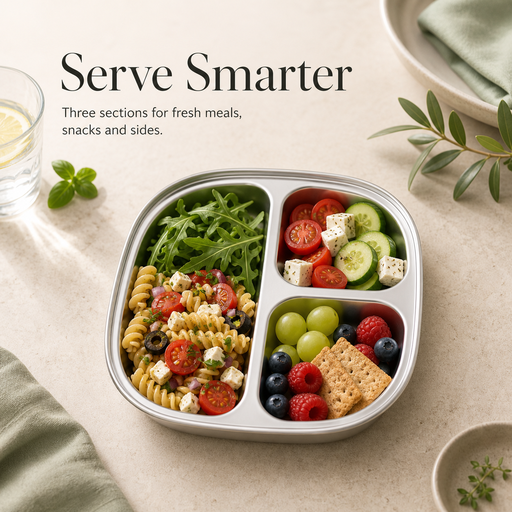
Why It's a Great Fit: Ideal for families looking for a durable and safe alternative to plastic dinnerware. The three compartments help children accept a balanced meal and are excellent for adult portion control.
The product is made from specified 304 stainless steel, avoiding the trap of vague material claims. Its seamless, unbreakable design makes it a truly practical everyday item, unlike impractically designed dinnerware.
Shatterproof, dishwasher-safe, and free of harmful substances. The compartments prevent food from mixing and promote portion control.
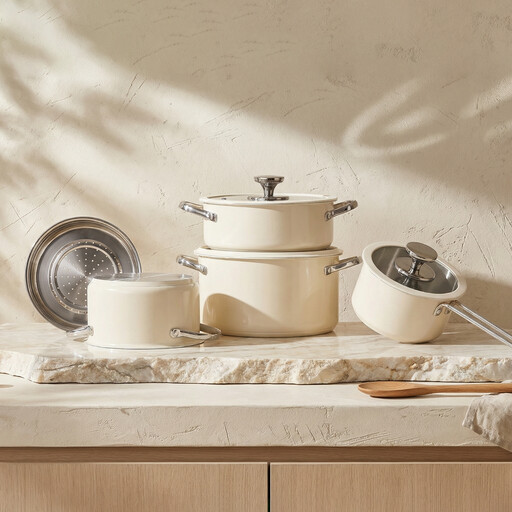
Why It's a Great Fit: This set covers a family's most common cooking needs with a milk pot, soup pot with steamer insert, hot pot, and stockpot. It's designed for all stovetops and provides a solid starter kit.
Compatibility with all stovetops, including induction, indicates a properly constructed base, avoiding the pitfall of poor heat conduction. The inner layer of 304 stainless steel guarantees material quality.
A complete set for various cooking methods (boiling, steaming, stewing). The external ceramic coating makes cleanup easier.

Why It's a Great Fit: This plate is extremely durable, lightweight, and stackable—perfect for camping, picnics, or backyard use. Its unbreakable nature makes it a worry-free choice for on-the-go meals.
The explicit mention of 304 stainless steel and its "unbreakable" property directly addresses the pitfalls of material quality and impractical design. Its compatibility with ovens and induction also shows a thoughtful construction.
Maximum durability and versatility. According to the manufacturer, it can be used not only as a plate but also for heating food in the oven or on an induction cooktop.
We've compiled a complete, up-to-date list of products that fully meet these strict selection criteria and German safety regulations.
1. Is all stainless steel cookware suitable for induction cooktops? No. For a pot or pan to work on an induction cooktop, its base must be magnetic. Look for the induction symbol (a stylized coil) on the packaging or in the product description. High-quality cookware with a multi-layer encapsulated base is often designed for all stovetops, including induction.
2. How do you clean stainless steel cookware properly to avoid stains? To prevent water spots, dry the cookware with a soft cloth immediately after washing. For stubborn discoloration or burnt-on food, briefly boiling a mixture of water and vinegar in the pot can help. Avoid steel wool or abrasive scouring pads, as they can scratch the surface.
3. What is the difference between 304 and 18/10 stainless steel? There is no significant difference. Both terms describe the same high-quality stainless steel alloy. 304 is the technical designation according to the American AISI system. 18/10 describes the ratio of the alloy components: 18% chromium and 10% nickel. If you see either of these designations, you can assume you are getting a high-quality, food-safe material.