
Lieferung heute & morgen

Qualitätsgarantie

Willkommens-Angebote freischalten: KOSTENLOSE Lieferung | Bis zu 80 % RABATT | Kostenlose 30-Tage-JoyPlus-Testphase
App herunterladen
Stainless steel cookware is a good fit for many UK households because pots, pans and woks generally work with different types of hob and are suitable for a wide range of cooking methods. Even so, not every option will automatically suit your everyday kitchen needs. Terms such as “Tri-Ply”, “304 stainless steel” or “ceramic coating” describe specific features, but on their own they say nothing about size, care requirements or ease of use.
If you are looking to buy a stainless steel pot, stainless steel frying pan or cookware set, you should avoid three common purchasing mistakes.
A polished or satin finish is primarily an optical and tactile feature. Heat distribution, on the other hand, depends mainly on the base construction and material thickness. A simple stainless steel base can heat unevenly at high temperatures. A sandwich base or Tri-Ply construction with an aluminium core can distribute heat across the cooking surface.
Important: A multi-layer construction does not automatically mean that every model performs in the same way. Also check whether the base is suitable for your hob and whether the manufacturer provides specific information about the construction and compatible hob types.
Uncoated stainless steel cookware does not contain a conventional non-stick coating. This may appeal to buyers who prefer a durable interior without a coating. At the same time, food can stick more readily if the pan is used when it is too cold, too hot or with too little fat.
Coated cookware with a ceramic coating can offer a different cooking experience at low to medium heat. However, you must follow the temperature limits, use suitable kitchen utensils and observe the care instructions. Metal utensils, sudden temperature changes and abrasive cleaners can damage the coating.
With a pot or frying pan, the main body may be dishwasher-safe while the lid, removable handles or silicone components should be cleaned by hand. Even with stainless steel, hand washing with a soft sponge can help protect the surface over the long term. Statements such as “dishwasher-safe cookware” should therefore always be considered in relation to the specific product and its individual components.
18/10 stainless steel refers to a composition of approximately 18 per cent chromium and 10 per cent nickel. This designation is widely used for household cookware and describes the composition of the stainless steel.
304 stainless steel is a material designation frequently used for cookware intended for food contact. However, the designation alone does not replace checking the workmanship, base construction, handles and product information. Statements about food safety should be based on the manufacturer's information and the applicable EU regulations for materials intended to come into contact with food.
With Tri-Ply stainless steel, the construction typically consists of stainless steel, a heat-conducting aluminium core and another layer of stainless steel. The aim is to provide more even heat distribution than a simple single-layer construction. A stainless steel pot with a sandwich base can benefit from this design when cooking soups, sauces or pasta.
For induction hobs, the base must be magnetically compatible. Look for a clear statement such as “suitable for induction”, or check that the listed combination includes induction, gas, electric and ceramic hobs.
A 16-cm pressure cooker or saucepan is suitable for small quantities, while a 24-cm stainless steel pot with a 6-litre capacity is more suitable for family-sized portions, soups or pasta. A 22-cm stainless steel frying pan is space-saving and practical for smaller households; 28 cm provides more cooking space but requires a sufficiently large hob.
A piece of cookware with a glass lid allows you to monitor the food while it cooks. With a hotpot, a divided interior can be useful if you want to prepare two broths or ingredients at the same time.
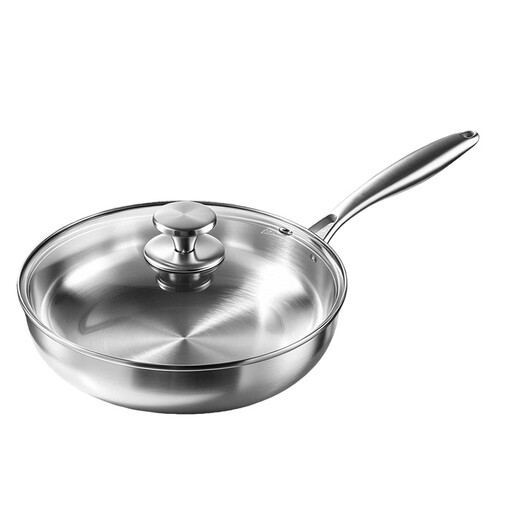
Why this product suits the profile: The 22-cm size is ideal for smaller portions and everyday tasks such as cooking eggs, pancakes or vegetables.
The product details specify an uncoated Tri-Ply construction made from 304 stainless steel and aluminium. This makes it clear that the non-stick coating is not being confused with stainless steel.
According to the product description, it is suitable for induction, gas, electric, ceramic and halogen hobs; dishwasher suitability is also stated.
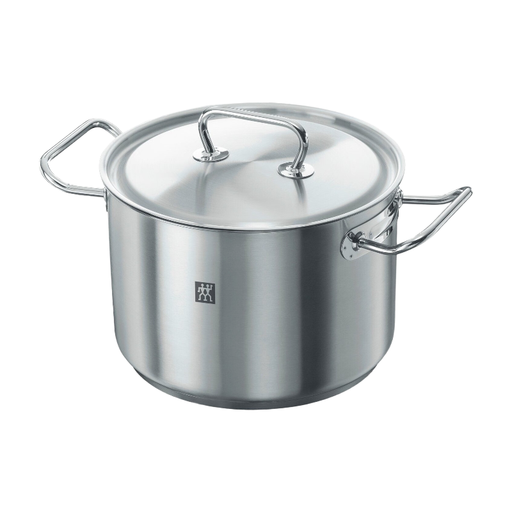
Why this product suits the profile: The 24-cm pot with a 6-litre capacity is designed for households that regularly cook larger quantities.
The product description specifies a SIGMA Classic sandwich base and an integrated measuring scale. This clearly identifies important construction features.
According to the manufacturer, it is made from 18/10 stainless steel, suitable for all the hob types listed and dishwasher-safe; a stainless steel lid is included.
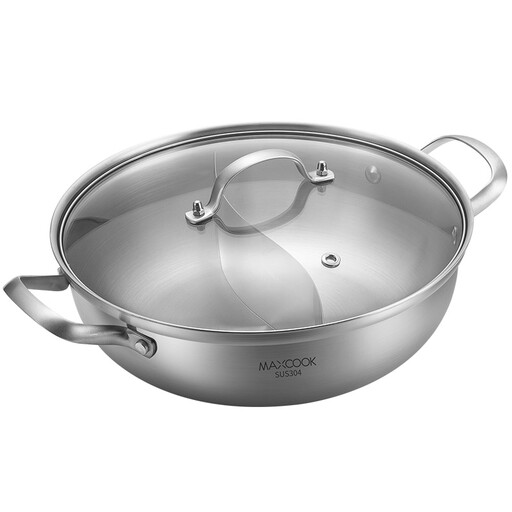
Why this product suits the profile: The divided hotpot is designed for shared meals with two different broths or ingredients.
The supplier lists the material, divider, compatible hob types and cleaning requirements separately. This makes it easier to compare the details with your own needs.
According to the product details, it is made from 304 stainless steel without a non-stick coating, features a composite base and is suitable for induction, gas, electric and ceramic hobs.

Why this product suits the profile: Removable handles allow the 20- and 26-cm cookware pieces to be stacked, saving cupboard space.
The product description distinguishes between dishwasher-safe metal bodies and handles, lids and accessories that must be cleaned by hand.
According to the manufacturer, it features a stainless steel body, aluminium core and ceramic coating, and is suitable for induction, gas, electric, ceramic and other hob types.
We have put together a complete, regularly updated list of products that fully meet these strict selection criteria and the safety regulations applicable in the EU.
For an uncoated stainless steel frying pan, the classic approach works well: heat the pan first, then add oil and adjust the temperature to suit the food. Very high temperatures are not always necessary in everyday cooking and can cause discolouration.
The following basic rules generally apply to cleaning:
Many models are suitable for induction, but not every stainless steel product is. The key factor is a magnetic or induction-compatible base. The product description should explicitly mention induction. This applies equally to induction frying pans, induction pots and stainless steel woks.
Its lifespan depends on the material, base construction, workmanship, temperature control and care. Uncoated stainless steel surfaces are less reliant on a delicate non-stick coating. With coated cookware, using low to medium heat, suitable kitchen utensils and gentle cleaning can help extend its lifespan. It would not be accurate to give one general number of years for all models.
A cookware set can be a sensible choice if you regularly use several sizes and storage space is a consideration. Before buying, check exactly which pieces are included, whether the lids are interchangeable and whether all components are suitable for your hob. If you only need a single stainless steel pot or frying pan, choosing an individual item may be more practical.