
Lieferung heute & morgen

Qualitätsgarantie

Willkommens-Angebote freischalten: KOSTENLOSE Lieferung | Bis zu 80 % RABATT | Kostenlose 30-Tage-JoyPlus-Testphase
App herunterladen
A stainless steel cutlery set should be reliable for everyday use, suit the number of people in your household and still look smart after many dishwasher cycles. In practice, however, disappointing purchases are often caused not by a lack of choice, but by unclear product information. A shiny surface, for example, reveals little about the material composition, while a large set may contain pieces that are rarely needed at home.
This guide explains which details are important to check before buying a cutlery set and which set is suitable for different situations.
The term stainless steel initially refers to a group of materials. When assessing a cutlery set, additional details such as 18/10 stainless steel, 13/0 chrome steel or “Inox” are useful. 18/10 refers to steel containing 18 per cent chromium and 10 per cent nickel. This composition is often used for cutlery and can help improve corrosion resistance. Knives may use a different type of steel from forks and spoons.
If the material is not specified precisely, buyers should check the product description and technical details particularly carefully.
Shiny, matt or floral-patterned cutlery can create different impressions depending on the table setting. However, the finish alone does not determine how easy the set is to care for. With a matt cutlery set, water marks or residue may become visible if the pieces remain wet for a long time after washing. Decorative handles should also have joins and embellishments that are as easy to clean as possible.
A 16-piece cutlery set may be sufficient for a small household or as a basic starter set. A 24-piece cutlery set often contains four place settings, each with a knife, fork, soup spoon and dessert spoon. For six people, a 24-piece set is only suitable if it contains six complete place settings. The total number of pieces therefore says less than the exact breakdown.
Anyone who regularly entertains should check whether a 68-piece cutlery set actually includes serving cutlery and how many people the individual place settings are designed for.
Look for specific material information. With 18/10 stainless steel cutlery, the 18 per cent chromium and 10 per cent nickel generally refer to the material designation of the individual cutlery pieces. In the ZWILLING set from our selection, the forks and spoons are specified as 18/10 stainless steel, while the knives are made from 13/0 chrome steel. This distinction is more transparent than giving a blanket specification for the entire set.
“Inox” is a commonly used term for stainless steel. With Inox cutlery, you should also check the specific alloy and care instructions.
A dishwasher-safe cutlery set makes everyday use easier. Nevertheless, knives should be placed in the cutlery basket with the blade facing down, and forks with the prongs facing down, to reduce the risk of injury when unloading. Once the programme has finished, it is best to remove and dry the cutlery promptly, especially if it has a matt finish.
Avoid leaving cutlery to soak for long periods in highly acidic, chlorine-based or alkaline cleaning products. Such guidance is more important than a general marketing claim about ease of care.
For a household of two to four people, a 16- or 24-piece set may be a sensible choice. A cutlery set for 6 people should ideally contain at least 24 basic pieces, provided that each place setting is intended to include four pieces of cutlery. With a cutlery set for 12 people, a wider selection of coffee and dessert cutlery is practical.
A cutlery set with serving utensils may additionally include serving spoons, salad servers, a soup ladle or a cake server. Check the contents list, as “68 pieces” can be divided up differently by different manufacturers.
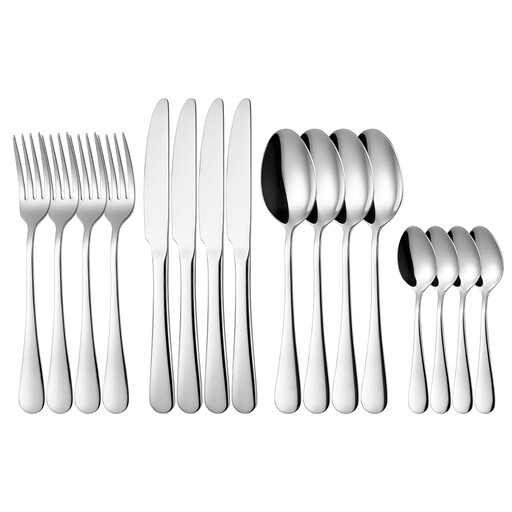
Why this product suits this profile: The 16-piece set provides a manageable selection of knives, forks and spoons, making it suitable for smaller households.
The number of pieces and the basic cutlery types included are clearly specified. This makes it possible to check before buying whether the contents suit your household.
16 pieces; dishwasher-safe according to the product information; silver-coloured stainless steel finish.
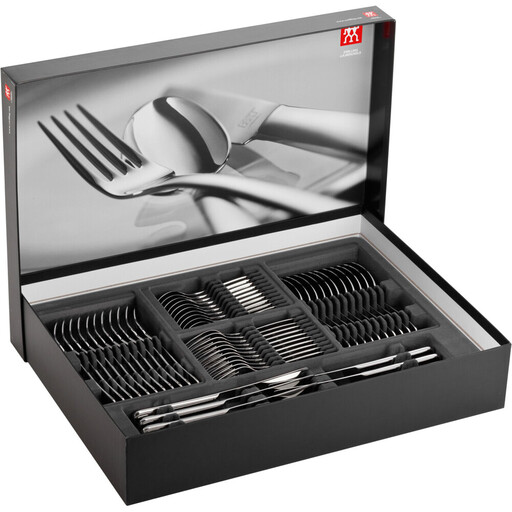
Why this product suits this profile: The set is designed for 12 people and combines complete place settings with eight serving pieces, making it suitable for larger households and special occasions.
The product details distinguish between the material used for the forks and spoons and the steel used for the knives. The breakdown of all 68 pieces is also specified in detail.
68 pieces; 12 place settings; matt finish; dishwasher-safe according to the product description; eight serving pieces.
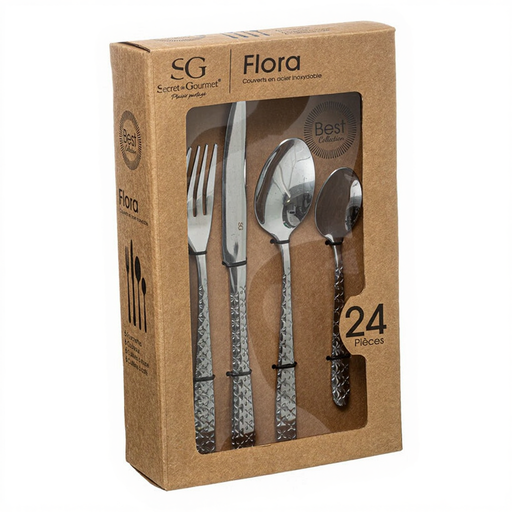
Why this product suits this profile: Designed for six people, this set combines clearly defined essentials with floral-patterned handles. It is suitable for everyday use as well as formal table settings.
The product description specifies the material, number of people and types of cutlery included. This reduces the risk of choosing a decorative set without enough everyday essentials.
24 pieces; 18/10 Inox stainless steel according to the product description; floral-patterned handles; dishwasher-safe; six pieces of each cutlery type.
We have put together a complete, regularly updated list of products that fully meet these strict selection criteria and the safety regulations applicable in the EU.
Sharp knife blades and pointed fork prongs also require careful handling. Cutlery should be stored out of the reach of young children.
That depends on the intended contents. A classic set with a knife, fork, soup spoon and dessert or coffee spoon for each person contains 24 pieces. For six people, you should check the contents list, as some sets include different types of cutlery instead of dessert spoons.
18/10 stainless steel is often used for dishwasher-safe cutlery. However, the specific manufacturer’s information for the complete set is what matters. After washing, water residue and harsh cleaning products should not remain on the surface for long.
Its service life depends on the material, workmanship, dishwasher habits, cleaning products and storage conditions. Without knowing the individual conditions of use, it is not possible to give a reliable specific lifespan. Drying the cutlery regularly, loading the dishwasher correctly and avoiding harsh soaking solutions can help protect the surface.