
Lieferung heute & morgen

Qualitätsgarantie

Willkommens-Angebote freischalten: KOSTENLOSE Lieferung | Bis zu 80 % RABATT | Kostenlose 30-Tage-JoyPlus-Testphase
App herunterladen
A double-sided stainless steel cutting board promises a hygienic, durable, and functional solution for the modern kitchen. However, the market is flooded with products of widely varying quality. Many home cooks invest in a supposedly high-end board, only to find that after a few months it warps, rusts, or develops deep scratches that make hygienic cleaning impossible. Before you make a purchase, it's crucial to understand the typical weaknesses and exaggerated marketing claims.
The three most common problems that lead to purchase regret:
To ensure your new cutting board is a long-term asset to your kitchen arsenal, you should check two core parameters: material quality and functional design.
The most important component is the stainless steel side. Look for the 304 stainless steel specification. This food-grade steel is corrosion-resistant, robust, and completely non-porous, making it an ideal surface for preparing raw meat and fish. It prevents juices and odours from penetrating the material, providing the foundation for an antibacterial cutting board.
The reverse side, usually made of wheat straw or polypropylene (PP), serves a different purpose. It is gentler on knives and is perfectly suited for vegetables, fruits, and bread. A high-quality wheat straw cutting board offers a dense, resilient surface that is less prone to deep cuts than cheap plastic. This clear separation makes it a perfect cutting board for meat and vegetables and minimises the risk of cross-contamination.
A thoughtful design is just as important as the material. A hygienic kitchen board should have the following features:
Here are some recommendations tailored to specific user profiles that meet the quality criteria mentioned above.
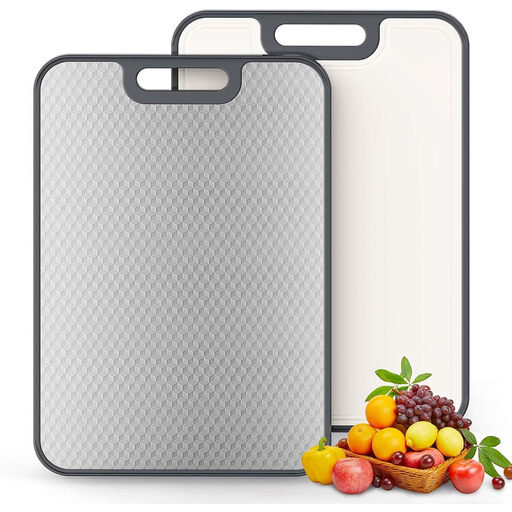
Why This Fits Their Persona: Ideal for preparing larger meals. The generous surface area and clear separation of stainless steel for meat and PP plastic for vegetables directly address a key family concern: preventing cross-contamination.
The use of food-grade stainless steel and its dishwasher-safe design ensure hygienic cleaning, unlike boards that warp or whose surfaces wear out quickly.
Large work surface (approx. 43 x 30 cm) and a textured surface for safer cutting.
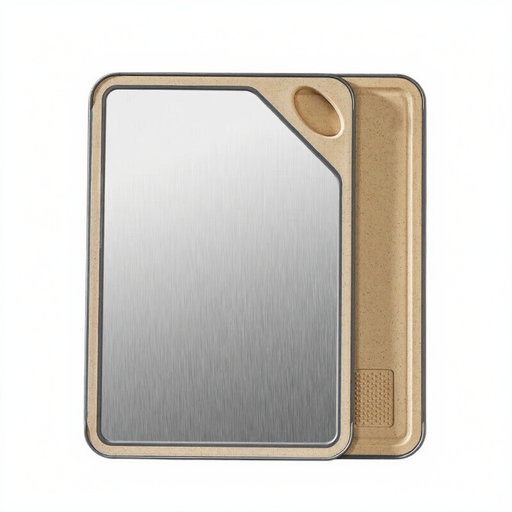
Why This Fits Their Persona: A versatile and low-maintenance all-in-one solution for daily use. The combination of durable steel and a knife-friendly wheat straw side makes it a functional choice for all cutting tasks.
This board specifies the use of 304 stainless steel, thus avoiding the risk of rust and corrosion common in boards made of unspecified metal. The wheat straw side is a robust alternative to cheap plastic.
Verified 304 stainless steel for durability and a knife-friendly wheat straw side in a practical size (25 x 36 cm).
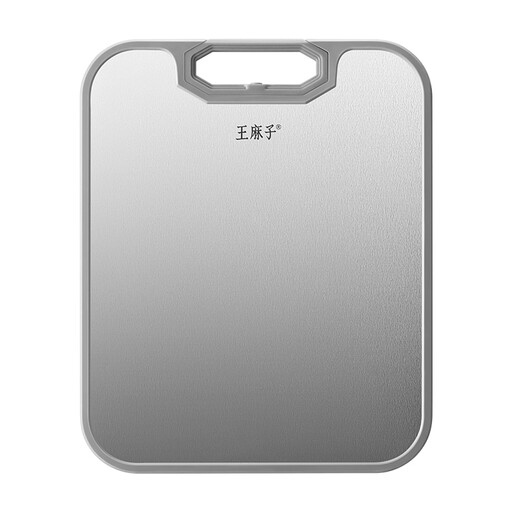
Why This Fits Their Persona: A straightforward option that focuses on the core benefit: a hygienic, dual-sided work surface. Perfect for smaller kitchens, students, or anyone looking to upgrade their basic kitchen tools.
This board avoids the common mistake of using a single, scratched board for everything. It provides a clear functional separation with a non-porous steel surface for hygiene-critical foods.
Compact design and a clear functional separation for an easy upgrade to kitchen hygiene.
We've compiled a complete, up-to-date list of products that fully meet these strict selection criteria and safety standards.
Most high-quality boards are dishwasher-safe. However, for maximum longevity, it is recommended to clean the board by hand with warm water and dish soap, then dry it thoroughly to prevent water spots. Do not use steel wool or aggressive abrasive cleaners on the stainless steel surface.
Yes, stainless steel is harder than wood or plastic, which can lead to faster wear on the knife blade. It is recommended to use the stainless steel side specifically for tasks like portioning raw meat or fish, where hygiene is the top priority. For extensive chopping of vegetables, the softer wheat straw or PP side is the more knife-friendly choice.
Wheat straw plastic is often promoted as a more resource-friendly alternative to purely petroleum-based plastic. In terms of function, high-quality wheat straw composites often provide a dense and resilient surface that is less prone to deep cuts than simple, soft PP plastic. The feel is also considered more pleasant by many users.