
Lieferung heute & morgen

Qualitätsgarantie

Willkommens-Angebote freischalten: KOSTENLOSE Lieferung | Bis zu 80 % RABATT | Kostenlose 30-Tage-JoyPlus-Testphase
App herunterladen
A stainless steel dish drying rack can help keep your worktop or the area beside the sink neat and organised. However, models vary considerably in terms of materials, footprint, capacity and water drainage. If you focus solely on appearance, you could end up buying a rack that does not fit your kitchen, directs water onto the worktop or offers too little space for everyday use.
This buying guide explains which details matter before you buy and which designs may suit different households, catering businesses and commercial kitchens.
The term “stainless steel” may refer to different components of a product. Some models are made entirely from stainless steel, while others combine a metal rack with a plastic drainboard. A stainless steel surface on steel is also not the same as a product made throughout from stainless steel.
So check the following:
A clear description of the materials makes it easier to choose the right product and helps ensure that the actual construction matches the product image.
A compact dish drying rack for the kitchen saves space, but may only have room for a few plates or cups. A small solution may be sufficient for a one-person household. Families, house shares and catering businesses, on the other hand, generally need several storage areas for plates, glasses, cutlery and cooking utensils.
The key factors are not just the external dimensions, but also:
A drainboard collects water, but does not automatically solve the drainage issue. If liquid remains standing, it must be emptied and cleaned regularly. Models with an outlet or rotating water diverter can direct water more effectively towards the sink. Before buying, check whether the drainage system is compatible with the position of your sink.
Stainless steel is well suited to kitchen environments because its surface is generally easy to wipe clean. Nevertheless, water, food residue and cleaning products should not be left on the material for extended periods. After washing up, regular cleaning with a suitable, non-abrasive cloth is recommended.
With a dish rack with drainboard, you should check the connection between the rack and the tray. Gaps where water can collect increase the cleaning effort. A removable tray is more practical for many households.
Measure the available area before buying. As well as width and depth, take the following into account:
A model measuring 42 × 29 × 12,7 cm may fit on a medium-sized worktop. A larger rack measuring 35 × 50 × 13 cm, on the other hand, requires a wider footprint but can hold more dishes.
A dish drainer for the sink should not direct water onto the worktop without control. Look for a slightly sloped drainboard, a drain, an outlet or an adjustable water diverter. With a sink organiser and a stainless steel sink shelf, it is also important that the underside can dry properly after cleaning.
Small additions can also be useful: A sink sponge holder provides a dedicated place for sponges and cloths. A sink drain strainer with a diameter of 7 cm can catch food residue and is designed for specific drainage or storage areas. The diameter and intended location must be compatible before you buy.
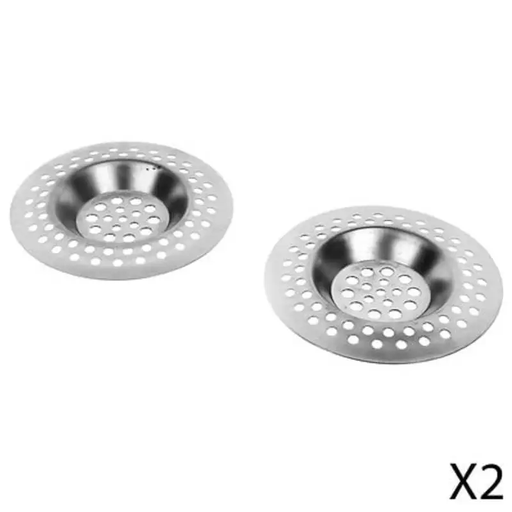
Why this product suits this profile: This two-piece set is designed for small drainage or storage areas, making it suitable for households looking for a compact solution rather than a large dish drainer.
The 7 cm diameter is specified, so you can compare it with the intended location before buying.
Two grids, compact dimensions and steel with a stainless steel finish, according to the product description.
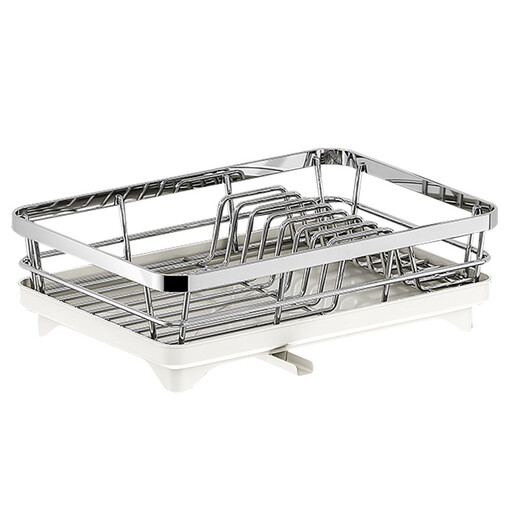
Why this product suits this profile: The combination of a stainless steel rack, drainboard and water diverter is aimed at users who value an organised set-up and controlled water drainage.
The product details specify a drainboard and a rotating water diverter. This allows you to check the drainage direction carefully before positioning the rack.
Stainless steel and PP components, an integrated construction requiring no assembly, and specified dimensions of 42 × 29 × 12,7 cm.
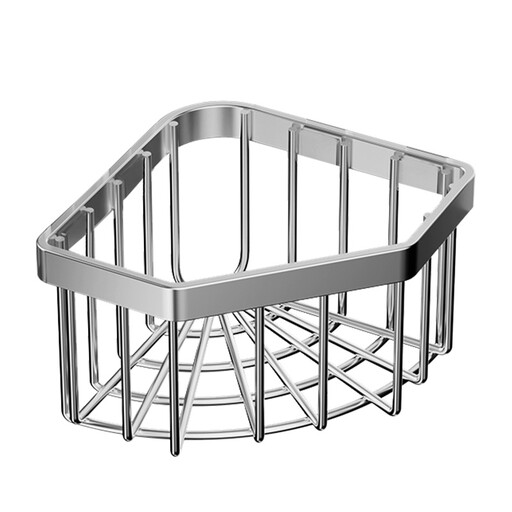
Why this product suits this profile: This sponge holder complements a dish-draining system and creates a dedicated storage area for sponges or cleaning cloths right by the sink.
The design is specified as a sink shelf. Before buying, check the fixing method, available width and water drainage of your own sink.
The product name specifies 304 stainless steel and use as a shelf for a sponge and cloth.
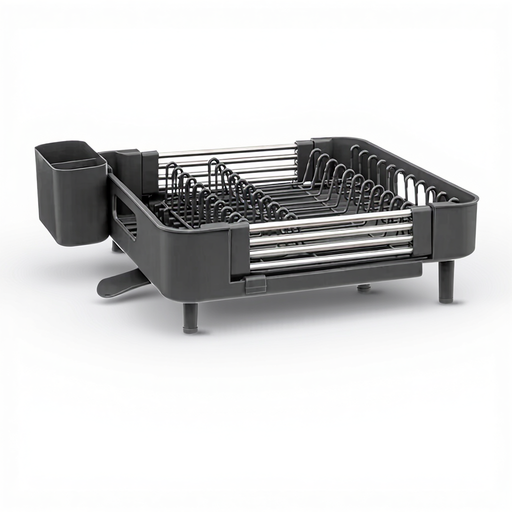
Why this product suits this profile: Its specified size of 35 × 50 × 13 cm and capacity of 20 make it an option for users who regularly need to place more dishes down at the same time.
The external dimensions and stated capacity are clearly specified. This makes it easy to check in advance whether your worktop offers enough space.
Specified dimensions of 35 × 50 × 13 cm, a weight of 1,57 kg and a metal and PP construction.
We have put together a complete, regularly updated list of products that fully meet these strict selection criteria and the safety regulations applicable in the EU.
To keep a dish drainer functional over the long term, the drainboard should be emptied regularly and cleaned separately. Remove food residue promptly and dry accessible metal surfaces when necessary. Abrasive cleaners, hard brushes and aggressive cleaning products can damage surfaces.
Restaurants, cafés, hotels and commercial kitchens must also follow their internal hygiene and cleaning schedules. A product designed for domestic use is not automatically suitable for every professional application. Check the specified use, load capacity and requirements of the intended location.
The right size depends on the size of your household, the amount of crockery and the available space. Measure the available width and depth, and allow room for the tap, cupboard doors and removing the dishes. A compact sink organiser may be enough for a small kitchen, while families and commercial kitchens need more slots and a larger storage area.
Choose a model with a drainboard and, ideally, controlled water drainage. An outlet or adjustable water diverter can direct water towards the sink. Before positioning the rack, check that its orientation matches the edge of the sink and that the tray sits completely level or as intended by its design.
Its lifespan depends on the materials, construction, load and care. Look for sturdy connections, an undamaged surface and sufficient load-bearing capacity. Regular cleaning and drying can help maintain its condition. For models with a plastic tray, also check whether the tray becomes brittle or deforms over time.