
Lieferung heute & morgen

Qualitätsgarantie

Willkommens-Angebote freischalten: KOSTENLOSE Lieferung | Bis zu 80 % RABATT | Kostenlose 30-Tage-JoyPlus-Testphase
App herunterladen
A stainless steel divided plate is a practical and durable alternative to ceramic, glass, or plastic plates. Whether for a child's organised meal, for mindful portion control in your daily life, or as a rugged companion for camping, the advantages are clear. However, the market offers a bewildering array of options, and not every product lives up to its promise. Before you make a decision, it's crucial to understand the common pitfalls that often only become apparent after your purchase.
This guide will show you what to look for to make an informed choice and find a plate that will meet your needs for years to come.
Many buyers focus on price or appearance, overlooking crucial quality indicators. This often leads to disappointment and unnecessary expense.
To avoid these pitfalls, you should check three core parameters before buying. These features determine the durability, safety, and functionality of your plate.
The most important specification is the steel grade. Look for the designation 304 stainless steel (also known in Europe as 1.4301 or V2A steel). This steel is food-grade, corrosion-resistant, and rust-proof. It doesn't react with foods, absorb odours or flavours, and is durable enough for daily use. Products without a clear material specification should be treated with caution.
A high-quality stainless steel plate with compartments is ideally made from a single piece of metal ("seamless one-piece construction"). Welded seams can be weak points where food particles can get trapped and bacteria can grow. Check the edges: they should be rounded and smooth to prevent injuries. This is an absolute must, especially for a stainless steel children's plate marketed as unbreakable.
The compartments should be deep enough to reliably separate more liquid foods like yoghurt, sauces, or fruit compote. A depth of 2 to 4 cm is a good benchmark. The number and size of the compartments depend on the intended use:
Based on these objective criteria, we have identified several products that are well-suited for specific user profiles.
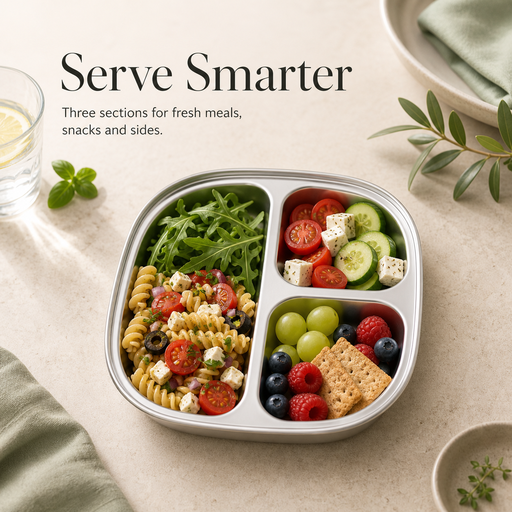
Why This Fits Their Persona: Ideal for parents seeking a durable and safe solution for children's meals. The three compartments encourage a balanced diet, and the unbreakable design withstands the rigours of hectic family life.
Its seamless construction from thickened 304 stainless steel resists warping. The compartments are 3.9 cm deep, sufficient to prevent foods from mixing.
Dishwasher-safe and sterilisable for easy cleaning. The brushed finish resists fingerprints and scratches.
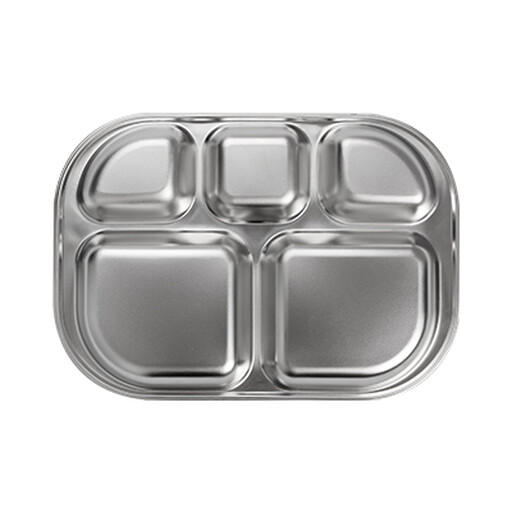
Why This Fits Their Persona: Perfect for health-conscious adults who need to precisely portion their meals for weight management or medical reasons (e.g., diabetes). The five compartments allow for a clear separation of macronutrients.
Five clearly separated, sufficiently deep compartments reliably prevent food from mixing. The product is explicitly made from food-grade 304 stainless steel.
Shatter-proof and scratch-resistant for a long lifespan. The non-porous surface prevents food from sticking and is dishwasher-safe.
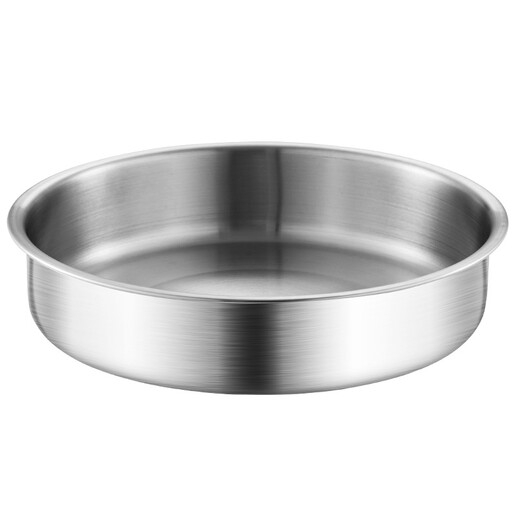
Why This Fits Their Persona: A simple yet extremely durable plate for outdoor enthusiasts. It's lightweight, stackable, and unbreakable—ideal for a backpack during camping, hiking, or picnics.
The thickened material, described as unbreakable, withstands the stresses of transport and outdoor use. Its 304 stainless steel construction prevents rust from moisture.
Versatile use: According to the manufacturer, it's suitable for ovens, steamers, and even induction cooktops to directly heat cold food.
We have compiled a complete, up-to-date list of products that fully meet these strict selection criteria and safety regulations.
No, absolutely not. Metal should never be used in a microwave oven. It can cause sparking, arcing, and severe damage to the appliance. Stainless steel plates are suitable for heating food in a conventional oven or steamer, provided the manufacturer specifies it.
Most high-quality stainless steel plates are dishwasher-safe. To prevent water spots, it's best to remove and dry the plates immediately after the cycle or use a rinse aid. When handwashing, use soft sponges and mild dish soap. Abrasive pads or harsh cleaners can scratch the surface.
Yes. 304 stainless steel is an established standard for kitchenware and medical instruments. It is classified as food-grade, meaning it does not leach harmful substances like lead or cadmium into food. Furthermore, the material is hygienic because it is non-porous, leaving no place for bacteria to hide.