
Same-day & Next-day Delivery

Quality Guaranteed

Unlock Your Welcome Offers: FREE Delivery | Up to 80% OFF | Free 30-day JoyPlus trial
Download the APP
By the Joybuy Product Recommendation Officer, July 28, 2026
Opting for a stainless steel food container is often a conscious step towards greater sustainability and durability in the kitchen. However, the market is crowded, and many products don't live up to their promises. Before you invest, it's crucial to understand the typical pitfalls that can lead to a purchase you'll regret.
Many buyers get frustrated with leaky lids that ruin the contents of their backpack or with containers that develop unsightly stains after a short time. Others find that their new stainless steel lunch box set is impractical to stack, wasting valuable space in the fridge or cupboard. These problems can be avoided if you know which details matter.
To make an informed decision based on facts rather than marketing buzzwords, you should examine three core aspects. These determine the longevity, safety, and practical utility of your new plastic-free food containers.
The term "stainless steel" alone isn't specific enough. The two most common alloys for food containers are 304 (also known as 18/8) stainless steel and 316 (also known as 18/10) stainless steel.
A container advertised as leak-proof and airtight is useless if the locking mechanism is weak. Look for the following features:
Think carefully about what you will primarily use the containers for.
Based on the objective criteria mentioned above, we have identified a few products that are a suitable solution for specific user profiles.
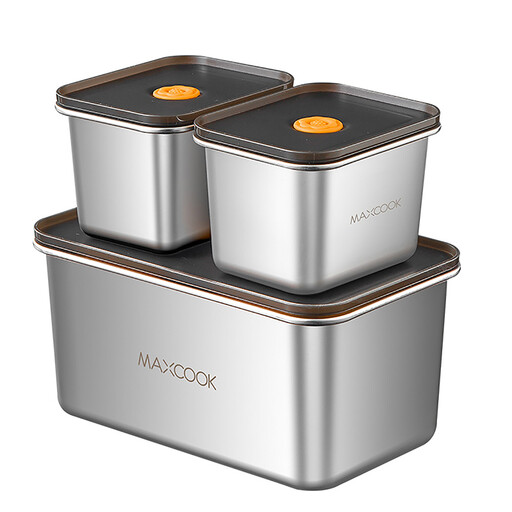
Why This Fits Their Persona: Ideal for users seeking a solid starter kit for plastic-free storage at home. This set covers the need for leftovers, packed lunches, or fridge organisation with various sizes, without having to invest in premium materials.
This set relies on the proven 304 stainless steel, which is perfectly adequate for most everyday applications. It avoids the premium price of 316 stainless steel, which isn't essential for this use case.
A versatile set with three different sizes for flexible use. The containers are stackable, saving space in the cupboard.

Why This Fits Their Persona: Perfect for health-conscious users who regularly prepare meals (meal prep) and use acidic or salty ingredients like dressings and marinades. The material's longevity is the top priority here.
This set solves the problem of material degradation by using 316 stainless steel. It offers objectively higher corrosion resistance, making it a long-term investment for demanding users.
Its suitability for the dishwasher and freezer makes it a flexible tool for weekly meal prep. The secure lids ensure airtight storage.

Why This Fits Their Persona: Designed for professionals, students, or outdoor enthusiasts who want to enjoy a hot meal on the go. This container is a specialised solution, not just a simple storage box.
It directly addresses the common misconception that any stainless steel container is insulated. The vacuum insulation is the key feature that distinguishes it from a standard lunch box and makes hot meals possible.
The combination of 316 stainless steel and vacuum insulation offers maximum durability and functionality. The leak-proof screw-top lid and wide opening ensure secure transport and comfortable eating.
We have compiled a complete, up-to-date list of products that fully meet these strict selection criteria and rigorous safety standards.
No, under no circumstances. Metal should never be placed in a microwave oven. It can cause sparking, damage to the appliance, and a fire hazard. Food must be transferred to a suitable container (e.g., glass or ceramic) before heating in the microwave.
Most high-quality stainless steel containers are dishwasher-safe. Always check the manufacturer's instructions. For a longer lifespan of the silicone seals, it is often recommended to wash the lids by hand. For stubborn odours or discolouration, a paste of water and baking soda can help. Apply it, let it sit for a while, and then rinse the container thoroughly.
For most daily applications, such as storing bread, fruit, or cooked pasta, 304 stainless steel is an excellent and more cost-effective choice. However, if you frequently store or transport foods with high acid or salt content (e.g., tomato sauce, salads with vinaigrette, pickled vegetables), 316 stainless steel offers superior corrosion resistance and represents a more durable long-term investment.