
Lieferung heute & morgen

Qualitätsgarantie

Willkommens-Angebote freischalten: KOSTENLOSE Lieferung | Bis zu 80 % RABATT | Kostenlose 30-Tage-JoyPlus-Testphase
App herunterladen
A stainless steel frying pan can be used in the household for many years when searing, sautéing and braising. However, not every stainless steel frying pan automatically delivers the right results. The material construction, diameter and care requirements often determine whether the pan heats evenly, sits securely on the hob and can be cleaned easily in everyday use.
A single-layer, uncoated stainless steel frying pan conducts heat differently from a 3-ply stainless steel frying pan with an aluminium core. In a three-layer construction, aluminium sits between layers of stainless steel. This can support heat distribution and reduce local temperature differences. If details about the material construction, base or core are missing, it is difficult to assess the actual design.
A coated stainless steel frying pan or hybrid pan can make it easier to release delicate foods. However, the coating is still a wear part. Depending on the product, manufacturers generally recommend gentle cleaning and kitchen utensils made from wood, silicone or plastic. With an uncoated stainless steel frying pan, there is no coating to wear out, but controlling the temperature properly is important to prevent food from sticking excessively.
Claims such as “PFAS-free pan” should refer to the specific product description. According to the product information, the ZEROPAN and KT hybrid models mentioned here have a PFAS-, PTFE- and PFOA-free ceramic coating. This is a product characteristic, not a medical claim.
A 20 cm stainless steel frying pan is better suited to small portions, eggs or side dishes. A 26 cm pan is a practical medium size for many two-person households. A 28 cm stainless steel frying pan provides more cooking surface for vegetables, meat or several portions. With a 30 cm stainless steel frying pan, weight and storage requirements generally increase. It is also important that the base sits fully on the hob zone.
Look out for the following details:
An induction frying pan requires a suitable magnetic base. The product information should explicitly mention induction as well as gas, ceramic or electric hobs. Some models are also designed for halogen hobs.
When using a pan in the oven, specific temperature limits matter. According to the product description, the KT hybrid model is suitable for temperatures up to 260 °C. For ZEROPAN, this temperature applies to the pan; according to the description, the glass lid is suitable for temperatures up to 148 °C. A lid may also be made from heat-resistant glass, but it must not be exposed to sudden changes in temperature.
A dishwasher-safe frying pan can make cleaning easier. Even with coated models, hand washing is often recommended to help protect the surface for longer. For uncoated stainless steel, soft sponges and mild washing-up liquid are suitable. Steel wool and abrasive products can dull the surface.
For uncoated frying pans, the following approach has proved effective in everyday use:
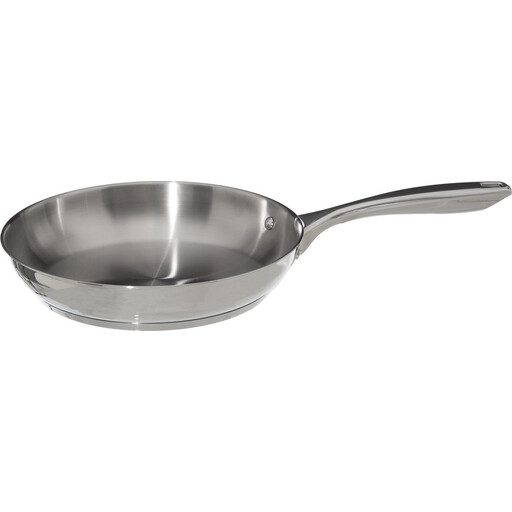
Why this product suits this profile: The 26 cm diameter is suitable for everyday portions. According to the product information, the pan works on gas, electric, ceramic and induction hobs and is dishwasher-safe.
The product details explicitly state the diameter, compatible hob types and cleaning requirements. This means buyers do not have to infer compatibility from the product name alone.
26 cm diameter; suitable for all the common hob types listed; dishwasher-safe.
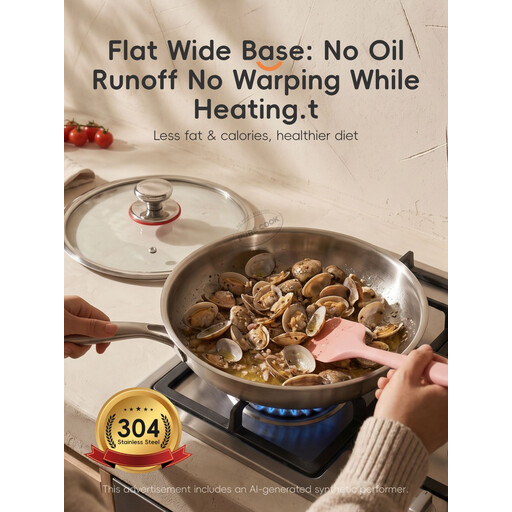
Why this product suits this profile: According to the product information, the pan combines 304 stainless steel, an aluminium core and a glass lid. This makes it a good choice for households that want to fry, sauté and braise with the lid on.
The construction is described in specific terms. The product information also lists the compatible hob types, dishwasher suitability and how to use the lid.
3-ply construction; 28 cm diameter; glass lid; suitable for gas, induction, ceramic and halogen hobs.
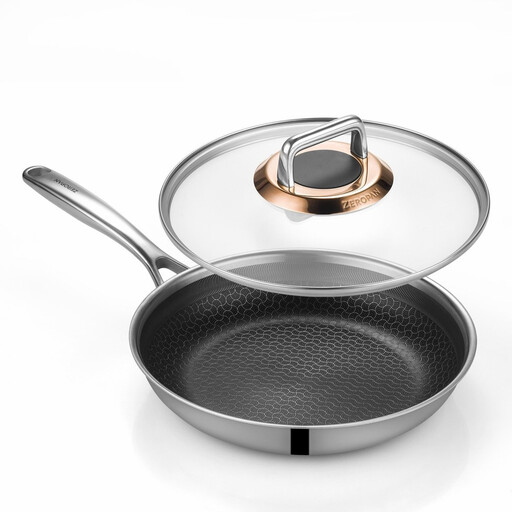
Why this product suits this profile: According to the product information, the deep hybrid pan combines stainless steel with a ceramic coating, an aluminium core and a glass lid. It is designed for larger quantities and dishes containing liquid.
The product description states separate temperature limits for the pan and lid. It also advises using non-metal kitchen utensils.
Deep design; 3-ply construction with aluminium core; according to the product information, PFAS-, PTFE- and PFOA-free ceramic coating; glass lid.
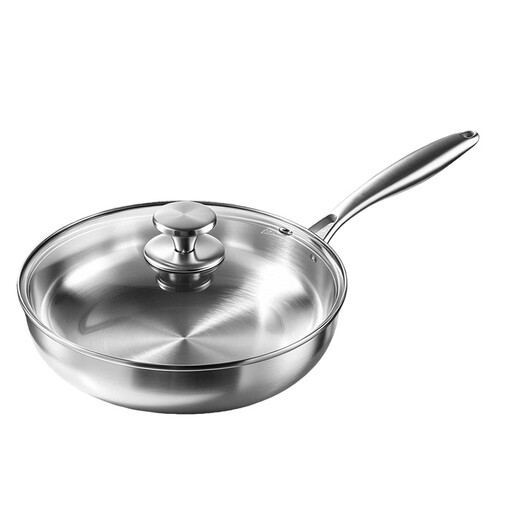
Why this product suits this profile: The compact size is suitable for small portions. According to the product information, the model has a ceramic coating and aluminium core, and is suitable for induction and other hob types.
The small size prevents a large cooking surface from being heated unnecessarily for a single portion. Details about the coating and hob compatibility are provided.
20 cm diameter; hybrid construction; according to the product information, suitable for gas, electric, ceramic, halogen and induction hobs.
We have put together a complete, regularly updated list of products that fully meet these strict selection criteria and the safety regulations applicable in the EU.
A 20 cm stainless steel frying pan may be sufficient for one person or small side dishes. A 26 cm pan is suitable for many everyday dishes. Sizes of 28 cm and 30 cm offer more room for several portions, but require a suitably sized hob zone and more storage space.
That depends on your cooking style. A coated stainless steel frying pan often makes it easier to fry delicate foods and clean the pan afterwards. An uncoated stainless steel frying pan does not rely on a non-stick coating, but requires controlled temperatures and proper preheating. The manufacturer’s care instructions should always take priority.
Many models are described as dishwasher-safe. With coated frying pans, hand washing may help protect the surface for longer. Uncoated stainless steel can generally also be cleaned in the dishwasher, but should be dried thoroughly afterwards to reduce water spots. Always check the specific product description before buying.