
Lieferung heute & morgen

Qualitätsgarantie

Willkommens-Angebote freischalten: KOSTENLOSE Lieferung | Bis zu 80 % RABATT | Kostenlose 30-Tage-JoyPlus-Testphase
App herunterladen
A stainless steel frying pan can be used in the home for many years – provided its materials, size and care requirements suit your everyday cooking routine. However, misunderstandings are common when buying one: a shiny surface says little about heat distribution, “non-stick” does not automatically mean coating-free, and the claim “suitable for all hob types” should be checked against the specific base construction.
This Joybuy buying guide from the Product Recommendation Officer helps you assess technical specifications and avoid common purchasing mistakes.
A simple, single-layer stainless steel frying pan can heat unevenly on an induction hob or gas flame. This creates hotter areas and makes frying more difficult. For even heat distribution, a multi-layer construction or a stable encapsulated base is important.
A Tri-Ply frying pan typically has two layers of stainless steel around an aluminium core. Aluminium conducts heat quickly, while stainless steel provides stability and a robust cooking surface. The key factor is not the name alone, but a clear and verifiable description of the materials.
A coating-free frying pan has untreated stainless steel on the inside. This may appeal to buyers who do not want an additional non-stick coating. However, stainless steel requires the right preheating and fat technique: the pan should not be heated empty at a high temperature for an extended period, and delicate foods can stick more easily without enough fat.
Models with ceramic, PTFE or structured honeycomb surfaces do not automatically belong in the coating-free frying pan category. Before buying, check carefully which surface comes into contact with food.
According to the supplier, some products are dishwasher-safe, while others should be washed by hand. Aggressive detergents, high temperatures and contact with other metal can put strain on the surface, handles or seals over time. For coated models, hand washing is often the gentler option for the materials, even when a delicate dishwasher programme is specified.
A 304 stainless steel frying pan is often marketed for its resistance to corrosion and its material quality suitable for cookware. The number 304 describes a stainless steel group, but it does not replace checking other specifications such as wall thickness, base construction, handle attachment and manufacturer information.
18/10 stainless steel is also a common designation for a stainless steel composition containing approximately 18 per cent chromium and 10 per cent nickel. Several factors therefore matter when making your decision:
References such as GB 4806.9, FDA or REACH should be understood as specific supplier information. They are not blanket proof of every product characteristic and should remain linked to the relevant product.
A 28 cm stainless steel frying pan provides enough space for several portions, vegetables, steaks or one-pan dishes. However, it needs a sufficiently large hob zone so that the base does not extend significantly beyond the heated area. For smaller households or individual portions, sizes from 24 to 26 cm may be easier to handle.
You should also check the actual base surface before buying. The stated diameter often refers to the upper rim rather than the induction surface that sits fully on the hob.
An induction frying pan needs a magnetic base. With gas, ceramic, electric and halogen hobs, the shape of the base is also important to ensure that the pan stands securely and transfers heat in a controlled way. The specification frying pan suitable for all hob types should be stated explicitly in the technical product data.
Oven use is a separate consideration. Temperature limits may apply differently to the pan body, lid and handle. Plastic or Bakelite handles should not automatically be placed in the oven. A glass lid also requires its own temperature specification.
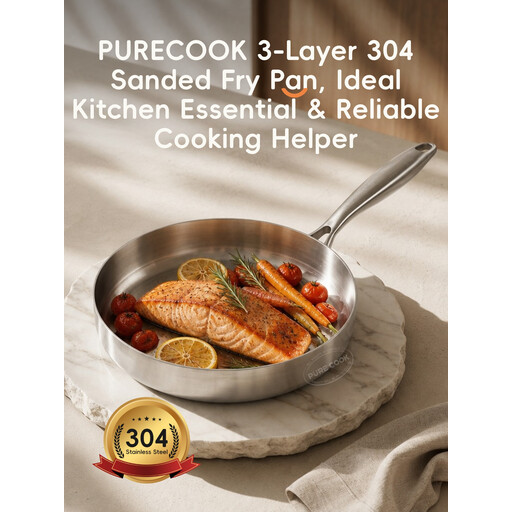
Why this product suits this profile: The compact size is ideal for individual portions, eggs, vegetables or smaller pieces of meat. The supplier states that it has a three-layer construction made from 304 stainless steel and is compatible with gas, induction and ceramic hobs.
The Tri-Ply construction goes beyond a single layer of stainless steel. The pan is described as having no additional non-stick coating, making the right preheating and fat technique essential.
26 cm diameter, three-layer 304 stainless steel construction and suitability for several hob types. According to the product information, it is dishwasher-safe.
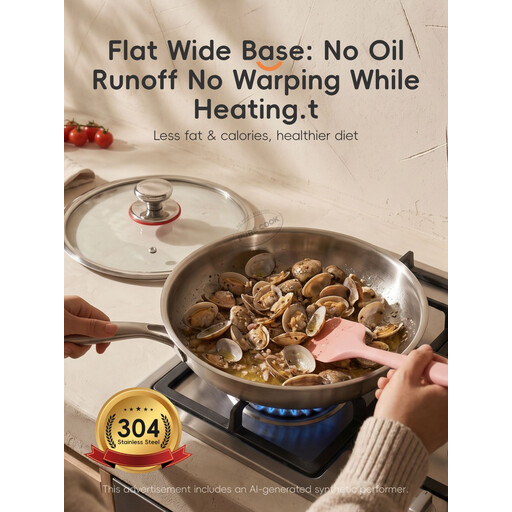
Why this product suits this profile: The 28 cm frying pan is designed for households that often fry larger quantities, reduce sauces or finish cooking dishes with the lid on.
The supplier describes a stainless steel–aluminium–stainless steel sandwich construction and lists gas, induction, ceramic and halogen as suitable hob types. The lid’s temperature limit should be checked separately before using it in the oven.
28 cm diameter, three-layer construction, glass lid and dishwasher-safe cleaning according to the product information.
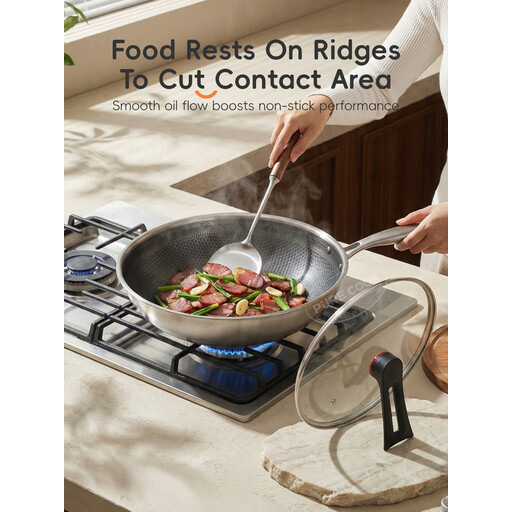
Why this product suits this profile: The 32 cm wok is designed for larger portions and versatile cooking methods such as searing, braising and steaming. The glass lid lets you keep an eye on your food while it cooks.
The product description states that it has a 304 stainless steel Tri-Ply construction and a structured interior surface without a conventional chemical non-stick coating. Hand washing is recommended to protect the materials during cleaning.
32 cm diameter, glass lid, insulated handle and suitability for gas, induction and ceramic hobs.
We have put together a complete, regularly updated list of products that fully meet these strict selection criteria and the safety regulations applicable in the EU.
A few simple steps can help when using an uncoated stainless steel frying pan:
A glass lid is practical for braised dishes, but it does not replace checking the temperature limits and handle material. The care instructions for the specific model always apply to a dishwasher-safe frying pan as well.
Yes, provided that it has a magnetic base. Many models with a stainless steel–aluminium construction have a magnetic outer layer. However, the specific statement “suitable for induction” should appear in the product details.
It is often caused by a pan that is not hot enough, too little fat or turning the food too soon. Stainless steel is not a self-working non-stick surface. Preheating at a medium temperature and using the right amount of fat can reduce sticking.
It is not possible to give a reliable fixed lifespan for every model. With correct use, uncoated stainless steel surfaces are less affected by the wear of a non-stick coating. A warped base, loose handles, deep scratches or damaged coatings are signs that the pan should be checked more closely or replaced.