
Lieferung heute & morgen

Qualitätsgarantie

Willkommens-Angebote freischalten: KOSTENLOSE Lieferung | Bis zu 80 % RABATT | Kostenlose 30-Tage-JoyPlus-Testphase
App herunterladen
A stainless steel frying pan is a versatile choice for frying, sautéing and braising. However, a shiny stainless steel surface alone doesn’t guarantee the right purchase. Important factors include the pan’s construction, its coating, whether it suits your hob and how easy it is to clean.
A stainless steel frying pan may have an uncoated cooking surface, a ceramic coating or a PTFE coating. These options behave quite differently when frying and require different care.
Uncoated stainless steel is designed for high temperatures and searing, but it calls for the right technique: preheat the pan, then use enough oil. A non-stick pan, on the other hand, makes it easier to cook delicate foods such as eggs, fish and pancakes. It should generally be used over a moderate heat and with suitable kitchen utensils.
An oven-safe rating doesn’t always apply to every part of the pan. The pan body, for example, may be suitable for temperatures up to 230 or 260 °C, while plastic handles or a glass lid may have additional limitations. Before buying, check:
A 28 cm stainless steel frying pan has room for larger portions, but needs a cooking zone that’s big enough. On smaller induction zones, heat may not spread as evenly to the edges. A 24 cm stainless steel frying pan is often better for one or two portions and easier to handle. Sets with 20, 24 and 28 cm pans let you choose the right size for each dish, but they also take up more cupboard space.
Multi-layer designs combine stainless steel with an aluminium core. Aluminium conducts heat quickly, while stainless steel provides strength and a durable outer surface. In a Tri-Ply pan, the aluminium core typically sits between two layers of steel.
For an induction hob, the pan also needs a magnetic base. So, make sure a stainless steel induction frying pan is explicitly listed as suitable for induction. The phrase “suitable for all hob types” is useful, but you should still check the manufacturer’s specific information.
If you’re looking for a coated stainless steel frying pan, check whether it has a ceramic or PTFE coating. A hybrid pan often combines raised areas of stainless steel with coated surfaces. This can support different frying techniques, but it doesn’t mean that every metal utensil is safe to use.
If you’re looking for a PFAS-free pan, the product description should explicitly say so. The ZEROPAN Standard is described as having a ceramic coating without PFAS, PFOA or PTFE. This applies to that specific product and shouldn’t be assumed to apply to other pans.
If you’d rather avoid coatings altogether, you could choose a model made from 304 stainless steel with an aluminium core. This puts more emphasis on your frying technique. Food may still stick at first if the pan is too cold, too hot or used with too little fat.
A dishwasher-safe frying pan can make cleaning easier. Even so, hand washing coated models with a soft sponge is often recommended to protect the surface. Avoid abrasive cleaners, steel wool and sudden changes in temperature.
A glass lid is handy when you want to cook braised dishes, sauces or vegetables with the lid on. With a stainless steel frying pan with a glass lid, pay particular attention to the permitted oven temperature and how to handle the hot glass.
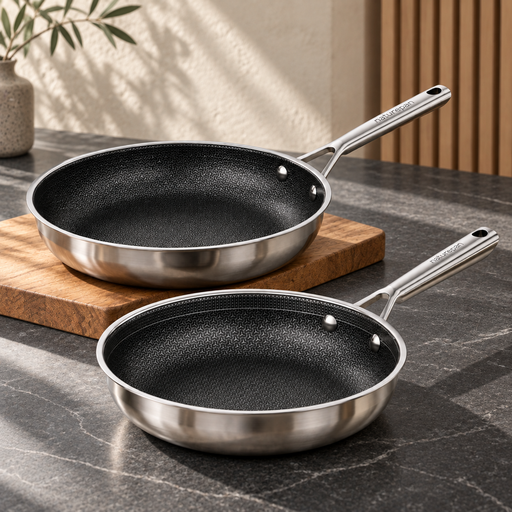
Why this product suits you: Two sizes cover the dishes you’re likely to cook every day. According to the product description, the pans are suitable for induction, gas, electric and ceramic hobs, giving you flexibility if you change your hob.
The product information specifies a multi-layer stainless steel construction with an aluminium core and a textured hybrid surface. So the pan is described in terms of more than just its stainless steel material.
Set includes 24 and 28 cm pans; ceramic coating; oven-safe up to 230 °C according to the product description.
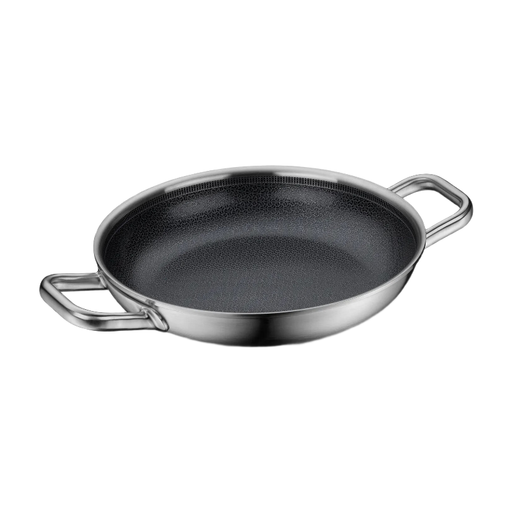
Why this product suits you: The combination of Cromargan stainless steel, an aluminium core and a PermaDur coating is designed for households looking to combine stainless steel construction with the convenience of a coated cooking surface.
According to the product description, the stainless steel structure sits above the PermaDur surface. Even so, avoid overheating, abrasive cleaners and using the pan if it shows visible damage.
24 cm diameter; three-layer construction; suitable for induction and other hob types according to the product information.
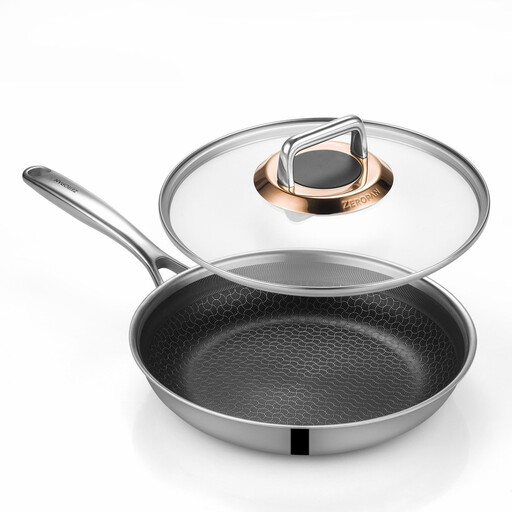
Why this product suits you: According to the product description, its 30 cm diameter and glass lid make it suitable for larger portions, sauces and braised dishes.
The product information separately specifies the lid, the layered construction, induction suitability and the ceramic coating, which is stated to be free from PFAS, PFOA and PTFE.
316 stainless steel inner layer; 430 induction base; oven-safe up to 260 °C according to the product description.
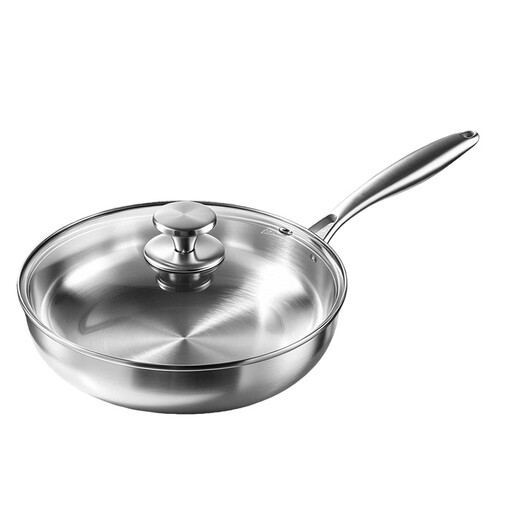
Why this product suits you: Its uncoated cooking surface is for anyone who wants to avoid ceramic or PTFE surfaces and is happy to master the techniques needed for stainless steel cookware.
The product description explicitly states that the pan has no coating. This avoids any confusion between a stainless steel surface and a non-stick claim.
304 stainless steel with an aluminium core; 22 cm diameter; suitable for induction and dishwasher-safe according to the product information.
For a coated stainless steel frying pan, use a medium heat, a little oil and utensils made from wood, silicone or nylon. An uncoated pan can be heated to a higher temperature, but shouldn’t be left empty on the hob for a long time.
After cooking, let the pan cool before cleaning it with water. This helps prevent sudden changes in temperature. Soak burnt-on residue first to help remove it. Avoid abrasive sponges on coated surfaces.
We’ve put together a complete, regularly updated list of products that meet these strict selection criteria and fully comply with the safety regulations in force in the EU.
An induction-compatible frying pan needs a magnetic base. Models with a specified 430 stainless steel base, or a manufacturer’s statement confirming induction suitability, are designed for this purpose. If in doubt, testing the base with a magnet can give you an initial indication, but the product information remains the definitive guide.
Common causes include an initial temperature that’s too low or uneven, too little oil or turning the food too soon. Preheat the pan, add oil, check the temperature and give the food time to form a crust. However, an uncoated stainless steel pan won’t automatically behave like a pan with a non-stick coating.
Its lifespan depends on the thickness of the material, the construction, temperature control and care. With proper use, an uncoated surface can last indefinitely. On coated models, the coating is the most delicate part. Hand washing, suitable utensils and avoiding overheating can help it last longer.