
Lieferung heute & morgen

Qualitätsgarantie

Willkommens-Angebote freischalten: KOSTENLOSE Lieferung | Bis zu 80 % RABATT | Kostenlose 30-Tage-JoyPlus-Testphase
App herunterladen
Purchasing a new stainless steel cookware set for an induction hob seems straightforward. In reality, however, many purchases end in disappointment. Pots that warp after a short time, heat unevenly, or have handles that become dangerously hot are all too common. These issues can often be traced back to clever marketing and hidden defects. Before you buy a stainless steel induction cookware set, you should be aware of the three most common pitfalls that lead to expensive mistakes.
To make an informed decision, you should focus on objective criteria rather than trusting advertising claims. Two technical features are central to the durability and functionality of induction-compatible stainless steel pots.
For efficient and even heat transfer on an induction hob, a special base construction is essential. Look for a multi-layered encapsulated or sandwich base. This typically consists of three layers:
A thick, fully magnetic base ensures that the energy from the hob is optimally absorbed and distributed. A simple test: if a magnet holds firmly to the entire base of the pot, it's a good indicator of solid induction suitability.
The quality of the stainless steel determines the sturdiness, longevity, and health safety of your cookware. The designation 18/10 stainless steel or Type 304 is a reliable quality indicator here.
This material is food-safe, taste-neutral, and resistant to food acids. A stainless steel cookware set of this type is an investment in durable and safe kitchen equipment.
Instead of making a one-size-fits-all recommendation, we have identified products that meet specific needs and adhere to the quality criteria mentioned above.
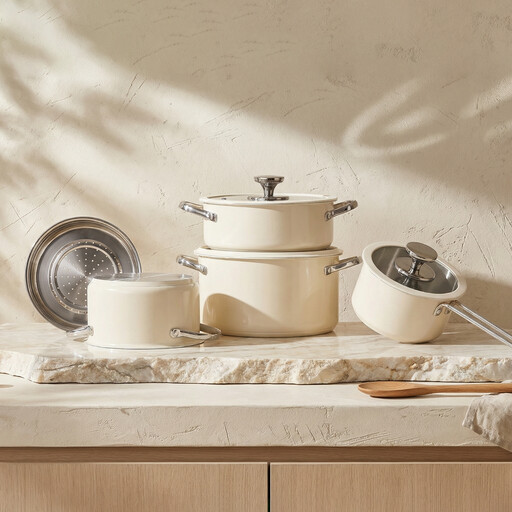
Why this set is a great fit: This set provides a versatile foundation for daily use. With a saucepan, a stockpot with a steamer insert, a hot pot, and a large stockpot, it covers the most essential cooking tasks—ideal for first-time homeowners or families.
The set is made entirely of 304 stainless steel on the interior and features a base suitable for all hobs, including induction. This ensures reliable and even performance.
A comprehensive set with four different pot sizes, including a practical steamer insert and glass lids.
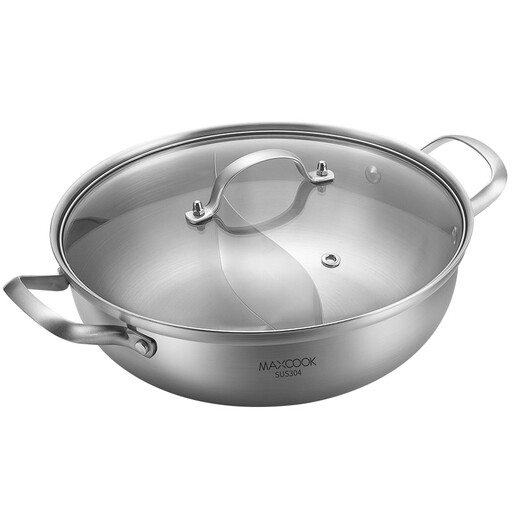
Why this pot is a great fit: This split hot pot is perfect for social gatherings where different tastes come together. It allows you to prepare two different broths simultaneously, such as a spicy and a mild version.
The 3-ply 304 stainless steel construction ensures a sturdy divider and even heat distribution across the entire base. This prevents one side from cooking faster than the other—a common problem with lower-quality models.
Allows for the preparation of two different dishes in one pot, making it a centerpiece for shared meals. Includes a matching pot with a glass lid.
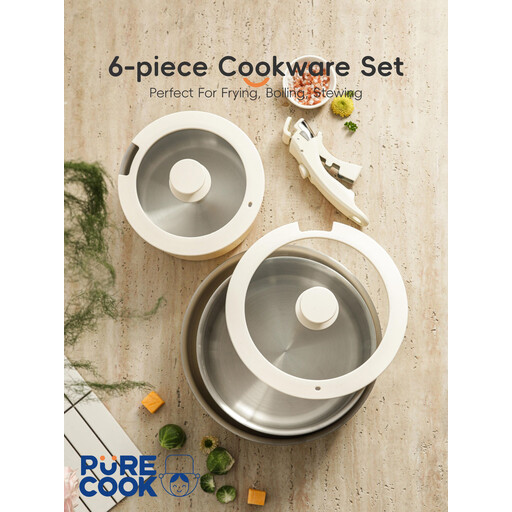
Why this set is a great fit: Thanks to its detachable handle, this set—comprising a saucepan, stockpot, and frying pan—can be nested to save an incredible amount of space. It's the ideal solution for small kitchens, RVs, or anyone who values an organised cupboard.
This set solves the problem of bulky, fixed handles. The high-quality 3-ply construction provides excellent heat conduction that surpasses basic pots and is also oven-safe.
Maximum space-saving, stackable design with a single detachable handle for all pieces. The pots are suitable for all hob types as well as the oven.
We have compiled a complete, up-to-date list of products that fully meet these strict selection criteria and German safety regulations.
1. How can I tell if a pot is truly induction-compatible? The surest method is the magnet test: hold a magnet to the base of the pot. If it adheres strongly across the entire base, the pot is suitable for induction. Additionally, a coil symbol is often printed on the packaging or the pot base itself. A flat base is also important for optimal contact with the hob.
2. What do "18/10 stainless steel" or "304" mean? This designation describes the composition of the stainless steel alloy. It consists of 18% chromium and 10% nickel. Chromium provides rust resistance, while nickel makes the material resistant to acids and gives it a durable shine. 304 stainless steel is an internationally recognised standard for high-quality, food-safe cookware.
3. How do I properly care for stainless steel pots to prevent stains? To avoid water spots or rainbow-like heat tint (caused by minerals in water or starches), pots should be dried immediately with a soft cloth after washing. Limescale spots can be easily removed with a little vinegar or lemon juice. Avoid using abrasive cleaners or steel wool, as these can scratch the surface.