
当日/次日达

品质保障

开启新人专享福利: 全场免邮 | 低至 2 折 | 免费试用 30 天 JoyPlus 会员
下载 Joybuy
A stainless steel insulated food container should perform reliably in your work rucksack, school bag or picnic basket. In practice, however, problems are often caused not by the material itself, but by an unsuitable size, difficult-to-clean lids or confusing claims about temperature retention. Check a few technical details before buying to avoid disappointment and choose a container that suits your everyday needs.
A large container is not automatically suitable for every situation. A 1.5-l insulated food container is ideal for several portions, family meals or a longer day out. For a single lunch break, however, it may be unnecessarily heavy and bulky. A 2-l insulated food container is more suitable for several people, large portions or sharing food while out and about.
It is also important to check whether the container can be filled right to the brim. When carrying hot food, leave some space so the lid closes securely and hot contents do not spray out when you open it.
A securely sealed lid requires an intact seal and an even closure. Check the following:
A leakproof stainless steel lunch box should first be tested with water before being transported. A quick leak test is particularly worthwhile for soups, sauces and other liquid foods. Even a product described as “leakproof” should not automatically be carried horizontally in your rucksack if the manufacturer specifies an upright position.
Vacuum insulation reduces heat exchange, but it is not a guarantee of an exact temperature. The actual duration depends on factors including the starting temperature, fill level, ambient temperature and how often the container is opened. Claims such as “4–6 hours” should therefore be understood as product information, not as a guaranteed result in every situation.
304 stainless steel is commonly used in food containers and is suitable for interior surfaces, outer walls and storage containers. 316 stainless steel contains additional components which, according to the material description, may support increased corrosion resistance. This does not automatically mean that a container made from 316 stainless steel is necessary for every purpose.
More important than the material designation alone are:
Lids are often made from polypropylene, while seals are made from silicone. These components should be taken into account when cleaning the container.
A vacuum-insulated food container works more effectively when it is prepared before filling. Fill the container with hot water for a few minutes, then pour the water out before adding your hot meal. For cold foods, the same principle works with cold water.
An insulated soup container should have a sufficiently wide opening. This makes it easier to fill, stir, eat directly from the container and clean it. Narrow openings can be impractical when carrying thicker foods.
A wide opening is convenient for everyday use, although a large vessel may require more space. A thermal lunch box with clips and a removable seal usually allows meals to be transported neatly. Check whether the product description states that it is dishwasher-safe. Several of the containers presented here are recommended for hand washing, particularly to help protect the seal and lid over the long term.
A stainless steel bento box is better suited to solid foods such as rice, bread, fruit or side dishes. For soup and stews, a food jar with a screw-top lid and vacuum insulation is often more suitable. A stainless steel drinking bottle, meanwhile, is designed for beverages and should not be considered a substitute for a food container.
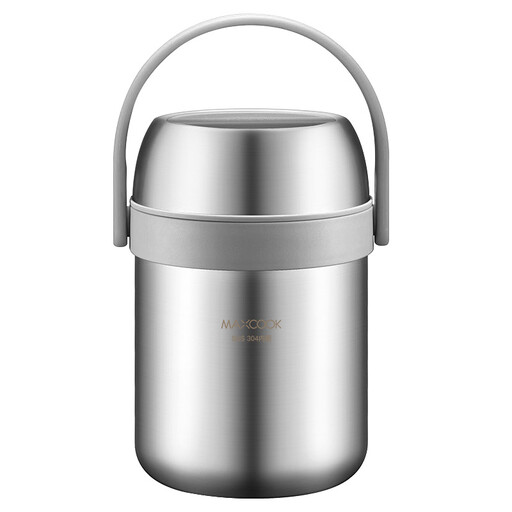
Why this product suits this profile: The 1.5-l container has a clearly stated capacity and is suitable for hot meals, soup or cold foods at work, school and on short trips.
The product description specifies a wide opening, vacuum insulation, a securely closing lid and hand washing. This makes key buying criteria clear from the outset.
304 stainless steel, 1.5-l capacity, wide opening and stated temperature retention of 4–6 hours.

Why this product suits this profile: This model combines 316 stainless steel with vacuum insulation, a wide opening and a leakproof design, according to the product description, making it suitable for regular use.
The material, sealing components and care instructions are specified clearly. The wide opening also reduces hard-to-reach areas inside.
316 stainless steel, vacuum insulation, a wide opening, plus a lid with a silicone seal and polypropylene components.
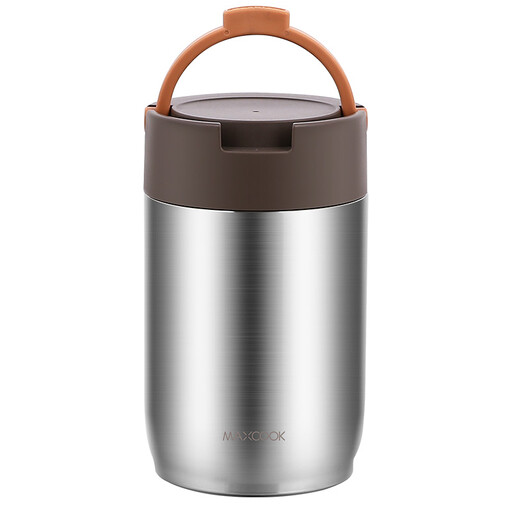
Why this product suits this profile: The larger capacity is designed for families, multiple portions, picnics or storing leftovers.
The 2.0-l capacity is clearly stated, making it easier to assess whether the weight and size suit your transport needs.
304 stainless steel, vacuum insulation, a securely closing lid, and suitability for hot and cold foods.
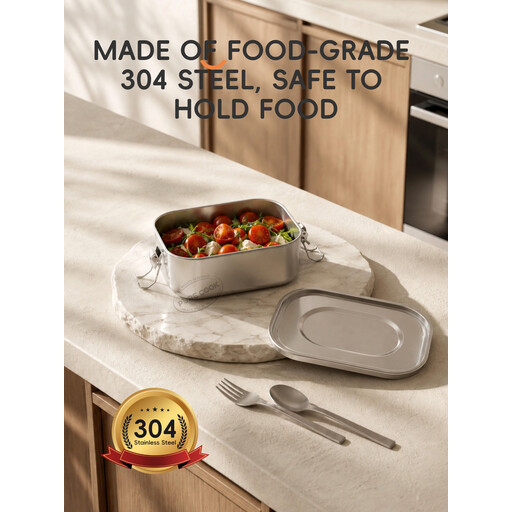
Why this product suits this profile: The rectangular shape is suitable for solid meals, snacks and meal prep in a bag, office or school bag.
The closure clips and removable silicone seal are specified as design features. This makes it easier to check how leakproof the box is.
304 stainless steel, rectangular design, one large compartment, closure clips and removable silicone seal.
We have put together a complete, regularly updated list of products that fully meet these strict selection criteria and the safety regulations applicable in the EU.
This depends on the insulation, fill level, starting temperature and ambient conditions. Manufacturer claims such as 4–6 hours are guide values for specific conditions. Preheating, filling the container fully without overfilling it and opening it infrequently can help maintain the temperature.
Smaller containers are often sufficient for a single meal. A 1.5-l food jar offers extra room for large portions or several people. A 2-l insulated food container is useful when you need to transport family-sized portions, several meals or larger quantities of soup.
A bento box with clips and a seal may be suitable for certain liquid foods, provided the manufacturer specifies this. For soup, stew or sauces, a wide, vacuum-insulated food jar is usually more practical. Always check the seal, closure type and specified transport position.