
Lieferung heute & morgen

Qualitätsgarantie

Willkommens-Angebote freischalten: KOSTENLOSE Lieferung | Bis zu 80 % RABATT | Kostenlose 30-Tage-JoyPlus-Testphase
App herunterladen
A stainless steel kettle is an indispensable appliance in many households, promising durability, hygiene, and a timeless design. However, the market can be overwhelming, and not every model lives up to its promises. Certain design flaws or exaggerated marketing claims often lead to a purchase you'll later regret.
As your Joybuy Product Recommendation Officer, I'm here to help you identify these pitfalls. This guide will show you the crucial features to look for to find an appliance that is safe, functional, and perfectly tailored to your needs.
Before you make a decision, you should be aware of the most common issues found in many devices that appear high-quality at first glance.
To avoid buyer's remorse, focus on the following objective parameters. These determine the longevity, safety, and functionality of your new kettle.
The heart of any good kettle is its material. Look for the designation food-grade 304 stainless steel (also known as 18/8 or 18/10). This material is corrosion-resistant, robust, and does not impart any taste to the water. Check if the lid, spout, and limescale filter holder are also made of stainless steel.
An alternative is a glass kettle with a stainless steel base. Here, the water only comes into contact with glass and metal. The use of heat-resistant borosilicate glass is crucial.
For maximum safety, a double-wall construction is recommended. It not only insulates against heat on the outside but also keeps the water warm for longer, which saves energy.
A kettle's power is measured in watts (W) and determines how quickly the water boils.
The capacity should match your household needs:
If you are a tea or coffee enthusiast, a kettle with temperature control is a worthwhile investment. Look for models that offer degree-specific settings or at least several preset levels (e.g., 70°C, 80°C, 90°C, 100°C). A digital sensor and a real-time temperature display are indicators of a precise device.
A kettle with a keep-warm function is practical if you need hot water over a longer period without constantly re-boiling it.
Here are some models that represent a considered choice for different user profiles, based on their objective features.
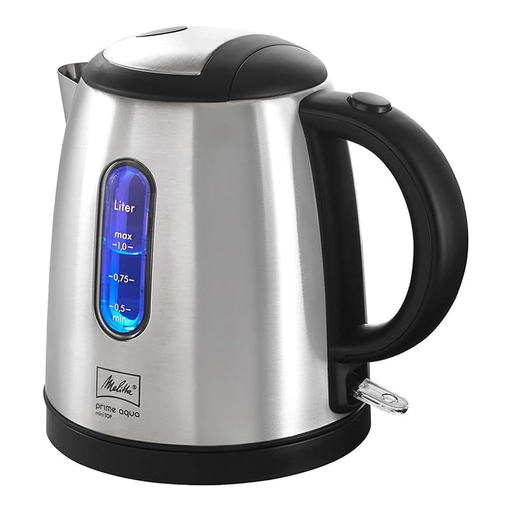
Why it's a great fit: With a 1.0-litre capacity and a compact design, this kettle is ideal for small kitchens, offices, or single-person households that value efficiency and space-saving.
The body is made of stainless steel, and according to the manufacturer, the plastic elements are explicitly declared as BPA-free, addressing concerns about hidden harmful substances.
Combines a high power of 2200 W for rapid boiling with a space-saving design and essential safety features like auto shut-off and boil-dry protection.
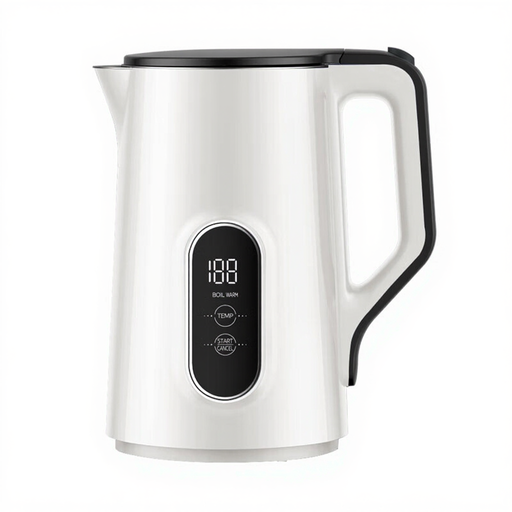
Why it's a great fit: Ideal for users who prepare different types of tea, coffee, or baby formula and require precise water temperatures. A true dedicated tea maker with modern technology.
The double-wall construction prevents a hot exterior. The digital control allows for precise temperature selection, bypassing the trap of inaccurate mechanical controls.
Variable temperature control from 45°C to 100°C, a 1-hour keep-warm function, and an interior made of food-grade 304 stainless steel with no plastic-water contact.
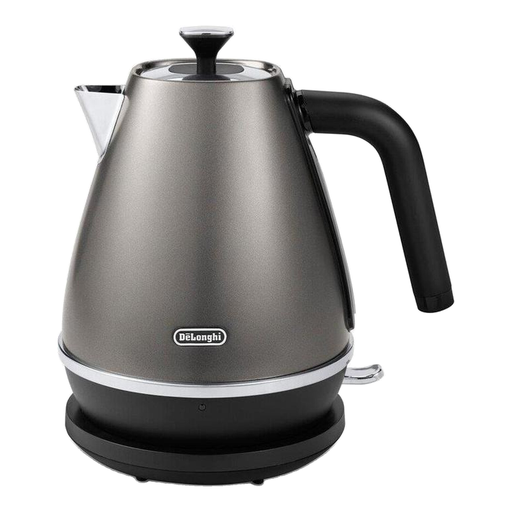
Why it's a great fit: With a 1.7-litre capacity, it's ideal for families. Its exclusive Italian design makes it a true designer kettle for style-conscious kitchens.
The body is made entirely of stainless steel, avoiding contact with plastic. A 3-level safety system provides comprehensive protection that goes beyond the standard.
Large 1.7 L capacity, combined with a robust stainless steel body, a removable anti-scale filter, and a sophisticated design.
We have compiled a complete, up-to-date list of products that fully meet these strict selection criteria and German safety regulations.
The frequency of descaling depends on the water hardness in your area. With hard water, it is advisable to descale the appliance every one to two months. With soft water, descaling every three to four months is sufficient. Regular descaling not only ensures hygiene but also maintains the efficiency of the heating element and extends the life of the appliance.
Both materials have their advantages. Stainless steel is more robust and resistant to impact. Glass kettles offer the benefit of being able to watch the boiling process and being absolutely certain that no materials are affecting the taste. However, they are more fragile. The choice depends on your priority: maximum durability (stainless steel) or maximum purity and visibility (glass).
BPA (Bisphenol A) is a chemical compound used in some plastics. It is suspected of being harmful to health, especially when leached from the material by heat. A kettle labelled as BPA-free guarantees that all plastic parts that could come into contact with water have been manufactured without this chemical. This is an important safety feature, especially if you are preparing water for baby formula or tea.