
Lieferung heute & morgen

Qualitätsgarantie

Willkommens-Angebote freischalten: KOSTENLOSE Lieferung | Bis zu 80 % RABATT | Kostenlose 30-Tage-JoyPlus-Testphase
App herunterladen
An electric kettle is a staple in any modern kitchen. However, when buying a new appliance, especially a stainless steel model, there are several pitfalls to avoid. Often, a shiny exterior can hide low-quality materials or impractical design flaws that make daily use a chore. This guide will help you separate the wheat from the chaff and find a model that is durable, safe, and perfectly suited to your needs.
Before we dive into the key features, let's highlight three common problems that often only become apparent after the purchase:
To avoid these issues, you should focus on three crucial criteria before you buy a kettle. These form the basis for a smart purchasing decision.
The cornerstone of a durable kettle is its material. Look for models where all parts that come into contact with water—the inner body, inner lid, spout, and limescale filter holder—are made of food-grade stainless steel (often designated as Type 304 or 18/8 and 18/10) or, in the case of a glass kettle, borosilicate glass. If plastic parts are used, they must be certified BPA-free and ideally should not have direct contact with the water. A double-walled construction provides better insulation, keeps water hot for longer, and ensures the outer casing remains cool to the touch.
A kettle's power is measured in watts (W) and determines how quickly the water boils. Models with 2200 watts or more bring water to a boil swiftly. The capacity should match your household's needs. For singles or couples, 1.0 to 1.2 litres is often sufficient. Families are better served with a 1.7-litre kettle. Essential safety features like auto shut-off and boil-dry protection are standard today and should be included in any device.
For preparing green tea (approx. 70–80°C), white tea (approx. 85°C), or pour-over coffee (approx. 92–96°C), a kettle with temperature control is essential. High-quality models offer precise, selectable temperature levels and display the current water temperature on a screen. An additional kettle with a keep-warm function is particularly useful if you need hot water at an exact temperature over an extended period without constantly re-boiling it. Such devices also serve as an ideal tea maker.
Here are a few models tailored to different user profiles that meet the criteria mentioned above.
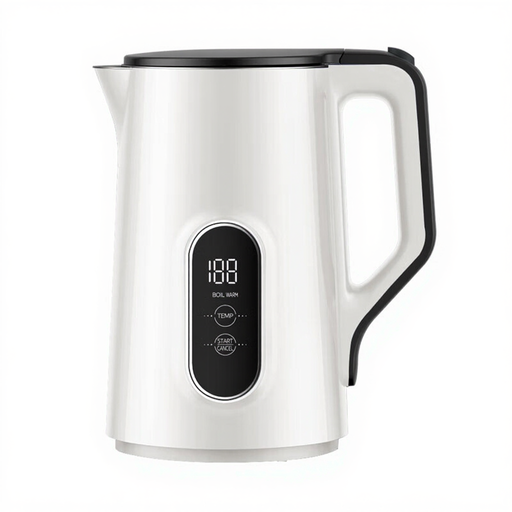
Why This Fits Their Persona: Ideal for tea and coffee lovers who need the exact water temperature for every beverage. The keep-warm function holds the water at the selected temperature for up to one hour.
The double-walled construction prevents a hot exterior. According to the manufacturer, all water-contact parts are made of food-grade 304 stainless steel, avoiding the plastic trap.
Precise temperature selection (45–100°C) with a digital display and a 1-hour keep-warm function.
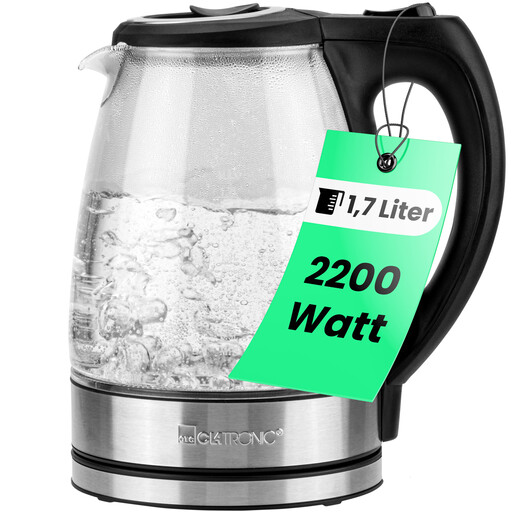
Why This Fits Their Persona: With a 1.7-litre capacity, it's ideal for family needs. The combination of glass and stainless steel is a visual highlight in the kitchen and lets you watch the water boil.
The water container is made of heat-resistant safety glass and stainless steel. The product is explicitly advertised as BPA-free, which minimises concerns about material contact.
Large 1.7-litre capacity and a transparent design that combines functionality with a modern aesthetic.
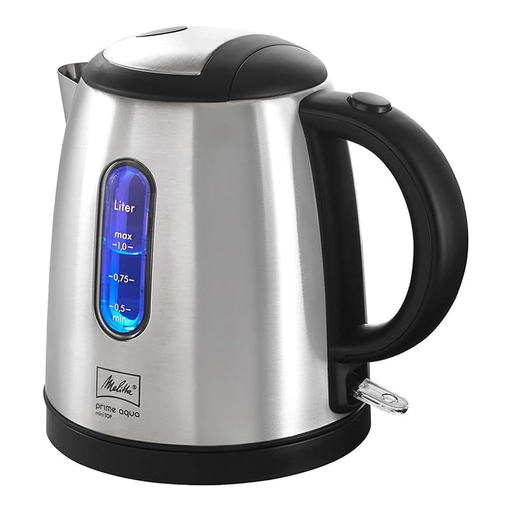
Why This Fits Their Persona: A compact and powerful appliance for small kitchens, singles, or couples. It focuses on fast, reliable boiling without unnecessary frills.
This model relies on proven brand quality with a focus on the basics: a stainless steel body, BPA-free plastic elements, and all necessary safety standards like auto shut-off and boil-dry protection.
Compact, space-saving design combined with high power (2200 W) for very fast boiling of smaller amounts of water.
We have compiled a complete, up-to-date list of products that fully meet these strict selection criteria and safety regulations.
The frequency largely depends on the water hardness in your area. With hard water, it's recommended to descale the appliance every four to six weeks. With soft water, cleaning every three to four months is sufficient. Regular descaling not only ensures hygiene but also maintains the efficiency of the heating element and extends the life of the appliance.
BPA (Bisphenol A) is a chemical compound used in some plastics. It is suspected that it can leach from the material when heated and transfer to food. An electric kettle labelled as BPA-free uses plastics made without this substance. This is particularly important for components that come into contact with hot water to avoid the potential intake of unwanted substances.
Not necessarily for a single boiling cycle. A device with a higher wattage (e.g., 2200 W or 3000 W) heats the water with more power, but it does so in a much shorter time than a model with a lower wattage (e.g., 1500 W). Therefore, the total energy consumption for boiling a specific amount of water is often comparable. A more powerful device primarily saves you time.