
Lieferung heute & morgen

Qualitätsgarantie

Willkommens-Angebote freischalten: KOSTENLOSE Lieferung | Bis zu 80 % RABATT | Kostenlose 30-Tage-JoyPlus-Testphase
App herunterladen
A stainless steel kettle is a staple in almost every kitchen, promising durability, hygiene, and a timeless design. However, choosing the right model involves navigating hidden pitfalls that often only become apparent after your purchase. Misleading material claims or poorly engineered designs can quickly make daily use a frustrating experience.
As your Joybuy Product Recommendation Officer, I'm here to help you identify these common problems and make an informed decision. We'll focus on the features that truly matter, ensuring you find an appliance that performs its job reliably and safely.
Common Frustrations When Buying a Stainless Steel Kettle:
To avoid a bad purchase, you should focus on a few crucial technical parameters. These form the foundation of a durable and functional appliance.
The core of any good kettle is its material. Look for the designation food-grade stainless steel (often Type 304). This material is corrosion-resistant, robust, and does not leach unwanted substances into the water. Another advantage is its ease of cleaning.
Pay special attention to any plastic parts on the interior. A high-quality stainless steel kettle should be designed so that water, ideally, only comes into contact with stainless steel. If plastic components are unavoidable (e.g., on the limescale filter), they must be certified BPA-free and heat-resistant.
Most households are well-served by a 1.7L kettle. This size is sufficient for preparing several cups of tea or filling a hot water bottle. The power, measured in watts, determines how quickly the water boils. Models with 2200 watts offer a good balance, bringing 1.7 litres of water to a boil in just a few minutes.
For tea lovers or parents preparing baby formula, a kettle with temperature control is a worthwhile investment. Different types of tea release their best flavour at specific temperatures—green tea, for example, at around 80°C. Precise temperature settings prevent you from "burning" delicate tea leaves.
Standard safety features like auto shut-off and boil-dry protection are indispensable today. A cordless jug that detaches from a 360° base significantly enhances convenience.
Here are some recommendations tailored to different user profiles that meet the criteria mentioned above.
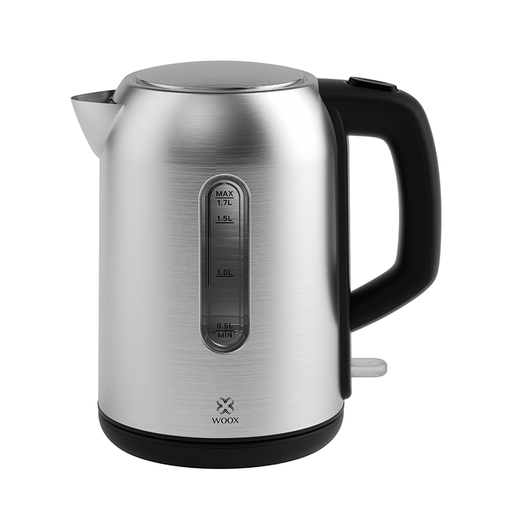
Why it's a good fit: This appliance is a reliable all-rounder for everyday life. With a 1.7-litre capacity and 2200 watts of power, it's perfect for a quick morning tea or for preparing pasta water. The design is functional and built for durability.
The interior is made of high-quality stainless steel. According to the manufacturer, the few plastic parts are BPA-free, minimising concerns about unwanted substances in the water.
A balanced combination of capacity (1.7L), fast boiling time (2200W), and solid safety features like auto shut-off and boil-dry protection.
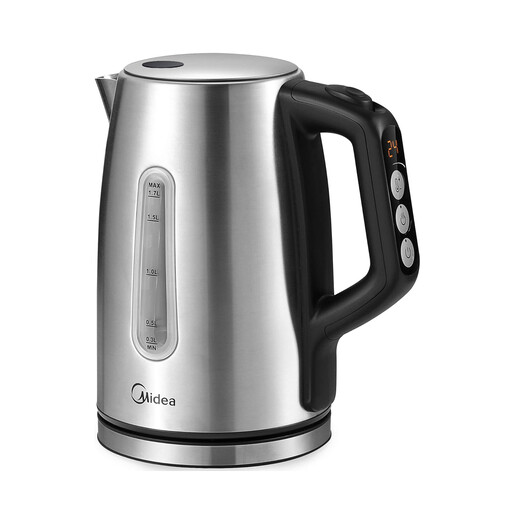
Why it's a good fit: For those who need more than just boiling water. This model is an ideal tea kettle, offering six precise temperature settings from 40°C to 100°C. It's perfect for green tea, white tea, or even for preparing baby formula.
The extra features here aren't just a marketing gimmick; they offer genuine added value. The temperature control and keep-warm function are practical and justify the expanded feature set.
Six preset temperature levels and a 60-minute keep-warm function provide maximum control and convenience. The double-wall construction ensures better insulation.
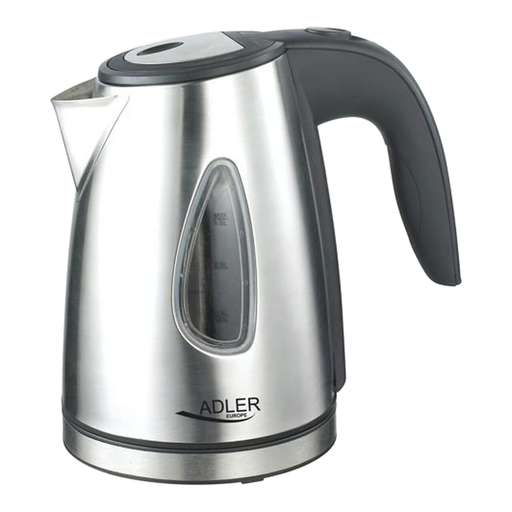
Why it's a good fit: Ideal for single-person households, offices, or kitchens with limited counter space. Its 1-litre capacity is designed for the needs of one or two people, avoiding unnecessary energy consumption. The polished stainless steel body with blue interior lighting adds a modern touch.
This model avoids the trap of being oversized. Instead of a large 1.7-litre appliance, it offers a suitable size for smaller households, making it more efficient for daily use.
A compact 1-litre design that saves space and is optimised for the needs of smaller households. The combination of polished stainless steel and blue illumination is a visual highlight.
We've compiled a complete, up-to-date list of products that fully meet these strict selection criteria and safety regulations.
The frequency depends on the water hardness in your area. With hard water, it's recommended to descale the kettle every four to eight weeks. An integrated limescale filter can reduce build-up inside the appliance but should also be cleaned regularly. You can use commercial descaling products or household remedies like vinegar concentrate or citric acid.
A kettle with a higher wattage (e.g., 3000W) heats water faster, but it consumes more power per second during that short time. The total energy consumption for boiling a full pot of water is often comparable between 2200W and 3000W models. The main difference is speed. Inefficient consumption primarily occurs when you regularly heat only small amounts of water in a large, high-power appliance.
Yes, food-grade stainless steel (like Type 304) is considered very safe for contact with drinking water. It is stable, does not rust, and does not release harmful substances under normal conditions. Unlike some plastics or coated metals, stainless steel provides a hygienic and taste-neutral surface.