
Lieferung heute & morgen

Qualitätsgarantie

Willkommens-Angebote freischalten: KOSTENLOSE Lieferung | Bis zu 80 % RABATT | Kostenlose 30-Tage-JoyPlus-Testphase
App herunterladen
A stainless steel kitchen colander is part of the basic equipment in many UK households. It helps with draining pasta, washing fruit and vegetables, sifting flour and draining fried foods. Even so, product descriptions such as “extra sturdy”, “rust-proof” or “suitable for all sinks” do not automatically lead to the right purchasing decision.
Three common pitfalls occur particularly often:
Look for specific material information. 304 stainless steel, also known as 18/8 stainless steel, is listed as a food-safe specification for several products. A Zwilling colander is specified as 18/10 stainless steel. These figures describe the composition of the alloy: 18 or 18 per cent chromium and 8 or 10 per cent nickel.
The following points are also relevant for everyday use:
The diameter is crucial when choosing a colander for vegetables and fruit or a pasta colander. A compact model with a capacity of 0.5 litres, for example, is suitable for small portions, berries or herbs. A colander with a diameter of 24 centimetres, on the other hand, offers more room for larger quantities of pasta or vegetables.
Practical guidance:
Height is important too. A deep colander helps prevent food from falling out easily when it is being washed. A shallow stainless steel draining basket, on the other hand, is often better suited for use as a storage surface or for drying dishes.
A kitchen colander with a handle can be held in one hand while draining. Check whether the handle is long enough and whether there is a hook or support surface. The model with a wooden handle has a total length of 33.5 centimetres; a hook can rest on the rim of a saucepan for extra stability.
A separate stand or raised base prevents drained water from coming back into contact with the food. An extendable sink colander should rest securely on the frame. Before filling it, adjust its length to the width of the sink.
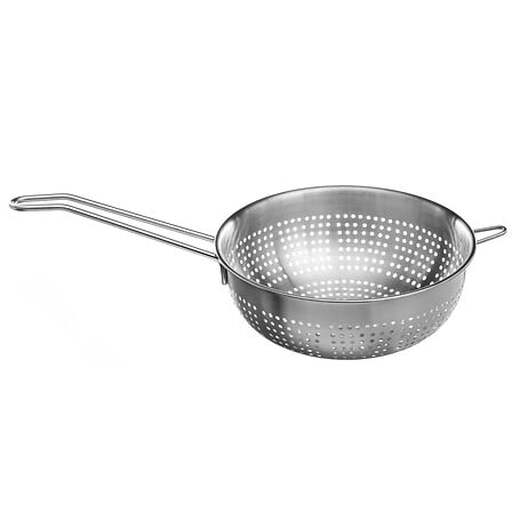
Why this product suits this profile: This compact model is designed for small households, individual portions and occasional kitchen tasks. The long handle makes it easier to hold while rinsing and draining.
The 0.5-litre capacity makes its usage limits clear. This prevents it from being chosen inadvertently as a large spaghetti colander for several people.
Stainless steel construction, compact size and a practical handle for small quantities.
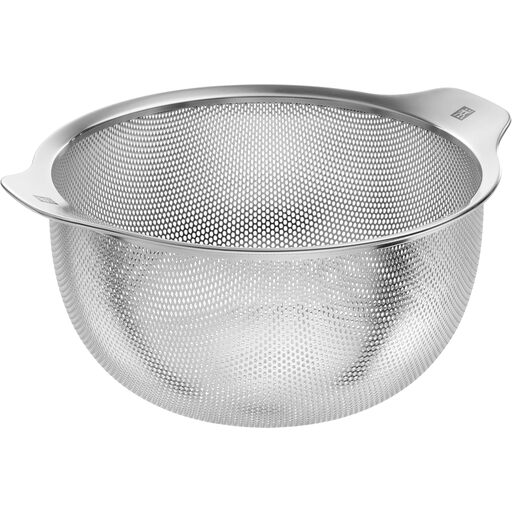
Why this product suits this profile: The 24-centimetre diameter, side handles and raised stand are designed for larger quantities and regular use.
The specific 18/10 material specification and stated dimensions replace unclear claims such as “extra large” or “particularly robust”.
24-centimetre diameter, integrated handles, raised base and, according to the product information, dishwasher-safe.
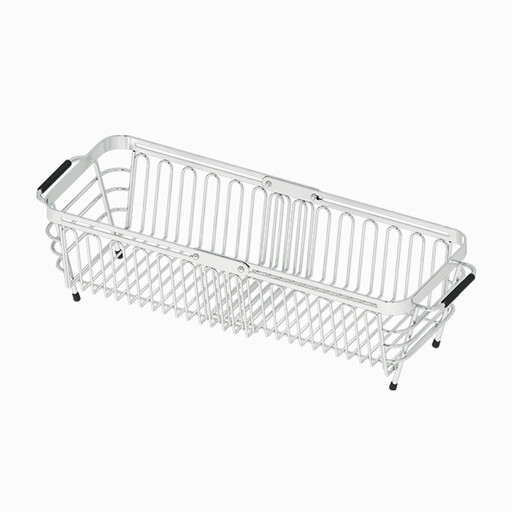
Why this product suits this profile: The extendable length of 29 to 44 centimetres is designed for use over sinks of different widths. It can be used as a draining colander, sink organiser or draining surface.
The adjustable length is stated clearly. Nevertheless, you should check the width of your own sink before buying and make sure the colander is positioned securely.
304 stainless steel, extendable frame and raised mesh surface, allowing water to drain directly into the sink.
Wash a stainless steel colander with warm water and a mild detergent after use. Dried-on starch from pasta or flour is easier to remove if it is not left on the surface for long. Dry the colander thoroughly afterwards, particularly around joins and the frame.
Follow the relevant manufacturer’s instructions:
We have put together a complete, regularly updated list of products that fully meet these strict selection criteria and the safety regulations applicable in the EU.
A small colander is sufficient for individual portions. For family-sized portions, around 20 to 24 centimetres is generally more practical. The key is to choose a capacity that suits the quantities you typically prepare and to make sure the colander can be held securely while draining.
Many models are dishwasher-safe according to the product information. For versions with a wooden handle, plastic frame or delicate surface, you should follow the care instructions. Thorough drying can help reduce water marks and deposits.
The terms are sometimes used interchangeably in everyday speech. A colander or pasta strainer is often designed for larger quantities of liquid. A fine kitchen sieve is also suitable for flour, icing sugar or small food items. A draining colander positioned over the sink combines draining with space-saving use and, depending on its design, can also be used as a stainless steel draining basket.