
Lieferung heute & morgen

Qualitätsgarantie

Willkommens-Angebote freischalten: KOSTENLOSE Lieferung | Bis zu 80 % RABATT | Kostenlose 30-Tage-JoyPlus-Testphase
App herunterladen
A stainless steel kitchen sieve can be used to drain pasta, wash vegetables, rinse rice or sift flour. In practice, though, differences often only become clear after repeated use. A diameter that’s too small, unstable handles or unsuitable mesh can make everyday cooking more difficult and lead to a disappointing purchase.
Price alone is therefore not a reliable way to choose. The intended use, quality of construction and cleaning instructions all matter. Keep an eye out for these three common buying mistakes:
Specific material details are more useful than general marketing claims when choosing a durable stainless steel sieve. 18/10 stainless steel refers to an alloy containing around 18% chromium and 10% nickel. 304 stainless steel is also commonly specified and is used in kitchens for direct contact with food.
A smooth, non-porous surface will generally absorb fewer odours and residues than porous materials. Also look for:
A model with a plastic frame needs to be assessed differently from an all-metal colander. For example, the 22 cm sieve from 5Five has a 316 stainless steel mesh and a plastic frame. According to the product details, it’s dishwasher-safe; however, you should check the frame’s stated temperature limit before using it with boiling liquids.
The right size depends on how much you’re preparing and how much worktop space you have:
A 24 cm pasta colander will usually have enough room for typical family portions, but avoid filling it to the brim when draining. Capacity can’t be judged by diameter alone, as height and shape also make a difference. The 5Five model has a 24 cm diameter and a stated capacity of 2.2 litres.
The size of the holes determines which foods the sieve can hold. Larger holes are suitable for pasta and chunky vegetables. For rice, quinoa or fine baking ingredients, choose a sieve for rinsing vegetables with a finer mesh, or a dedicated flour sieve.
A raised base stops the sieve from sitting directly in the liquid as it drains. Side handles make it easier to lift and move safely, while a wide base helps it sit over a bowl. Even with a dishwasher-safe sieve, you should follow the manufacturer’s instructions: plastic parts, satin finishes and fine mesh can wear more quickly if they’re exposed to high temperatures or abrasive detergents over time.
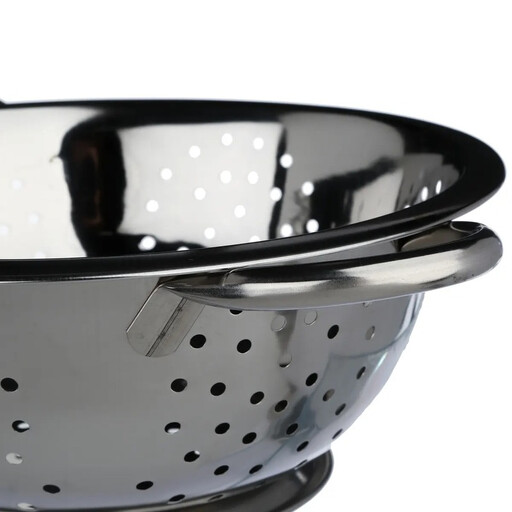
Why this product suits this profile: With a 24 cm diameter and a capacity of 2.2 litres, this colander handles everyday tasks such as draining pasta, washing fruit and rinsing vegetables.
The stated dimensions and capacity make it easier to choose than a product described by size alone.
24 cm diameter, 2.2-litre capacity and stainless steel construction, according to the product description.
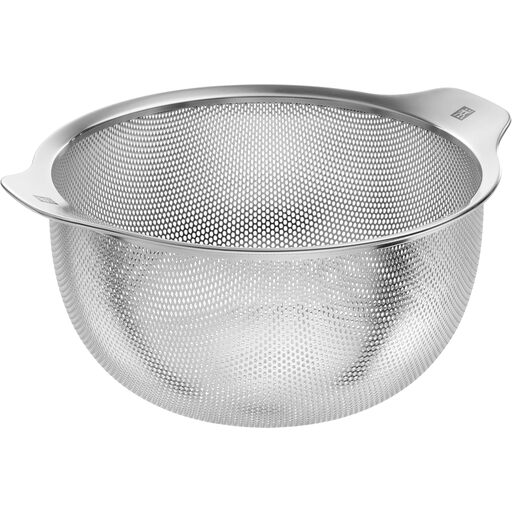
Why this product suits this profile: Made from 18/10 stainless steel, this 24 cm colander has side handles and a raised base, making it well suited to larger quantities and regular use.
The specific stainless steel grade and integrated handles offer clear, verifiable details rather than vague promises about quality.
18/10 stainless steel, side handles, a raised base and dishwasher-safe, according to the product details.

Why this product suits this profile: Its expandable design is a useful option for homes and kitchens with sinks of different sizes, particularly when preparing large quantities of vegetables, pasta or fried food.
The expandable design comes with stated external dimensions and a 3.6-litre capacity. Check the width of your sink before buying.
3.6-litre capacity, extends to 53.5 cm and made from stainless steel, according to the product details.
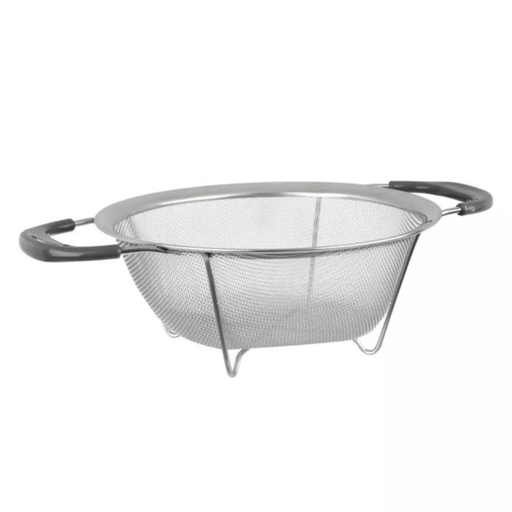
Why this product suits this profile: The fine 316 stainless steel mesh is suitable for flour, icing sugar, small ingredients and liquids when you need a finer weave.
The fine mesh is designed to hold small particles. Avoid exposing the plastic frame to boiling liquids above its stated temperature limit.
22 cm diameter, 316 stainless steel mesh and dishwasher-safe, according to the product details.
We’ve put together a comprehensive, regularly updated list of products that meet these strict selection criteria and the safety regulations in force in the EU.
Before using your new stainless steel kitchen sieve for the first time, rinse it with warm water and mild washing-up liquid. After cleaning, allow it to dry completely, especially around joins and beneath the handles. Avoid steel wool and harsh scouring products, as they can scratch the surface.
When handling hot liquids, the handles and frame are important. An all-metal colander needs to be assessed differently from a model with plastic parts. Check the edges, mesh and feet regularly, too. A bent sieve may become unstable or fail to hold food securely.
Yes, stainless steel is generally suitable for a pasta colander, as long as the model is designed for hot food. Look for a stable base, heat-resistant handles and holes small enough to keep the pasta you’re cooking from falling through.
For everyday household use, a size of around 20 to 24 cm is often versatile. For larger family portions or washing plenty of vegetables, a model measuring 27 cm or more, or a draining basket with a greater capacity, may be a better choice. Height and available worktop space also matter.
Not necessarily. A dishwasher-safe label makes cleaning more convenient, but fine mesh, plastic frames and decorative finishes can be put under greater strain by frequent intensive wash cycles. For delicate parts, washing by hand with a soft sponge is a good option.