
Lieferung heute & morgen

Qualitätsgarantie

Willkommens-Angebote freischalten: KOSTENLOSE Lieferung | Bis zu 80 % RABATT | Kostenlose 30-Tage-JoyPlus-Testphase
App herunterladen
A stainless steel kitchen sieve is one of the most versatile kitchen aids: it rinses rice and vegetables, drains pasta, filters liquids and sifts flour. However, unclear product specifications and unsuitable designs can quickly lead to disappointing purchases. When choosing, it is therefore not just the shiny stainless steel that matters, but above all the combination of mesh width, diameter, capacity, handle design and ease of cleaning.
A fine-mesh kitchen sieve is ideal for sifting flour and icing sugar, removing fruit pulp or filtering fine residue from juices. However, for pasta, potatoes or larger pieces of vegetables, a very fine mesh can slow down drainage.
A coarsely perforated pasta strainer allows liquid to drain quickly, but may not retain small grains of rice or fine pieces of dough. Simply looking for a product described as a “sieve” therefore does not automatically guarantee that it is the right tool for the job.
“Stainless steel” initially describes only the material category. For frequent contact with salt, acids or moist foods, specifications such as 304 stainless steel, 18/8 or 18/10 are more helpful, provided they are clearly stated by the seller. The workmanship also matters: smooth edges, sturdy handles and evenly sized openings make everyday use easier.
For coated sieves or models made partly from plastic, you should also check whether they are suitable for hot liquids and dishwasher use. A plastic rim can make handling easier, but its suitability may depend on the temperature, depending on the product.
A kitchen sieve with a handle can easily be held over bowls or saucepans. For larger quantities, however, side handles and a stand are more practical. In smaller kitchens, an extendable sink strainer can save space, provided that its dimensions match the sink.
A missing hook, a short handle or a wobbly base can quickly become irritating in everyday use. Before buying, you should therefore compare the product dimensions with how you intend to use it.
For regular use, an uncoated stainless steel sieve is easy to maintain and resistant to retaining odours. Models specified as being made from 304 stainless steel use a grade that is commonly found in kitchen utensils. However, the designation alone does not replace checking the other product details.
Look out for:
A dishwasher-safe sieve reduces the effort required for cleaning. For sets with bamboo lids, this property does not necessarily apply to every component. Natural wood should generally be cleaned by hand and dried thoroughly.
A diameter of around 16 cm is suitable for flour, icing sugar and smaller quantities. A model measuring 22 to 24 cm offers more space for fruit, vegetables or pasta. For family-sized portions, depth and stability are also important.
A capacity of 2.2 litres is suitable for many everyday tasks. For meal prep, large portions of vegetables or rinsing salad, a 3.6-litre model may be more practical. With an extendable sink strainer, the adjustable length must match the width of the sink.
A classic sieve for straining is placed over a bowl or saucepan. A kitchen colander with a stand is practical when both hands are needed for transferring food. For soups, fried food and removing foam, a straining spoon or stainless steel skimming spoon is the more suitable design.
When handling hot food, you should follow the manufacturer's instructions. A heat-insulating handle can reduce heat transfer, but it does not automatically make the entire kitchen utensil heatproof. Hot oils, naked flames and microwave use are excluded for many straining spoons.
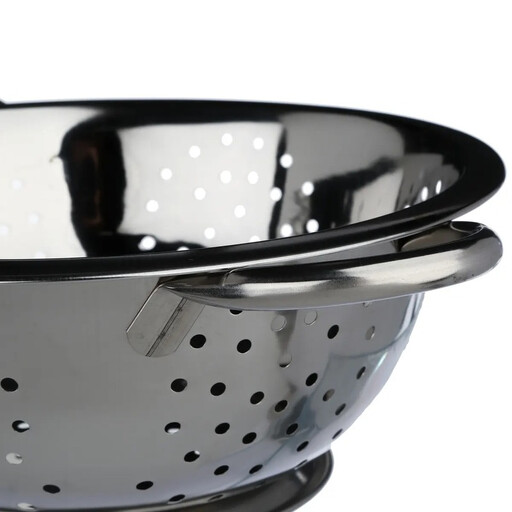
Why this product suits this profile: The 24 cm colander is designed for pasta, vegetables, fruit and dry ingredients, covering a range of typical household tasks.
The stated size and capacity make the choice clearer than a generic product description without measurements.
24 cm diameter, 12 cm height and stainless steel construction for a range of kitchen tasks.
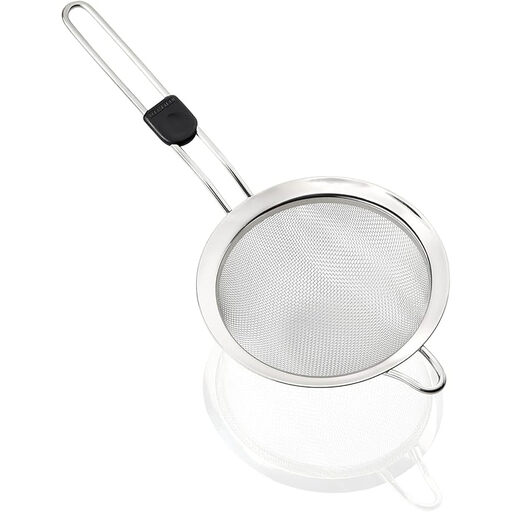
Why this product suits this profile: This 16 cm stainless steel sieve is aimed at keen bakers and households looking for a compact model for flour and icing sugar.
The stated 1.5 mm mesh opening clearly defines its intended use and prevents unrealistic expectations of a coarse draining sieve.
Dishwasher suitability, stainless steel construction, thumb rest and hanging loop.
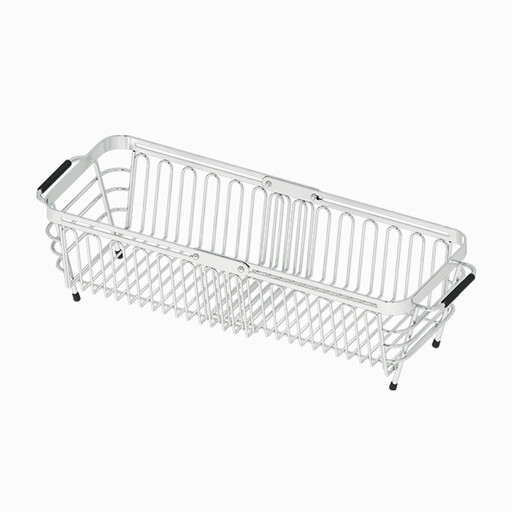
Why this product suits this profile: The extendable sink strainer adjusts from 29 to 44 cm and is suitable for vegetables, fruit, dishes or larger draining tasks.
The adjustable length is clearly stated. This allows you to check before buying whether the sieve will rest securely on your sink.
Stated 304 stainless steel, adjustable frame and raised base for draining water into the sink.
We have put together a complete, regularly updated list of products that fully meet these strict selection criteria and the safety regulations applicable in the EU.
Rinse a stainless steel sieve promptly after use with warm water and mild washing-up liquid. Salt, acid residue and oil should not be left on the surface for extended periods. A soft sponge protects fine meshes and polished surfaces from scratches.
Even a dishwasher-safe sieve should be dried thoroughly after the wash cycle. For bamboo lids or plastic frames, follow the relevant manufacturer's instructions. Check the sieve regularly for loose handles, sharp edges or damaged meshes. A damaged sieve should no longer be used for food.
For flour and small quantities, a diameter of around 16 cm is sufficient. For pasta, salad and vegetables, 22 to 24 cm is more practical. Families and meal-prep users often benefit from a deeper model or a capacity of around 2 litres or more.
Generally, yes, provided that the diameter and stability are suitable. Very fine meshes can drain water more slowly. For large quantities of pasta, a spacious draining sieve with larger perforations is usually more practical.
A stainless steel sieve set is useful if you regularly have different tasks to handle: sifting flour, rinsing rice, draining vegetables and filtering liquids. If you only drain pasta occasionally, you generally do not need a multi-piece set. What matters is the actual range of sizes included and the cleaning instructions for each individual piece.