
Lieferung heute & morgen

Qualitätsgarantie

Willkommens-Angebote freischalten: KOSTENLOSE Lieferung | Bis zu 80 % RABATT | Kostenlose 30-Tage-JoyPlus-Testphase
App herunterladen
A stainless steel kitchen sieve is found in many British households, but it is often chosen for its appearance rather than its intended use. A small fine-mesh sieve is suitable for sifting flour, but it cannot replace a large pasta colander. Conversely, a coarsely perforated draining colander can be impractical for rice, berries or fine ingredients.
Before buying, households, home cooks, baking enthusiasts and catering businesses should therefore watch out for three common pitfalls: unsuitable mesh sizes, unstable handles, and unclear information about materials and cleaning.
A sieve with a large diameter is not automatically particularly spacious. The height of the bowl, usable internal area and stated capacity are also important. A compact kitchen sieve is sufficient for a portion of berries or a bunch of herbs. For pasta, salad or larger quantities of vegetables, a deep colander with a stable base is the more practical choice.
Look for specific details such as 16, 22 or 24 cm diameter, as well as the capacity. For example, a 2.2-litre model is suitable for washing and draining several ingredients, while a 3.6-litre sieve offers more space for larger portions.
The size of the holes or mesh determines what remains in the sieve. Large openings allow liquid to drain quickly, but may let small pasta, rice or berries through. By contrast, a fine-mesh sieve with a mesh size of around 1.5 mm is designed for flour, icing sugar and fine dry ingredients.
For a draining colander used with pasta and vegetables, evenly distributed round holes are usually more practical. For stock, sauces or fruit purée, a fine-mesh model or a strainer with smaller openings is more suitable. If you often work directly in the pan, look for a pasta strainer with handle or a straining spoon with a hanging hook.
Not all stainless steel is the same. Meaningful product information may specify 304 stainless steel or 18/10 stainless steel, for example. These designations describe the material composition and make comparisons easier. The construction also matters: smooth, deburred edges, secure welds and a shape that resists twisting are more relevant in everyday use than a shiny finish alone.
For sieves with plastic frames, you should also check whether they are suitable for hot liquids. The product “Stainless Steel and Plastic Mesh Sieve”, for example, states that the plastic frame should not be exposed to temperatures above 70 °C. A dishwasher-safe sieve can make cleaning easier, but the manufacturer’s care instructions should be followed for plastic components.
A flat base prevents the sieve from standing directly in the draining water. Side handles make it easier to carry full bowls. A long handle, on the other hand, is particularly useful when using a slotted spoon, straining spoon or soup strainer in deep pans.
For small kitchens, extendable models can be a space-saving solution. The 3.6-litre stainless steel sieve can be used over sinks of different sizes and has a stated length of 53.5 cm. For storage in a drawer, a compact model with a hanging loop is usually more practical.
Before buying, consider whether the sieve will mainly be used for draining pasta, washing fruit and vegetables, filtering liquids or baking. A single universal sieve can cover several tasks, but it will not be equally suitable for every application.
For flour and icing sugar, a close-mesh kitchen sieve such as the Leifheit ProLine, with a mesh size of 1.5 mm, is a good choice. Closely spaced drainage openings are useful for washing rice or quinoa. For deep-frying, hotpot dishes or dumplings, small straining spoons with long handles are suitable.
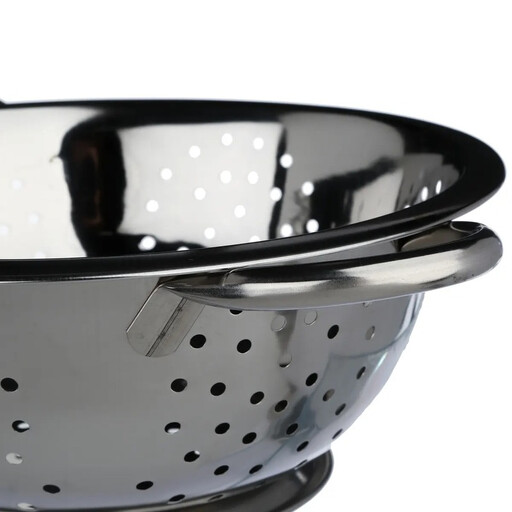
Why this product suits this profile: With a capacity of 2.2 litres and a diameter of 24 cm, this model covers typical household tasks, including draining pasta, washing fruit and sifting dry ingredients.
The precise dimensions and capacity make it easier to choose than a sieve whose size is described only in general terms.
2.2-litre capacity, 24 cm diameter and a height of 12 cm.
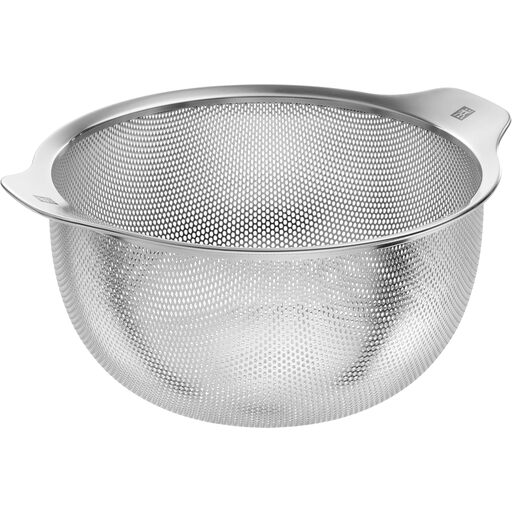
Why this product suits this profile: According to the product information, this model is made from 18/10 stainless steel and features side handles and a raised base.
The 18/10 material specification and the stated construction features provide clear points of comparison, rather than relying solely on a high-gloss appearance.
24 cm diameter, integrated handles, raised base and, according to the product information, dishwasher suitability.
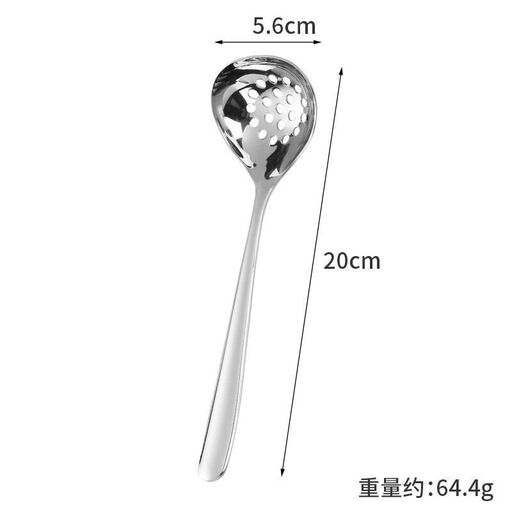
Why this product suits this profile: The long handle is designed for deep pans, soups, hotpot dishes, dumplings and lifting out noodles. This makes the strainer suitable for frequent use in larger kitchens, too.
The extended handle keeps your hands further away from hot liquids. Nevertheless, it should be handled carefully during prolonged heating.
Deep, perforated bowl and long handle for soups, pasta, vegetables and fried ingredients.
We have put together a complete, regularly updated list of products that fully meet these strict selection criteria and the safety regulations applicable in the EU.
For small quantities and baking ingredients, around 10 to 16 cm is sufficient. A sieve measuring 20 to 24 cm is more suitable for draining pasta, washing vegetables and preparing salad. For larger households or catering businesses, a model with a 3-litre capacity may be a sensible choice.
No. Suitability depends on the specific product and any additional materials, such as plastic or wood. Information such as “dishwasher-safe” should be stated directly in the product details. With delicate surfaces, hand washing can help extend the product’s service life.
A fine-mesh sieve has small meshes or openings and is often used for flour, sugar, sauces or fine particles. A pasta colander or coarsely perforated strainer is designed for draining larger quantities of food. One sieve can be suitable for both tasks if the hole size and capacity match the intended use.