
Lieferung heute & morgen

Qualitätsgarantie

Willkommens-Angebote freischalten: KOSTENLOSE Lieferung | Bis zu 80 % RABATT | Kostenlose 30-Tage-JoyPlus-Testphase
App herunterladen
A stainless steel kitchen sieve is one of the most versatile kitchen essentials: it can drain pasta, rinse rice, wash vegetables, sift flour and filter liquids. However, not every sieve will deliver the result you want. The key factors are the material, hole or mesh size, capacity and how the sieve is handled.
A colander with round perforations is suitable for pasta, dumplings and larger pieces of vegetables. For flour, icing sugar, fruit pulp or very small grains of rice, a fine-mesh kitchen sieve is usually more suitable. A dense filter structure holds back suspended particles, although liquids may drain more slowly when you are working with larger quantities.
The term stainless steel alone says little about the alloy used or the quality of the workmanship. Specifications such as 304 stainless steel or 18/8 and 316 stainless steel provide more useful guidance. Smooth, neatly finished edges and a sturdy connection between the handle, frame and sieve surface are equally important.
A large colander is practical for family-sized portions, but it can take up a lot of space in small kitchen cupboards. An extendable sink sieve can be positioned over different sink sizes and then stored more compactly. For individual portions, a small kitchen sieve with a handle is often all you need.
For everyday use, rust-resistant stainless steel varieties with a smooth surface are practical. Models made from 304 stainless steel are often described as food-safe and corrosion-resistant. When buying, you should also check:
A plastic frame can reduce the weight, but depending on the model, it may not be suitable for very hot liquids. If you choose a stainless steel sieve with a wooden handle, do not leave the handle in water for extended periods.
The right structure depends on the food you are preparing:
A flour sieve needs a finer structure than a traditional pasta colander. A sieve for rinsing rice should retain small grains while still allowing enough water to pass through.
For a one-person household or small quantities, around 0.5 to 1.5 litres is often sufficient. Families benefit from larger versions with a capacity of approximately 2 to 3.6 litres. You should also look for:
A colander with two handles can be carried more securely with both hands. By contrast, a small fruit sieve or portion sieve with a long handle is quick to reach for and takes up very little space.
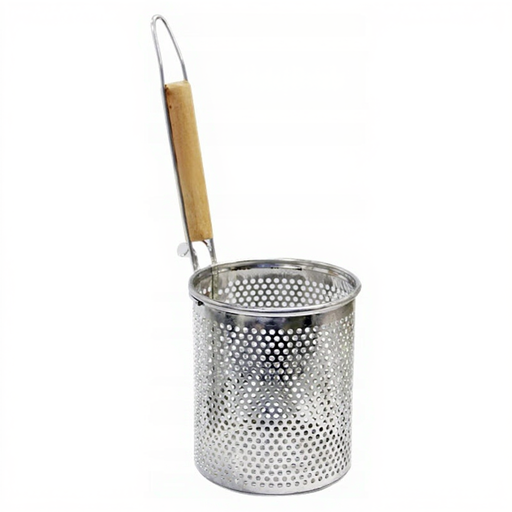
Why this product suits this profile: The compact 12 cm diameter is suitable for smaller portions, pasta, dumplings and blanched vegetables.
The stated dimensions make the capacity clear and avoid the expectation that a small sieve will be suitable for large family portions.
Stainless steel construction, a total length of 33.5 cm and a wooden handle with a hook for hanging.
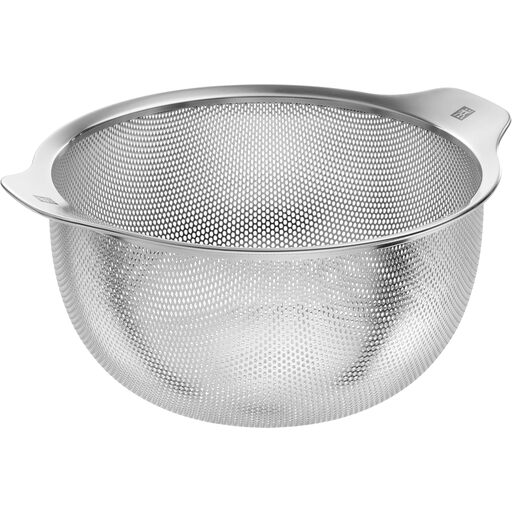
Why this product suits this profile: The 24 cm diameter and integrated side handles are designed for larger quantities of pasta, vegetables or fruit.
The size, stand and two handles are clearly designed for larger portions rather than simply claiming general versatility.
18/10 stainless steel, integrated side handles, raised stand and, according to the product information, dishwasher-safe.
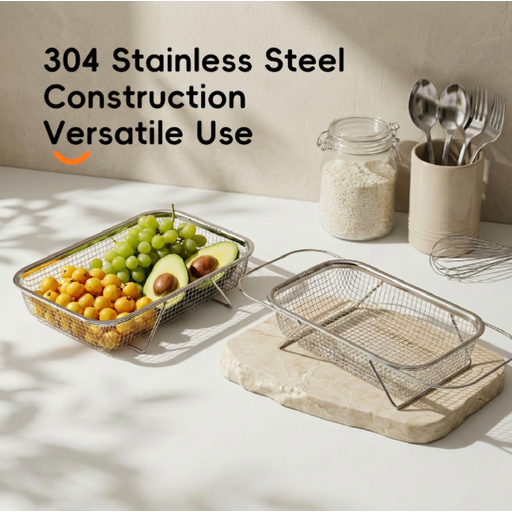
Why this product suits this profile: The extendable design can be used over the sink and shortened for storage.
The stated length of 29.5 cm and extendable design make it easier to adapt to the width of your sink.
304 stainless steel, an adjustable design and closely spaced drainage openings for vegetables, fruit and washing-up.
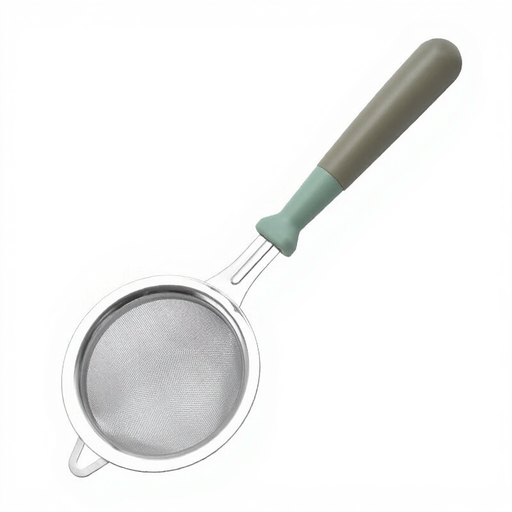
Why this product suits this profile: The spoon-shaped design with a dense mesh is intended for juices, stock, foam and fine residue.
The fine filter surface is designed for different tasks than a coarsely perforated pasta colander, helping you avoid choosing the wrong product.
Dense stainless steel mesh, heat-insulating handle and integrated hook for storage.
We have put together a complete, regularly updated list of products that fully meet these strict selection criteria and the safety regulations applicable in the EU.
Before using a new stainless steel kitchen sieve for the first time, wash it with warm water and mild washing-up liquid. Do not clean fine mesh with knives, hard brushes or abrasive cleaners. This helps prevent deformation and damage to the mesh.
For hot liquids, follow the relevant manufacturer's instructions. A heat-insulating handle does not automatically protect every component from heat. Plastic frames may be unsuitable for boiling liquids. Make sure a large sieve is standing securely and do not overload extendable models.
For individual portions, compact models with a diameter of around 12 to 16 cm are sufficient. Families and frequent users are generally better served by a sieve with a diameter of 22 to 27 cm or a capacity of around 2 litres or more. It is important that the sieve fits in your sink, on a bowl or in the cupboard where you plan to store it.
Yes, provided the openings are small enough to prevent the grains of rice from falling through. For rice, quinoa and small pulses, evenly distributed, smaller drainage openings are a sensible choice. A very coarse pasta colander may not be suitable for this purpose.
Its lifespan depends on the alloy, workmanship, level of use and care. Rust-resistant stainless steel, sturdy handles and careful drying all help ensure long-lasting use. Damaged or bent mesh should no longer be used, particularly if sharp edges have formed.