
Lieferung heute & morgen

Qualitätsgarantie

Willkommens-Angebote freischalten: KOSTENLOSE Lieferung | Bis zu 80 % RABATT | Kostenlose 30-Tage-JoyPlus-Testphase
App herunterladen
A stainless steel kitchen sieve is one of the most versatile kitchen helpers: it washes fruit and vegetables, separates liquids from solid ingredients, sifts flour and helps skim off foam or fried foods. However, not every stainless steel model is the right purchase. The key factors are intended use, mesh size, dimensions and the actual material specification.
“Stainless steel” initially describes only a group of materials. For contact with food and everyday use, it is sensible to look for a specific specification such as 304 stainless steel or 18/10 stainless steel. These designations make it easier to assess the product than general claims such as “particularly durable” or “rustproof”.
However, this does not guarantee protection against every type of discolouration or corrosion. Salt, acids, prolonged exposure to moisture and aggressive cleaning products can affect metal surfaces. The care instructions provided by the respective manufacturer therefore remain important.
A fine-mesh sieve is suitable for filtering fruit pulp, soya milk, stock or flour. For pasta, rice and vegetables, larger, evenly distributed openings are usually more practical because water drains away faster and the sieve is less likely to become blocked.
A very fine straining sieve is therefore not automatically a suitable pasta strainer. If you only want to buy one model, consider whether you are more likely to filter liquids or drain larger foods.
A small kitchen sieve is easy to handle, but can only hold limited quantities. For family portions, a diameter of around 20 to 24 cm or a capacity of several litres is more practical. A stand, side handles or a hook for resting on a pan rim make draining easier.
The temperature specification is also important: a plastic frame may behave differently with very hot liquids than a strainer made entirely from metal. When choosing a sieve for draining, check whether the product is designed for boiling liquids.
Look for:
A stainless steel kitchen sieve with a smooth surface is practical because fewer residues can become trapped there. Nevertheless, the sieve should be dried thoroughly after cleaning.
The product’s shape determines its function:
The position of the handle also matters: a long handle keeps you further away from hot oil, but may take up more space in small drawers.
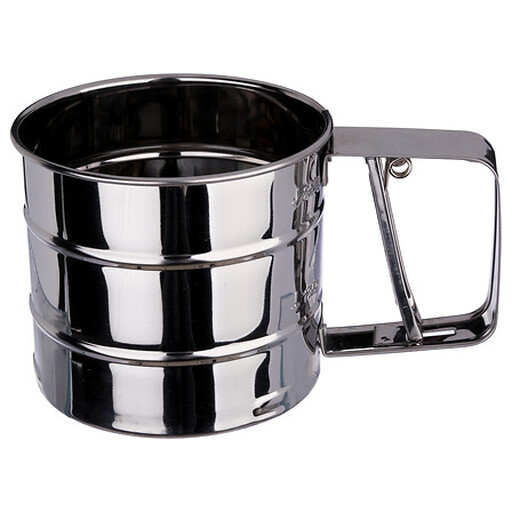
Why this product suits the profile: Measuring a compact 10.3 × 9.3 × 15.5 cm, it is suitable for smaller kitchens and occasional tasks such as sifting flour, filtering liquids or rinsing small ingredients.
The clearly stated compact size prevents a small model from accidentally being chosen for large portions of pasta.
Stainless steel construction, a low weight of 0.120 kg and easy cleaning with warm soapy water.
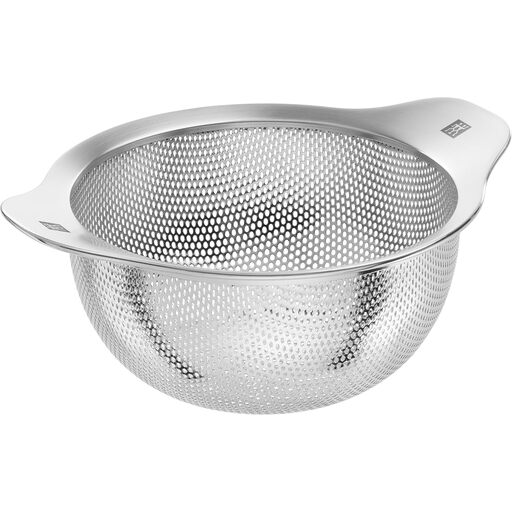
Why this product suits the profile: Its 3-in-1 design combines a sieve, colander and bowl. The flat base makes it easier to set down, while two handles make it easier to move.
The stated 18/10 stainless steel construction and stable base make the material and stability specifications easy to understand.
Satin finish, stackable sizes within the range and stated dishwasher suitability.
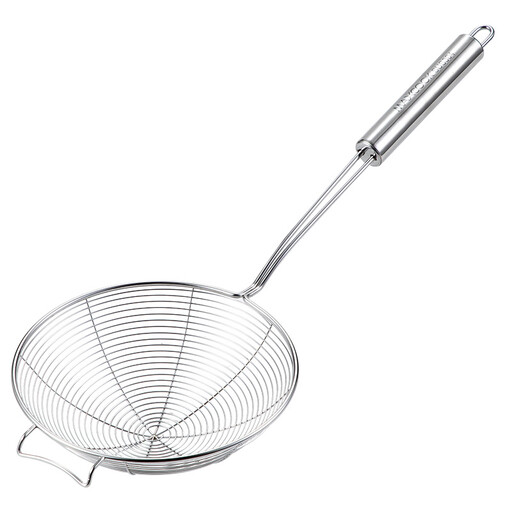
Why this product suits the profile: This draining spoon is designed for hotpot, pasta and dumplings, as well as lifting and filtering food while cooking and frying.
The integrated pan-rim hook, deep spoon head and hollow handle are clearly stated construction features.
304 stainless steel, rounded edges and a hanging hole; the handle may still become warm during prolonged exposure to heat.
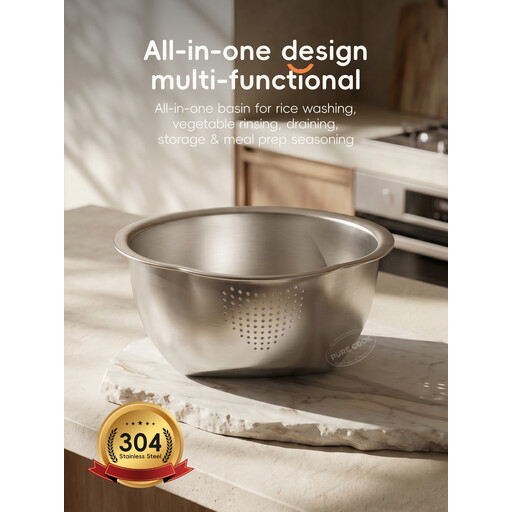
Why this product suits the profile: The 27 cm diameter and side handles are designed for larger quantities of rice, pasta, fruit or vegetables.
The dimensions, evenly distributed drainage openings and the product specification “dishwasher-safe” provide clear guidance for everyday family use.
304 stainless steel, smooth edges, two side handles and versatile use for washing, draining and preparation.
We have put together a complete, regularly updated list of products that fully meet these strict selection criteria and the safety regulations applicable in the EU.
Before first use, every stainless steel kitchen sieve should be cleaned with warm water and mild washing-up liquid. Some products require additional cleaning steps. After use, remove salt, acid and oil residues promptly.
Also bear in mind:
Medium-sized, evenly distributed openings are practical for pasta and vegetables. Very small mesh openings can slow down drainage and are better suited to flour, juices or finer suspended particles.
That depends on the specific product. Many models made entirely from stainless steel can be placed in the dishwasher according to the product specifications. With plastic frames, wooden handles or decorative surfaces, hand washing may be more suitable. The relevant manufacturer’s instructions are decisive.
It is not possible to give a general fixed service life. This depends on the material, construction, level of use and care. A sieve can be used for longer if it is not overloaded, is not treated with abrasive cleaners and is stored dry after washing.