
Lieferung heute & morgen

Qualitätsgarantie

Willkommens-Angebote freischalten: KOSTENLOSE Lieferung | Bis zu 80 % RABATT | Kostenlose 30-Tage-JoyPlus-Testphase
App herunterladen
A stainless steel kitchen sieve needs to perform reliably day in, day out: whether you’re draining pasta, washing vegetables, rinsing rice or sifting flour. In practice, unclear material specifications, unsuitable mesh sizes and unstable handles often lead to disappointing purchases. The following criteria will help home cooks, families, keen bakers and catering businesses compare models objectively and find the right one.
The term stainless steel doesn’t always tell you the exact alloy or how the product has been made. For food contact, clear specifications such as 304 stainless steel, also known as 18/8, or 18/10 stainless steel are more helpful. Smooth edges, a clean finish and a design without hard-to-reach gaps are important too.
A stainless steel kitchen sieve with polished edges may be more comfortable to handle every day. Even with budget-friendly models, it’s worth checking that the rim is sturdy and that the sieve won’t easily bend under normal use.
A very fine-mesh sieve is ideal for sifting flour and icing sugar, or filtering stock and fruit pulp. However, it can slow down the flow of water when you’re draining a large pan of pasta. A stainless steel colander with larger holes is handy for pasta and vegetables, but won’t reliably catch fine particles.
If you want a sieve that can handle several tasks, consider using a fine-mesh kitchen sieve for dry ingredients and liquids, and a larger colander with a sturdy base for draining.
A small hand sieve saves space, but can only hold limited quantities. A large colander needs enough room over the sink, a bowl or a pan. A secure grip is also important when handling hot food. Models with side handles or a raised base are usually easier to control when you’re working with larger quantities.
Look out for the following details when choosing a durable kitchen sieve:
Dry the sieve thoroughly after washing. Abrasive cleaners, steel wool and harsh chemicals can damage the surface or plastic parts.
A diameter of around 16 to 17 cm is suitable for smaller portions, baking ingredients and washing small quantities of fruit. Models with a diameter of 20 to 24 cm are more practical for family-sized portions, pasta and vegetables. A 3.6-litre expandable sieve can fit over sinks of different sizes, but takes up more storage space.
For rice, quinoa and small pulses, it’s important to have evenly spaced, sufficiently small holes. A dedicated rice sieve or a rice bowl with drainage holes around the sides may be more suitable than a stainless steel colander with larger holes.
Not every sieve is suitable for boiling liquids or hot oil. If a model has a plastic frame, check the stated temperature limit. According to the product information, the 316 stainless steel mesh sieve with a plastic frame in our selection is suitable for food contact and dishwasher-safe. However, the frame isn’t designed for temperatures above 70 °C.
A fine-mesh filter spoon, on the other hand, is suitable for juices, soya milk or fruit pulp. If you’re looking for a food mill, compare the mesh structure and shape of the filter insert carefully.
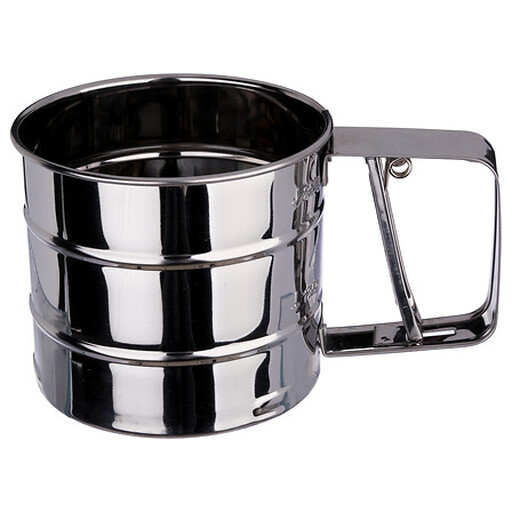
Why this product suits this profile: Measuring 10.3 × 9.3 × 15.5 cm, this compact sieve is well suited to smaller households, baking ingredients and everyday kitchen tasks.
The stainless steel material specification is clearer than a colour description alone. Its compact design also helps avoid buying a sieve that’s too large for smaller quantities.
Suitable for sifting flour, straining liquids and dusting with icing sugar; described as rust-resistant and easy to clean.
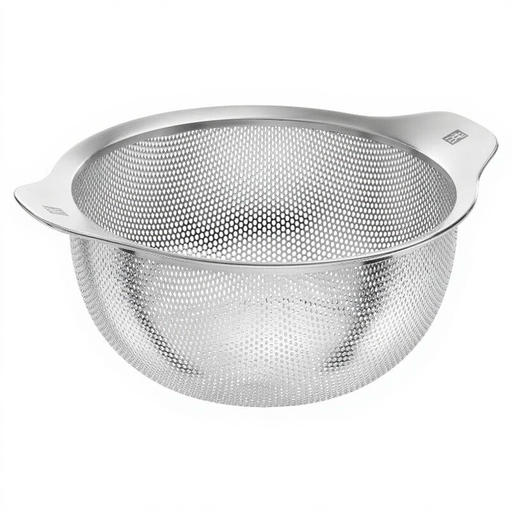
Why this product suits this profile: This 20 cm colander is made from 18/10 stainless steel. Its clearly specified material and sturdy shape make it a good choice for regular kitchen use.
The 18/10 specification and satin-finish stainless steel make it easier to check the material details. The flat base helps keep the sieve stable.
20 cm diameter, perforated stainless steel construction and dishwasher suitability according to the product specifications; can be used as a sieve, serving bowl or colander.
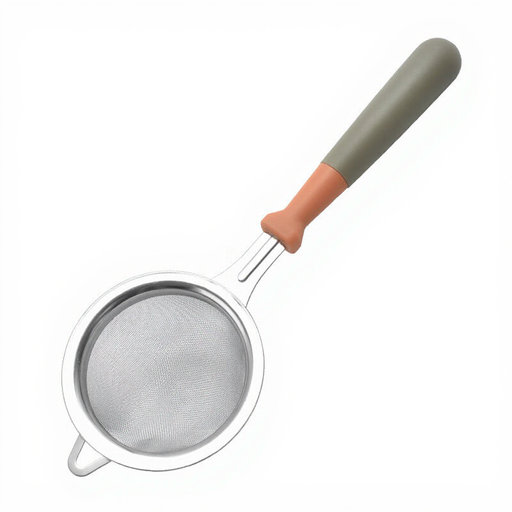
Why this product suits this profile: Its spoon-like shape and fine stainless steel mesh are designed for filtering soya milk, juices and citrus drinks.
Its specific purpose helps you avoid using a coarse pasta colander for fine residue or fruit pulp.
Fine stainless steel mesh described as durable and rust-resistant; the handle gives you better control while filtering.
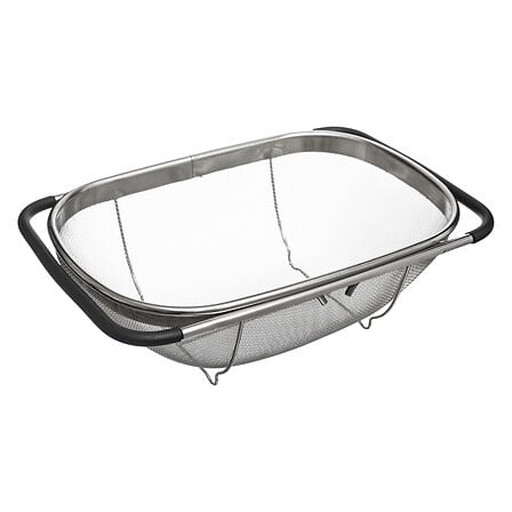
Why this product suits this profile: With a 3.6-litre capacity and an expandable design, it’s made for larger quantities and sinks of different widths.
The stated capacity helps you avoid choosing a sieve that’s too small for family-sized portions. The extendable supports can be adjusted to fit the width of your sink.
Measures 53.5 × 24.7 × 10.5 cm and features stainless steel construction and an ergonomic handle, according to the product specifications.
We’ve put together a complete, regularly updated list of products that meet these strict selection criteria and the safety regulations in force in the EU.
To keep a draining sieve in use for as long as possible, remove food residue straight after use. Fine mesh can get clogged with starch, fruit pulp or flour. Warm water, a mild washing-up liquid and a soft sponge are recommended.
When using a stainless steel pasta strainer, distribute the weight of the food evenly. Fine wire mesh isn’t designed to take the weight of knives, bones or heavy objects. Don’t use plastic frames with boiling liquids if this would exceed the manufacturer’s stated temperature limit.
A sieve for washing vegetables should be large enough, have a stable base or secure handles, and feature evenly spaced holes. A model with a diameter of 16 to 17 cm is enough for smaller quantities. Households with families often benefit from a sieve measuring 20 to 24 cm or more.
It depends on the product. Some models in our selection are described as dishwasher-safe. Frequent washing at high temperatures may affect the lifespan of the frame on sieves with plastic parts. Always check the manufacturer’s information on the product page before buying.
There’s no reliable one-size-fits-all answer. Lifespan depends on the thickness of the material, the construction, how heavily it’s used, how it’s cleaned and how it’s stored. A sieve may last longer if you don’t overload it, clean it with steel wool or put it away before it’s completely dry. It’s also important not to use a fine-mesh model for heavy or sharp-edged food.