
Lieferung heute & morgen

Qualitätsgarantie

Willkommens-Angebote freischalten: KOSTENLOSE Lieferung | Bis zu 80 % RABATT | Kostenlose 30-Tage-JoyPlus-Testphase
App herunterladen
A good stainless steel kitchen strainer is an indispensable tool in any kitchen. Whether for draining pasta, washing salad, or sifting flour, its uses are manifold. However, the market is flooded with products that seem solid at first glance but quickly turn out to be a bad purchase. Many buyers get frustrated with rust spots, bent handles, or mesh that stubbornly traps food residue.
As your Joybuy Product Recommendation Officer, I'm here to help you navigate these common pitfalls. In this guide, I'll show you the crucial features to look for to find a durable and functional stainless steel kitchen strainer that reliably does its job without ending up in the bin after a short time.
Before we dive into quality features, let's highlight the most common issues that lead to disappointment. Knowing these will help you search for a better product more effectively.
To avoid the problems mentioned above, you should check three key aspects before buying. These define the longevity, safety, and functionality of your new kitchen helper.
The most important characteristic is the steel alloy used. Pay attention to precise specifications from the manufacturer.
The type of openings determines the primary use.
Pay attention to details that make a big difference in daily use.
Here are some recommendations tailored to different needs and kitchen profiles.
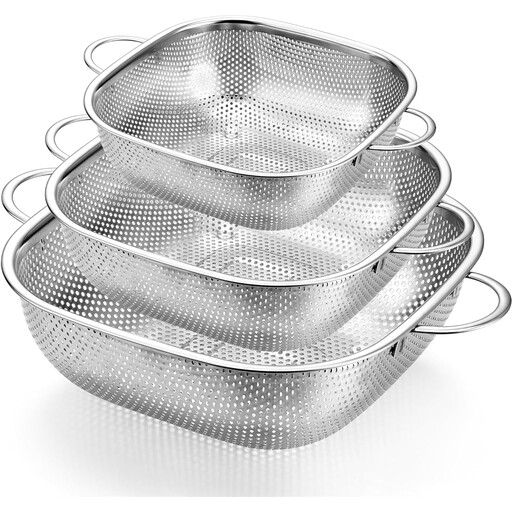
Why This Fits Their Persona: This strainer set is ideal for the daily hustle of family life, where different quantities are constantly being prepared. With three different sizes (20, 24, and 28 cm), you always have the right colander at hand – whether for a small portion of berries or a large family-sized portion of pasta.
The set solves the problem of having the wrong size for different tasks. The solid steel construction and stable feet counteract the construction trap and ensure safe handling.
Three sizes for maximum flexibility. Sturdy feet keep the strained food away from the sink bottom.
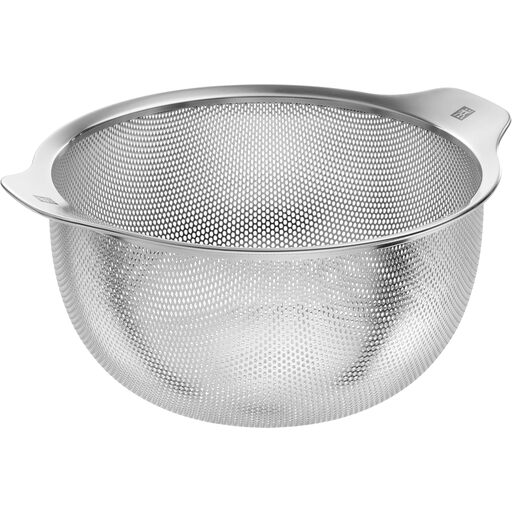
Why This Fits Their Persona: For cooks who value the highest quality, functionality, and aesthetics. This strainer is not just a tool but also a design object that, thanks to its polished surface, can also be used as a serving bowl for fruit.
According to the manufacturer, 18/10 stainless steel is used, which effectively bypasses the rust trap. The seamless workmanship and integrated handles offer maximum stability and hygiene, thus avoiding the construction and hygiene traps.
High-quality 18/10 stainless steel for maximum corrosion resistance. Very stable, hygienic, and seamless construction.
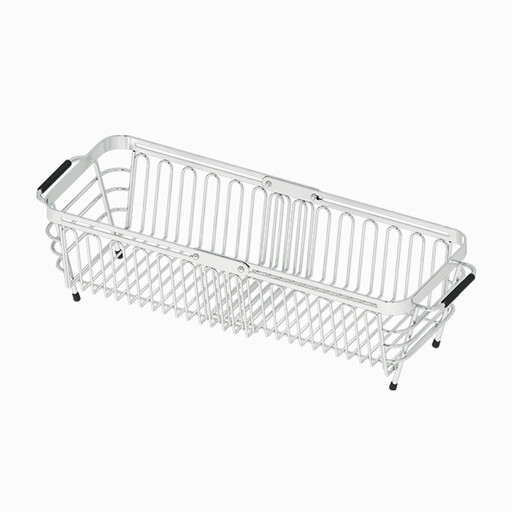
Why This Fits Their Persona: Perfect for anyone looking to maximize their counter space and optimize their kitchen workflow. This over-the-sink strainer hangs directly over the basin, allowing water to drain away immediately and keeping your hands free.
The use of 304 stainless steel prevents rust. The design solves the problem of a conventional colander sitting in drained water. The extendable frame is flexible yet stable, bypassing the construction trap.
Space-saving and multifunctional (washing, draining, storing). Keeps the countertop dry and clean.
We have compiled a complete, up-to-date list of products that fully meet these strict selection criteria and UK/EU safety regulations.
1. Which stainless steel won't rust in the kitchen? For kitchen use, stainless steel grades like 304 (also known as 18/8) and 18/10 are highly recommended. They contain a high percentage of chromium and nickel, making them extremely resistant to rust and the acids found in food. Proper care, especially drying after use, further contributes to their longevity.
2. How do you properly clean a fine-mesh kitchen strainer? It's best to rinse a fine-mesh strainer under running water immediately after use, before food particles can dry. For stubborn particles, a dish brush with a little washing-up liquid will help. You can also soak the strainer briefly in warm, soapy water. Many stainless steel strainers are dishwasher-safe, but it's always wise to check the manufacturer's instructions.
3. What is the difference between a sieve and a colander? A sieve typically has a fine wire mesh and is used for filtering small particles, such as when sifting flour (fine-mesh sieve) or rinsing quinoa. A colander has larger, punched holes in a solid body. It is ideal for draining larger foods like pasta (pasta strainer) or washing salad and vegetables.