
Lieferung heute & morgen

Qualitätsgarantie

Willkommens-Angebote freischalten: KOSTENLOSE Lieferung | Bis zu 80 % RABATT | Kostenlose 30-Tage-JoyPlus-Testphase
App herunterladen
A stainless steel kitchen strainer is a staple in many German households, yet it is often chosen based primarily on price or appearance. This can result in a strainer that is too small for pasta, too coarse for flour or difficult to clean after only a short time. The key factors are intended use, mesh size, diameter and the stability of the construction.
This buying guide from the Joybuy Product Recommendation Officer explains what households, home cooks, baking enthusiasts and food-service businesses should look for in 2026. The features presented are based on the respective product specifications.
A fine-mesh kitchen strainer is well suited to flour, icing sugar, fruit pulp, foam or soy milk. However, a very fine mesh can drain more slowly when handling large portions of pasta. Dense mesh also requires more thorough cleaning after processing starchy foods.
A coarsely perforated pasta strainer, on the other hand, is practical for pasta and vegetables but does not reliably retain small grains, fruit fibres or fine flour particles. The mesh size should therefore match the primary purpose.
A large strainer holds more food, but it also becomes heavier when filled with water or pasta. A thin rim, a single short handle or an unstable support can make handling more difficult. For family-sized portions, a wide base, side handles or a secure design that rests over the sink are useful.
A dishwasher-safe strainer is convenient for everyday use. However, in models with plastic frames, frequent exposure to heat can affect the frame’s service life. Stainless steel can generally also be cleaned by hand. Abrasive sponges, steel wool and harsh cleaning agents may damage the mesh, surface or plastic components.
Fine mesh is useful for flour and icing sugar. According to the product specifications, the Leifheit ProLine kitchen strainer has a diameter of 16 cm and a mesh opening of 1.5 mm. It is therefore designed for dry ingredients and smaller straining tasks.
A fine-mesh filter spoon is better suited to removing foam, suspended particles, oil or fruit pulp from liquids. For soy milk, juices or broths, this design can be more practical than a large round strainer.
A 24 cm strainer provides more room for pasta and vegetables, but it also requires more storage space in the kitchen cupboard.
A stainless steel strainer is corrosion-resistant and, when cleaned correctly, does not absorb typical plastic odours. The specific grade of stainless steel should nevertheless be checked. The Zwilling product, for example, is listed as being made from 18/10 stainless steel. This designation means 18 percent chromium and 10 percent nickel.
The following features are also important:
With fine mesh, users should check before each use whether the mesh is torn or the handles are loose. Sharp edges can cause injury.
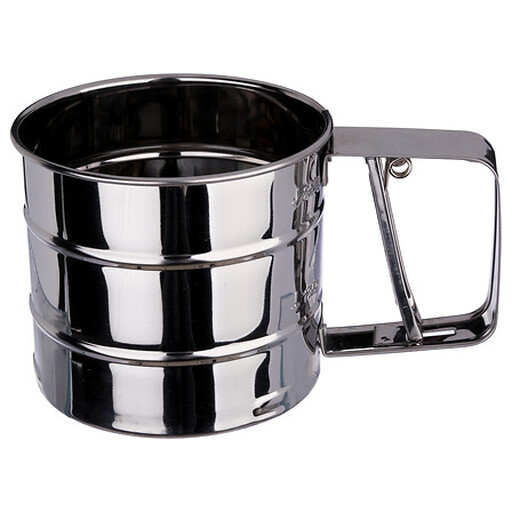
Why it is a good fit: The compact strainer is designed for small kitchens, occasional baking and simple tasks such as sifting flour or icing sugar.
Its compact dimensions make it clear that this is not a large strainer for draining substantial quantities of pasta.
Stainless steel construction, compact dimensions of approximately 10.3 × 9.3 × 15.5 cm and easy hand washing.
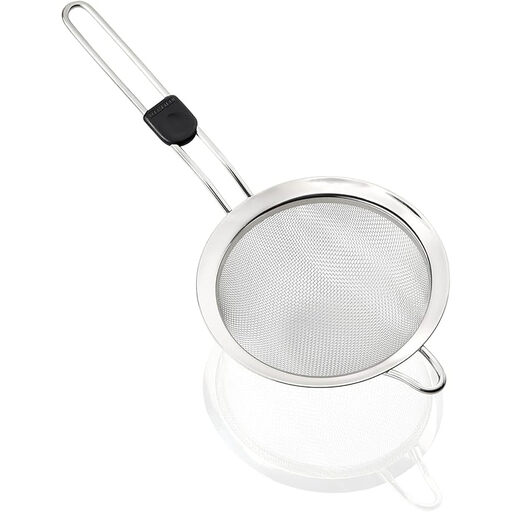
Why it is a good fit: For baking enthusiasts looking for a precisely specified fine-mesh strainer with an ergonomically designed handle.
The specified 1.5 mm mesh opening provides a concrete reference point instead of an imprecise marketing claim such as “extra fine”.
According to the product specifications, dishwasher-safe and equipped with a thumb rest and hanging loop.
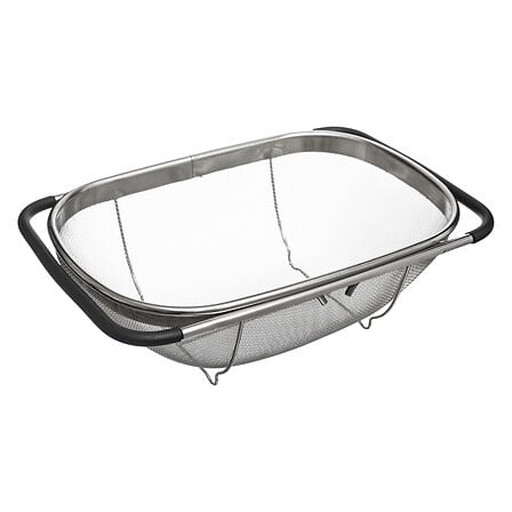
Why it is a good fit: For family households, frequent pasta draining and users with sinks of different sizes.
The stated 3.6-litre capacity and expandable design make it easier to assess the intended volume and sink compatibility realistically.
Expandable length, 3.6-litre capacity and stainless steel construction according to the product description.
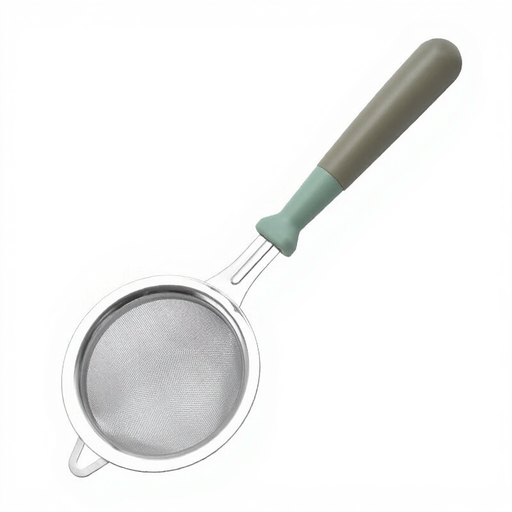
Why it is a good fit: The spoon-shaped design is intended for users who want to filter liquids, foam, fruit pulp or suspended particles in small portions.
The product is described as a filter spoon and should therefore not be confused with a large pasta strainer for draining pasta.
Fine mesh, heat-insulating handle and integrated hook according to the product specifications; not intended for use in a microwave or over an open flame.
We have put together an up-to-date selection of products that can be compared based on mesh size, dimensions, handling and cleaning requirements.
After use, the strainer should be rinsed immediately to prevent starch, flour or fruit fibres from drying in the mesh. Allow it to dry completely afterwards. With plastic frames, users should follow the manufacturer’s guidance on temperature limits.
This depends on the specific construction. Full stainless steel models are generally designed for contact with hot food, provided the manufacturer states this. Plastic frames or handles may be subject to lower temperature limits. Product information and warnings should be checked before use.
Fine mesh is suitable for flour, icing sugar and cocoa. A specific measurement such as 1.5 mm provides a more useful basis for comparison than a general description such as “fine”. For pasta or coarsely chopped vegetables, larger openings or perforations are usually more practical.
There is no universal service-life estimate. It depends on the quality of the stainless steel, the mesh connection, the level of use and the cleaning method. A strainer should be replaced if the mesh is torn, the frame is deformed or a handle becomes loose. Gentle cleaning and thorough drying can help extend its useful life.