
Lieferung heute & morgen

Qualitätsgarantie

Willkommens-Angebote freischalten: KOSTENLOSE Lieferung | Bis zu 80 % RABATT | Kostenlose 30-Tage-JoyPlus-Testphase
App herunterladen
A stainless steel lunch box should transport food safely, be easy to clean and perform reliably every day. However, there are clear differences between a classic stainless steel lunch box, a stainless steel bento box and a thermal food container. If you focus only on capacity, the stainless steel finish or the words “leak-proof”, you may end up buying a container that does not suit your everyday needs.
A leak-proof lunch box needs a suitable lid, an intact seal and a secure closure. With models featuring removable silicone seals, incorrectly fitted or dirty sealing edges can impair performance. Many lunch boxes are also primarily designed for solid foods. Liquid sauces, soups and very moist dishes usually belong in a thermal food jar or soup thermos designed for that purpose.
So pay attention to the type of closure, seal construction and usage instructions. Even a container described as leak-proof should ideally be carried upright in a rucksack unless the manufacturer specifies otherwise.
A large stainless steel food container may look versatile on paper. In practice, however, you need to allow space for cutlery, the seal and a secure closure. If a container is filled too full, the lid may be difficult to close or may put pressure on the seal during transport.
For a single meal, smaller lunch boxes with compartments are often sufficient. If you prepare several portions, you are likely to benefit more from a meal-prep container set in different sizes.
With dishwasher-safe stainless steel containers, lids, clips and silicone seals may have different care instructions from the stainless steel body. Vacuum-insulated containers often need to be washed by hand to protect the seals and insulation. The binding information is provided on the product label and in the relevant instructions.
The designations 304 stainless steel and 316 stainless steel describe different grades of steel. 304 is commonly used for food containers and lunch boxes. 316 contains additional alloying elements and is associated, among other things, with greater corrosion resistance. This does not automatically mean that every product with a particular steel designation is suitable for every application.
Before buying, check:
A stainless steel lunch box is generally not suitable for use in a microwave, as metal must not be used in one. For hot food, you should also follow the temperature and safety instructions.
A lunch box with compartments can separate bread, fruit and snacks, for example. This is practical for school, the office and picnics when different foods should not mix. However, fixed dividers are less flexible than separate stainless steel containers.
A stainless steel bento box with two or four sections is suitable for portioned meals. A single deep container, on the other hand, is better for salads, rice dishes and larger meals. For soups and liquid dishes, a thermal food container with a wide opening is the more suitable category.
A thermal food jar or soup thermos features vacuum insulation. According to the product descriptions of the relevant Maxcook models, this construction helps maintain the temperature for several hours. The actual duration depends, among other things, on the starting temperature, filling quantity, ambient conditions and how often the container is opened.
For longer journeys, we recommend:
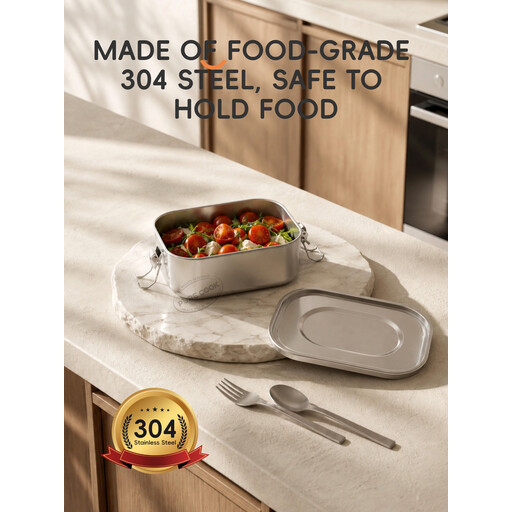
Why this product suits this profile: The rectangular single container is designed for a straightforward meal at the office, at school or on the go. According to the product description, it features closure clips and a removable silicone seal.
The clearly stated single compartment avoids unrealistic expectations about flexible dividers. The seal can be removed for cleaning.
304 stainless steel, a rectangular format and clips as closure features; according to the product information, it is suitable for cleaning in the dishwasher.
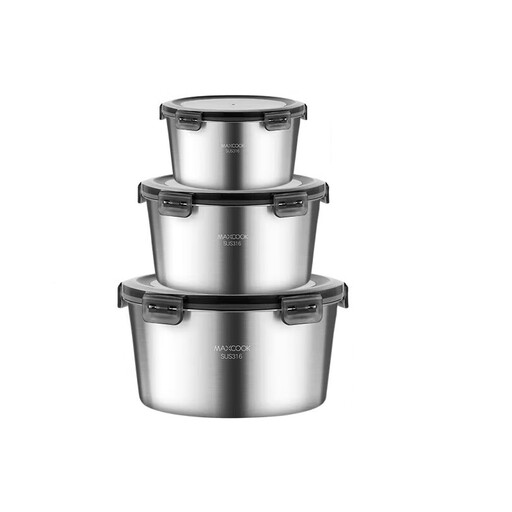
Why this product suits this profile: Three sizes – 600 ml, 1,100 ml and 2,200 ml – cover snacks, individual portions and larger preparations. The set is therefore well suited to regular meal prep and food storage.
The different sizes mean you do not need to use an oversized container for every portion. The lids and containers should be cleaned separately.
316 stainless steel according to the product description, three capacities and information on dishwasher and freezer use.
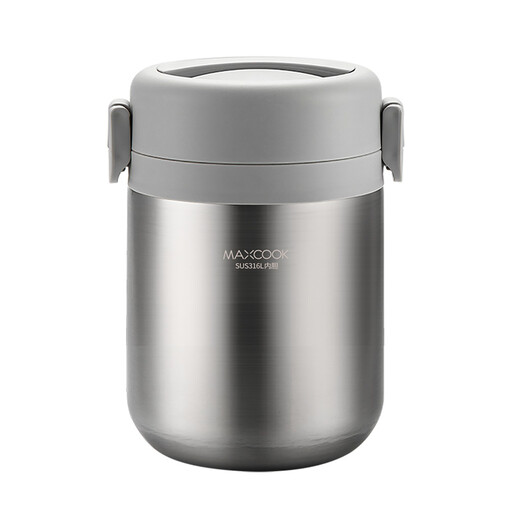
Why this product suits this profile: The wide opening and 1.5-litre capacity are designed for users who want to transport hot food, soups or larger portions.
It is described as a thermal food container with a wide opening, making it more clearly suited to liquid dishes than an ordinary lunch box.
316 stainless steel, vacuum insulation, a 1.5-litre capacity and a wide filling and eating opening.
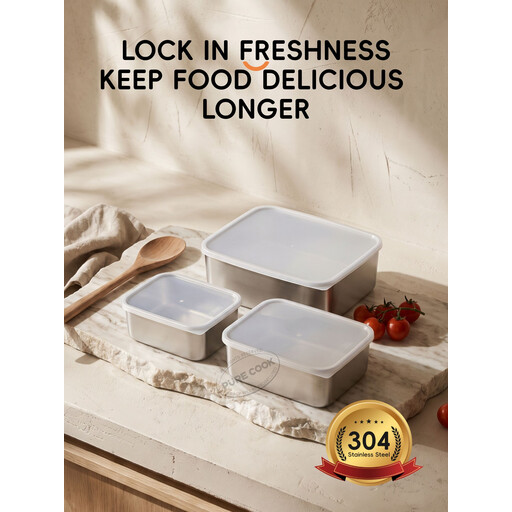
Why this product suits this profile: Three deep containers support storing prepared food at home as well as transporting individual portions.
Several individual containers reduce the need to mix different foods in one compartment or overfill it.
304 stainless steel, three deep containers and PE lids according to the product description; suitable for different storage quantities.
We have put together a complete, regularly updated list of products that fully meet these strict selection criteria and the safety regulations applicable in the EU.
Lifespan depends on more than just the quality of the steel. The closure, seal and daily cleaning are also important. Food residue should be removed as soon as possible after use. For hand-washed containers, thorough drying helps reduce water marks and odours.
Also bear the following in mind:
This depends on the lid, seal and closure. A lunch box with clips and a silicone ring may be suitable for solid or only slightly liquid foods. For soups and highly liquid dishes, a soup thermos designed for this purpose and featuring a tightly closing lid is the more suitable choice. Keep every container upright wherever possible and follow the product information.
The stainless steel body of many models is dishwasher-safe. However, lids, seals and clips may have different requirements. Hand washing is often recommended for a vacuum-insulated thermal food container. The instructions for the specific product are the decisive source of information.
With normal use, a stainless steel container can remain usable for a long time. Seals, closure clips and lids are often the first components to show signs of wear. Regular cleaning, thorough drying and following the care instructions help preserve the service life of stainless steel food containers.