
Lieferung heute & morgen

Qualitätsgarantie

Willkommens-Angebote freischalten: KOSTENLOSE Lieferung | Bis zu 80 % RABATT | Kostenlose 30-Tage-JoyPlus-Testphase
App herunterladen
A good stainless steel mixing bowl set is the cornerstone of countless kitchen tasks, from mixing a cake batter to tossing a fresh salad. However, the selection can be overwhelming, and not every shiny set lives up to its promise. Before you make a decision, it's helpful to know the most common pitfalls that can lead to buyer's remorse.
Many buyers discover only after a short time that their new bowls have flaws. A common problem is overly thin material that gets dented with light pressure or while kneading dough. Another annoyance is a so-called "non-slip base" that still slides around on the countertop or whose coating peels off after just a few washes. Finally, impractical size combinations are a widespread issue—sets that lack a truly large bowl for salads or a small one for dressings severely limit their everyday usability.
To avoid disappointment, you should focus your attention on a few key features. These objective criteria will help you evaluate the functionality and durability of a bowl set.
The term "stainless steel" alone isn't a sufficient guarantee of quality. For food contact, 304 stainless steel, also known as 18/8 stainless steel, is a common and reliable choice. This material is corrosion-resistant and does not react with acidic foods.
Even more important is the material's thickness. A thick-walled stainless steel bowl that feels heavier is more resistant to warping and dents. This is particularly relevant if you're looking for a dough bowl for kneading, where stability and robustness are crucial. Thin bowls can bend under the pressure of heavy dough or when using a hand mixer.
A salad bowl with a non-slip base makes kitchen work significantly easier. Look for models with a base made of silicone or TPR (Thermoplastic Rubber). These materials provide a firm grip on the work surface and prevent the bowl from sliding while stirring or mixing. Unlike simple coatings, these bases are more durable and often permanently bonded to the bowl.
For a tidy kitchen, stackable bowls are essential. A well-designed kitchen bowl set will nest inside each other to save space. Check if the bowls are shaped to fit together stably and without getting stuck. This maximises storage space in your cupboard.
A versatile set covers a wide range of applications. It should include small prep bowls for ingredients or dips, medium-sized bowls for everyday tasks, and at least one large stainless steel bowl (e.g., with a 4–5 litre capacity) for big salads, doughs, or marinating meat. Consider which tasks are most common in your kitchen and choose a set with a size range that meets your needs. Sometimes, supplementing with a separate ceramic or wooden serving bowl makes sense to also satisfy aesthetic requirements when serving.
Here are a few recommendations tailored to different use cases that meet the quality criteria mentioned above.
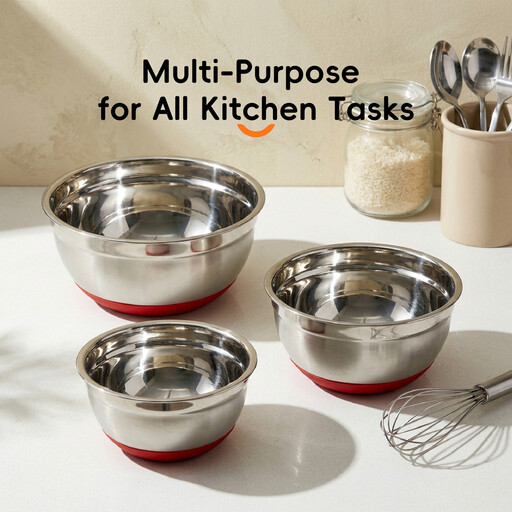
Why it's a great fit: This set is designed for daily use. The three common sizes (18, 20, and 24 cm) cover most tasks, from whisking a dressing to mixing a salad. The bowls are stackable, saving valuable cupboard space.
The permanently integrated silicone base provides reliable stability, solving the problem of sliding bowls. The food-grade stainless steel is robust and designed for long-term use.
A practical salad bowl set with three sizes and a stable, non-slip silicone base for secure handling.
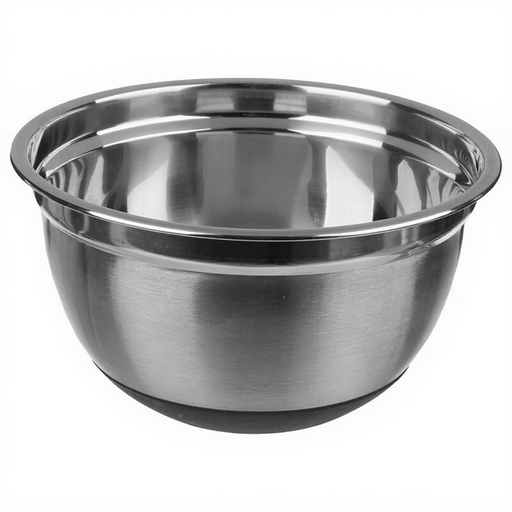
Why this bowl is a great fit: For home bakers who regularly prepare heavy bread or yeast doughs, size and stability are crucial. With a 4.5-litre capacity, this bowl offers ample space, and the TPR base provides the necessary grip for kneading.
This bowl solves the problem of bowls that are too small or unstable for dough. Its large volume and non-slip TPR base are specifically designed for demanding tasks.
A large capacity (4.5 L) and a wide, non-slip base make it an ideal dough bowl for kneading.
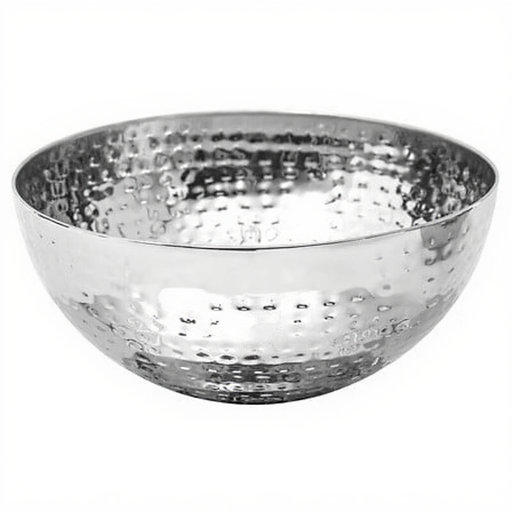
Why this bowl is a great fit: If you're looking for a functional bowl that also cuts a fine figure as a decorative serving bowl on the dining table, this is an excellent solution. The hammered finish gives the stainless steel a unique texture and appearance.
This bowl avoids the purely functional, often sterile look of many kitchen bowls. It combines the durability of stainless steel with an appealing design, without compromising on material quality.
A decorative hammered finish on a generous 29 cm diameter bowl, suitable for both preparation and serving.
We've compiled a complete, up-to-date list of products that fully meet these strict selection criteria and rigorous safety standards.
Most stainless steel mixing bowls are dishwasher-safe, which makes cleaning them much easier. However, for models with a silicone or TPR base or a special exterior coating, it's wise to check the manufacturer's care instructions. To maintain the surface's shine over the long term, occasional hand washing can be beneficial.
Stainless steel is an excellent choice for a dough bowl for kneading. The material is smooth, so the dough doesn't stick; it's robust, doesn't absorb odours, and is easy to clean. A large, heavy stainless steel bowl with a non-slip base provides the stability needed to vigorously knead even heavy doughs without the bowl sliding around.
Look for the 304 stainless steel or 18/8 stainless steel designation, as this indicates high corrosion resistance and food-grade safety. Another indicator is the weight and material thickness: a bowl that feels solid and heavy is usually made from thicker material and is therefore more resistant to dents and warping.