
Lieferung heute & morgen

Qualitätsgarantie

Willkommens-Angebote freischalten: KOSTENLOSE Lieferung | Bis zu 80 % RABATT | Kostenlose 30-Tage-JoyPlus-Testphase
App herunterladen
A stainless steel saucepan with lid is a kitchen essential in many homes. But shiny surfaces, generous capacity claims and terms such as “multi-layer” don’t automatically point to the right choice. What matters is whether the material, base, size, lid and cleaning requirements suit the way you cook.
“Stainless steel” only describes the basic material. The alloy, the construction of the base and how evenly the heat is distributed also matter. A stainless steel saucepan with a thin base may warp more quickly over high heat or distribute heat unevenly.
Look for specific details such as 304 or 316L stainless steel, a bonded base or Tri-Ply construction. For uncoated pans, it should also be clear whether the interior is genuinely free from coatings containing PFAS, PFOA and PTFE.
A stainless steel saucepan for induction needs a magnetic base. Not all types of stainless steel are suitable for induction by themselves. Check that the manufacturer explicitly lists induction compatibility and that the base sits flat on the hob.
A pan that works on gas, electric, ceramic and induction hobs gives you more flexibility. If you have an older or particularly small hob, also check that the base diameter is suitable.
Capacity is usually measured right up to the rim. When cooking soup, pasta or stews, you’ll need to leave some room at the top for safety. A 20 cm saucepan with a capacity of around 2.5 to 3 litres is often a good fit for smaller households and side dishes. A 24 cm saucepan holding around 4 litres gives you more room for family portions, stock and slow-cooked dishes.
These details are useful for everyday cooking:
A saucepan with a glass lid lets you keep an eye on your food without lifting the lid. You can see what’s happening while more heat and moisture stay in the pan. However, glass may be more vulnerable to knocks and temperature changes than stainless steel.
A stainless steel lid doesn’t let you see inside, but it’s durable and gives the pan a matching finish. Check that it fits well and has a heat-resistant handle that’s easy to grip. Always take care when handling pan handles and lid knobs while cooking with hot liquids.
A dishwasher-safe saucepan makes cleaning easier, though water marks or mineral deposits may still appear. A soft sponge, mild washing-up liquid and thorough drying will help keep the surface in good condition. Scouring products and metal scouring pads can scratch stainless steel.
For an oven-safe saucepan, check the pan itself, as well as the lid and handles. A wooden handle may make the pan unsuitable for oven use, even if the pan itself is made from stainless steel. Always follow the stated maximum temperature.
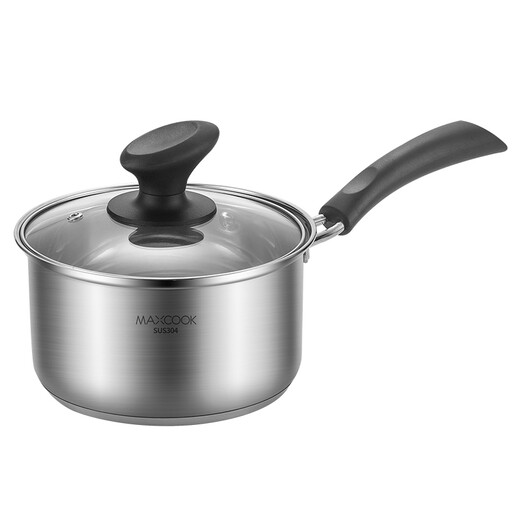
Why it suits this profile: This compact saucepan with a glass lid is designed for smaller portions, sauces, milk and side dishes. According to the product description, it’s compatible with gas, electric, ceramic and induction hobs.
The product details explicitly specify 304 stainless steel construction and a reinforced base. That means you don’t have to judge it by its shiny surface alone.
304 stainless steel, a 16 cm diameter and a glass lid; suitable for several types of hob, including induction.
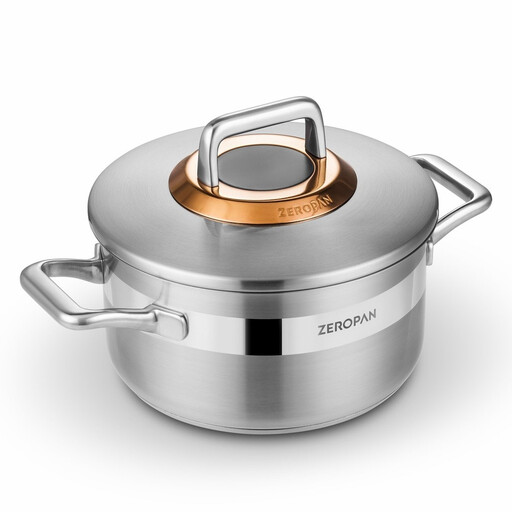
Why it suits this profile: The product details specify 316L stainless steel, a fully clad Tri-Ply construction, a stainless steel lid and compatibility with gas, electric, ceramic, halogen and induction hobs.
The product description lists specific materials and its multi-layer construction, rather than relying on a vague claim that it’s made from stainless steel.
2.8 litres of capacity, a stainless steel lid, oven-safe up to 260 °C according to the product details, and dishwasher-safe construction.
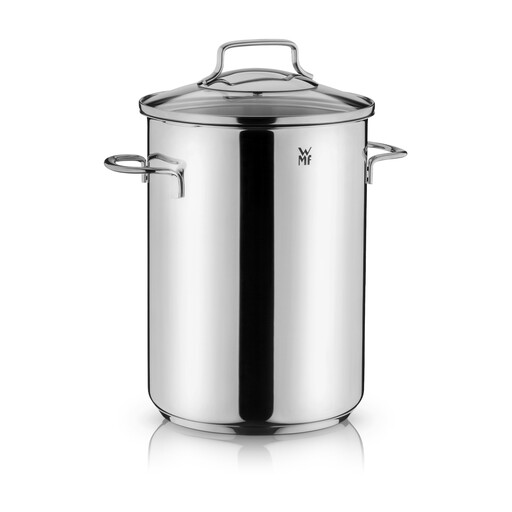
Why it suits this profile: This tall stockpot comes with a wire insert and is designed for asparagus, pasta, spaghetti and vegetables. Its stated capacity is 4.5 l.
Its tall, narrow shape is designed for a specific use. The wire insert makes it easier to lift out the food, so it isn’t simply a substitute for a saucepan of any size.
Cromargan 18/10 stainless steel, a glass lid, wire insert, TransTherm all-round base and induction compatibility according to the product description.
We’ve put together a complete, regularly updated list of products that meet these strict selection criteria and the safety regulations in force across the EU.
Only if its base is magnetic and the manufacturer specifically confirms that it’s suitable for induction. Check that it sits flat on the hob and compare the base diameter with the size of your cooking zone.
White marks are often caused by water or starch. Cleaning gently with vinegar or citric acid may help. Rinse the pan thoroughly and dry it afterwards. Avoid harsh scouring products and metal scouring pads.
Its lifespan depends on the thickness of the material, the base construction, how it’s cared for and how it’s heated. A pan without a delicate interior coating can last for years with proper use. Avoid heating an empty pan, sudden temperature changes and abrasive cleaning tools.